
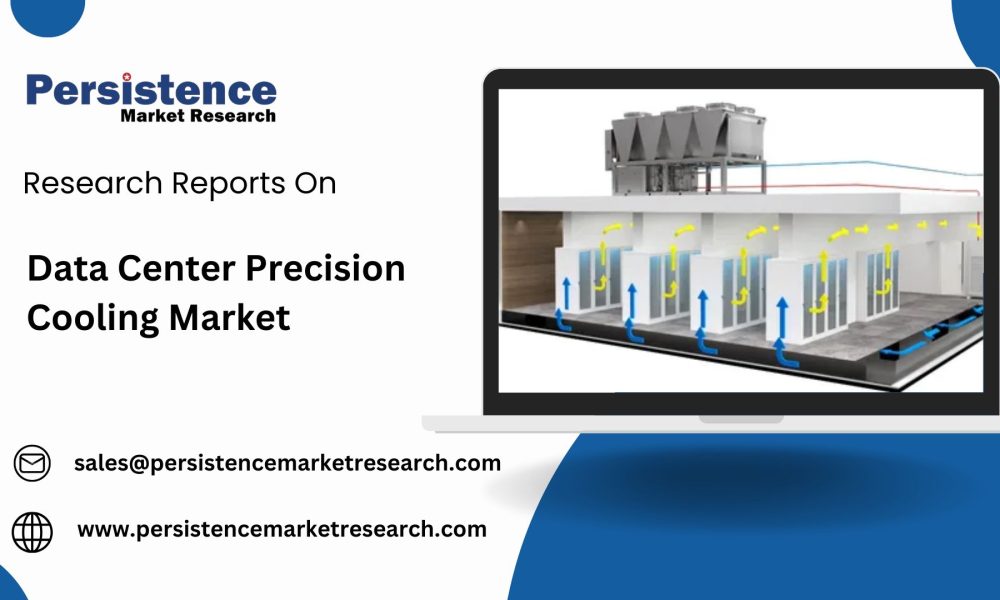
The global data center precision cooling market is projected to be valued at US$16.11 billion in 2025 and is expected to reach US$37.69 billion by 2032, expanding at a robust CAGR of 12.9% during the forecast period. With the surge in high-performance computing, the rise of artificial intelligence (AI), and the rapid expansion of cloud and edge computing infrastructure, precision cooling technologies are gaining widespread adoption across the globe.
This growth trajectory highlights how data centers are becoming increasingly sophisticated, energy-intensive, and mission-critical to the modern digital economy. As a result, the demand for efficient, reliable, and sustainable cooling solutions is at an all-time high.
What is Data Center Precision Cooling?
Traditional cooling systems often lack the efficiency and adaptability required to handle today’s densely packed servers and intensive computing workloads. Precision cooling is specifically designed for data center environments, where cooling requirements are far more demanding compared to general HVAC (Heating, Ventilation, and Air Conditioning) systems.
Key attributes of precision cooling include:
- Targeted Cooling: Directly focuses on heat-generating components like racks and server clusters.
- High Accuracy: Maintains strict temperature and humidity control for optimal IT equipment performance.
- Energy Efficiency: Reduces overall power consumption while maximizing cooling effectiveness.
- Scalability: Supports both small enterprise data centers and hyperscale facilities.
As workloads become more AI-driven and cloud-reliant, these attributes are crucial for reducing downtime, optimizing performance, and meeting sustainability goals.
Market Growth Drivers
- AI and High-Performance Computing (HPC) Adoption
AI algorithms and HPC workloads demand massive processing power, which translates into significantly higher heat output. Precision cooling solutions ensure that these compute-intensive servers operate without overheating, thus preventing failures and extending equipment lifespan.
- Expansion of Cloud and Edge Data Centers
Cloud giants like AWS, Microsoft Azure, and Google Cloud continue to expand globally, while edge data centers proliferate to support real-time applications such as IoT, 5G, and autonomous systems. These distributed architectures require localized cooling systems that are efficient and easily scalable.
- Rising Energy Efficiency Mandates
Governments and enterprises are under pressure to reduce carbon footprints. Precision cooling systems, especially those that integrate liquid cooling and advanced airflow management, play a key role in sustainable data center operations.
- Growth of Hyperscale Facilities
The rise of hyperscale data centers, which house tens of thousands of servers, is fueling demand for advanced cooling infrastructure. Precision cooling ensures consistent temperature management across massive server halls, reducing operational risks.
- Emergence of Immersion and Liquid Cooling
As rack densities increase, traditional air-based cooling is becoming less effective. Liquid cooling solutions—such as direct-to-chip cooling and immersion cooling—are emerging as critical technologies, driving the next wave of innovation in the precision cooling market.
Market Restraints and Challenges
While the growth potential is strong, the market does face certain challenges:
- High Initial Investment: Deploying precision cooling systems, especially advanced liquid cooling setups, involves significant upfront costs.
- Complexity in Integration: Retrofitting precision cooling solutions into existing facilities can be challenging.
- Maintenance and Skilled Workforce: Precision cooling systems require specialized knowledge for operation and maintenance, creating a talent gap in some regions.
- Water Usage Concerns: Certain liquid cooling systems raise sustainability concerns regarding water consumption.
Overcoming these challenges will be key for broader adoption in emerging markets and smaller enterprises.
Elevate your business strategy with comprehensive market data. Request a sample report now: https://www.persistencemarketresearch.com/samples/23299
Precision Cooling Technologies in Focus
The market is evolving with a range of innovative technologies, including:
- In-Row Cooling Systems: Positioned close to IT racks, reducing the distance for cold air travel.
- Overhead and Underfloor Cooling: Ensures optimized airflow management in large data centers.
- Liquid Cooling: Direct-to-chip and immersion cooling provide superior heat management for dense workloads.
- Chilled Water Systems: Widely used in large-scale facilities for reliable cooling performance.
- Economizer Systems: Leverage outside air for free cooling, reducing reliance on energy-intensive systems.
The integration of IoT sensors, AI-driven automation, and predictive analytics further enhances system efficiency by enabling real-time monitoring and optimization.
Regional Market Insights
- North America
North America remains the largest market, fueled by the presence of hyperscale data centers and leading cloud providers. The U.S. is a frontrunner in adopting liquid cooling and AI-integrated cooling systems.
- Europe
Europe is heavily driven by sustainability mandates and green data center initiatives. Countries like Germany, the Netherlands, and the Nordics are leading adopters of renewable-powered and energy-efficient data centers.
- Asia-Pacific
Asia-Pacific is the fastest-growing region, with countries like China, India, and Singapore investing heavily in cloud infrastructure and digital transformation. The rise of smart cities and 5G networks further accelerates demand.
- Middle East & Africa
The Middle East, particularly UAE and Saudi Arabia, is investing in large-scale data center projects to support digital economy initiatives, creating opportunities for precision cooling providers.
- Latin America
Emerging cloud adoption in Brazil, Mexico, and Chile is driving new investments, though infrastructure development is still at a nascent stage compared to other regions.
Competitive Landscape
The market is highly competitive, with both established players and startups innovating aggressively. Key companies include:
- Schneider Electric SE
- Vertiv Holdings Co.
- Rittal GmbH & Co. KG
- STULZ GmbH
- Airedale International Air Conditioning
- Coolcentric (Vertiv)
- Nortek Air Solutions
- Daikin Applied
These companies focus on:
- Expanding liquid cooling portfolios
- Offering modular and scalable solutions
- Integrating AI-driven monitoring tools
- Partnering with cloud providers for large-scale deployment
Future Trends in the Data Center Precision Cooling Market
Looking ahead, several trends are shaping the market’s future:
- Rise of AI-Optimized Cooling
AI and machine learning will be increasingly used to predict cooling requirements, minimize energy waste, and optimize performance. - Shift Toward Sustainable Cooling
Data centers are moving toward low-carbon, eco-friendly cooling systems, such as free-air cooling and water-free liquid systems. - Integration with Renewable Energy
Cooling systems will increasingly integrate with renewable-powered data centers, aligning with net-zero commitments. - Adoption of Modular Cooling
As edge data centers expand, modular cooling systems that are quick to deploy and scale will gain traction. - Growth of Immersion Cooling
Immersion cooling is expected to grow significantly, especially in AI and HPC applications, where heat loads are extreme.
Conclusion
The global data center precision cooling market is entering a transformative phase, growing from US$16.11 billion in 2025 to US$37.69 billion by 2032 at a strong CAGR of 12.9%. Driven by the rise of AI, high-performance computing, cloud, and edge infrastructure, precision cooling technologies are no longer optional—they are mission-critical.
As data centers continue to power the digital economy, the ability to cool efficiently, sustainably, and intelligently will define competitive advantage. Companies that invest in next-generation cooling technologies will not only improve operational efficiency but also align with the global shift toward green, sustainable, and resilient IT infrastructure.
The future of the data center precision cooling market is smart, sustainable, and innovation-driven—a testament to the growing role of digital infrastructure in shaping the modern world.
Related Reports:




