
Flexible Heating Film Market Outlook 2025–2032: Trends, Innovations, and Growth Opportunities
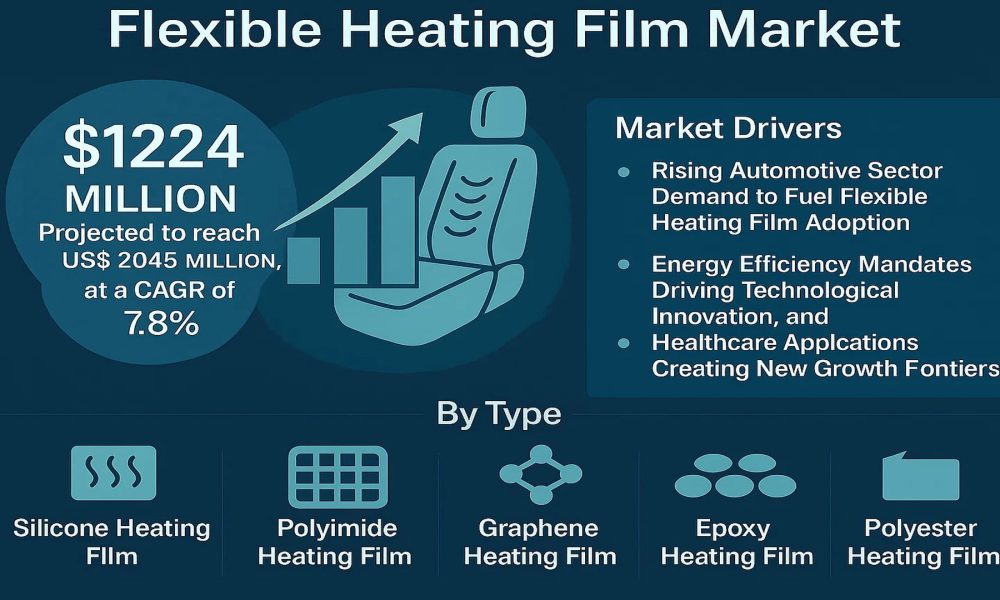
The global Flexible Heating Film Market was valued at 1224 million in 2024 and is projected to reach US$ 2045 million by 2032, at a CAGR of 7.8% during the forecast period.
Flexible heating films are thin, lightweight heating elements that can conform to complex surfaces through chemical etching, screen printing, or wire winding technologies. These films enable precise temperature control across diverse applications ranging from automotive seat warmers to industrial process heating systems. Key product variants include silicone, polyimide, graphene, epoxy, and polyester-based heating films – each offering unique thermal and mechanical properties for specialized use cases.
Market expansion is primarily driven by growing automotive adoption, where these films enhance passenger comfort through integrated seat and steering wheel heaters. The electronics sector also contributes significantly, particularly in display manufacturing and battery thermal management systems. Recent technological advancements like Toray Industries’ 2700 Prepreg System demonstrate the industry’s shift toward high-performance materials capable of withstanding extreme environments while maintaining operational reliability.
Get Full Report with trend analysis, growth forecasts, and Future strategies : https://semiconductorinsight.com/report/flexible-heating-film-market/
Segment Analysis:
By Type
Silicone Heating Film Segment Leads Due to Superior Thermal Conductivity and Durability
The market is segmented based on type into:
- Silicone Heating Film
- Polyimide Heating Film
- Graphene Heating Film
- Epoxy Heating Film
- Polyester Heating Film
By Application
Automobile Segment Dominates Owing to Rising Demand for Thermal Comfort Features in Vehicles
The market is segmented based on application into:
- Automobile
- Subtypes: Seat heaters, steering wheel heaters, window defrosters
- Home Appliances
- Electronic
- Other
By End User
Original Equipment Manufacturers (OEMs) Segment Holds Significant Share Due to Bulk Procurement
The market is segmented based on end user into:
- Original Equipment Manufacturers (OEMs)
- Aftermarket
By Technology
Screen Printed Technology Segment Prevails Due to Cost-Effectiveness and Design Flexibility
The market is segmented based on technology into:
- Screen Printing
- Chemical Etching
- Wire Wound
MARKET DYNAMICS
MARKET DRIVERS
Rising Automotive Sector Demand to Fuel Flexible Heating Film Adoption
The global automotive industry’s expansion is driving substantial growth in flexible heating film demand. With vehicle production projected to reach over 95 million units annually by 2030, manufacturers are increasingly incorporating advanced thermal management solutions. Flexible heating films play a critical role in modern vehicles, powering seat warmers, steering wheel heaters, and mirror defogging systems that enhance passenger comfort. The transition toward electric vehicles further accelerates this trend, as efficient cabin heating solutions become essential to maintain battery range in cold climates. Premium automakers now install heated surfaces in over 75% of their vehicle models, while the technology is rapidly trickling down to mass-market segments.
Energy Efficiency Mandates Driving Technological Innovation
Stringent global energy efficiency regulations are compelling industries to adopt flexible heating solutions over traditional alternatives. Modern heating films demonstrate 30-40% higher energy efficiency compared to conventional resistive heating elements, making them particularly attractive for building applications. The construction sector accounts for nearly 40% of global energy consumption, creating significant opportunities for underfloor heating films and smart window defogging systems. Recent advancements in graphene-based heating films have achieved conductivity levels exceeding 3,000 S/cm while maintaining flexibility, opening new applications in aerospace and wearable technologies. Government incentives for energy-efficient building retrofits across Europe and North America are further stimulating market growth.
Healthcare Applications Creating New Growth Frontiers
The medical sector is emerging as a high-growth application area for flexible heating films, particularly in therapeutic devices and diagnostic equipment. Temperature-controlled medical packaging represents a $1.2 billion opportunity, ensuring sensitive pharmaceuticals and biologics maintain optimal conditions during transport. Patient warming systems utilizing ultrathin heating films are gaining traction in surgical settings, with adoption rates increasing by approximately 15% annually. The COVID-19 pandemic accelerated development of disposable heated PPE and portable medical equipment requiring compact thermal solutions. Ongoing research into flexible heating elements for wearable drug delivery systems promises to unlock additional healthcare applications in the coming decade.
MARKET OPPORTUNITIES
Smart Infrastructure Development Creating New Application Avenues
The global smart cities initiative presents transformative opportunities for flexible heating film technologies. Intelligent building systems increasingly incorporate heated surfaces for snow-melting walkways, energy-efficient radiant heating, and dynamic thermal membranes. Market analysis suggests the smart infrastructure sector could account for over 25% of total flexible heating film demand by 2030. Emerging applications include self-regulating heated solar panels that maintain efficiency in cold climates and adaptive building facades that optimize thermal performance. Pilot projects in Nordic countries have demonstrated 30% energy savings through integrated heating film solutions in public infrastructure projects.
Advanced Material Innovations Driving Next-Generation Products
Breakthroughs in nanomaterials and printed electronics are creating significant opportunities for product differentiation. Hybrid heating films combining carbon nanotubes with metallic meshes achieve unprecedented heating uniformity while maintaining flexibility. The printable electronics market for heating applications is growing at 18% CAGR, enabled by advancements in conductive inks and roll-to-roll manufacturing. Recent developments in self-regulating heating films that adjust output based on ambient temperature could revolutionize applications requiring precise thermal control. Industry leaders are investing heavily in these technologies, with R&D expenditures increasing by an average of 22% annually over the past three years.
FLEXIBLE HEATING FILM MARKET TRENDS
Technological Advancements to Drive Market Growth
The flexible heating film market is experiencing significant advancements in material science and manufacturing techniques, propelling its adoption across multiple industries. Key players are investing heavily in research and development to introduce more efficient, durable, and lightweight heating solutions. For instance, recent innovations in graphene-based flexible heaters have demonstrated superior thermal conductivity and energy efficiency compared to traditional materials like polyimide or silicone. Additionally, the integration of internet of things (IoT) capabilities allows for smart temperature control in applications ranging from automotive seat warmers to medical devices, enhancing user experience and operational efficiency.
Other Trends
Automotive Industry Demand
The automotive sector remains a dominant driver for flexible heating films, particularly for applications such as seat warming, battery thermal management in electric vehicles (EVs), and defrosting systems. The global shift toward electric mobility has further accelerated demand, as EVs require precise thermal regulation for battery performance and passenger comfort. Flexible heating films are preferred due to their thin profile and ability to conform to complex surfaces, making them ideal for integration into modern vehicle designs. With EV sales projected to grow at a compound annual growth rate (CAGR) of over 20% globally, the market for these heating solutions is poised for sustained expansion.
Growing Adoption in Consumer Electronics and Medical Applications
Beyond automotive uses, flexible heating films are gaining traction in wearable devices, medical equipment, and home appliances. In the healthcare sector, they are increasingly utilized in patient warming systems and diagnostic devices requiring stable thermal conditions. The consumer electronics segment benefits from the integration of heating films in flexible displays and touch panels, ensuring optimal performance in cold environments. With the home appliance market expanding, particularly in emerging economies, demand for energy-efficient heating solutions in products like smart mirrors and underfloor heating systems is expected to rise significantly in the coming years.
Recent Developments:
- Integration with Smart Thermostats:
Flexible heating films are increasingly being integrated with smart home systems and smart thermostats for better temperature control. This allows users to adjust floor heating or surface heating remotely, improving convenience and energy efficiency. - Use in Automotive Applications:
The demand for heated seats and steering wheels in vehicles is pushing the adoption of flexible heating films in the automotive industry. These films are used to create lightweight, flexible heating elements for cabin comfort. - Advancements in Energy Efficiency:
Manufacturers are focusing on improving the energy efficiency of flexible heating films, reducing power consumption while maintaining high heat output. This is achieved through advanced materials and optimized heating designs, making them more sustainable for long-term use. - Application in Wearable Heating Products:
Flexible heating films are being used in the production of wearable heating products, such as heated jackets, gloves, and insoles. These products are gaining popularity in outdoor sports and extreme weather conditions. - Increased Use in Floor and Ceiling Heating Systems:
Flexible heating films are seeing significant growth in floor heating systems in residential and commercial buildings. The technology is also being adapted for use in ceiling heating, providing more efficient and uniform heating solutions.
Learn more about Competitive Analysis, and Forecast of Flexible Heating Film Market: https://semiconductorinsight.com/download-sample-report/?product_id=107438
COMPETITIVE LANDSCAPE
Key Industry Players
Leading Companies Expand Technological Capabilities to Dominate the Rapidly Growing Market
The global flexible heating film market features a dynamic competitive environment with both established manufacturers and emerging innovators vying for market share. The landscape remains semi-consolidated, with GEOMATEC Co., Ltd and Watlow currently holding prominent positions due to their extensive product portfolios and robust distribution networks across North America and Europe.
Chromalox, a subsidiary of Spirax-Sarco Engineering plc, has emerged as a key player with significant investments in R&D for industrial-grade heating solutions. Their ability to provide customized heating films for extreme environments has helped them secure long-term contracts in aerospace and automotive sectors. Meanwhile, Backer Heating Technologies Inc. maintains strong brand recognition through its precision-engineered flexible heaters for medical applications.
Market competition intensifies as companies focus on material innovation and operational efficiency. Tempco gained notable attention in 2023 by introducing graphene-infused heating films with 25% faster thermal response times compared to conventional products. Similarly, OMEGA Engineering expanded its market presence through strategic acquisitions in Asia-Pacific, positioning itself as a complete thermal solutions provider rather than just a component manufacturer.
The automotive sector’s rapid electrification creates both opportunities and challenges for heating film providers. Players like Zoppas Industries are developing ultra-thin heating elements for EV battery temperature management, while Thermowatt specializes in energy-efficient seat heaters with patented moisture-resistant technology. Both approaches demonstrate how flexible heating film manufacturers are adapting products for next-generation vehicle requirements.
List of Key Flexible Heating Film Companies Profiled
- GEOMATEC Co., Ltd (Japan)
- Termofol (Poland)
- Thermo (U.S.)
- Tempco (U.S.)
- Backer Heating Technologies Inc. (U.S.)
- Watlow (U.S.)
- Chromalox (U.K.)
- NIBE (Sweden)
- Friedr Freek GmbH (Germany)
- OMEGA (U.S.)
- Zoppas Industries (Italy)
- Thermowatt (Italy)
- Tutco Heating Solutions Group (U.S.)
- CCI Thermal Technologies (Canada)
- Headway (China)
Browse Related Reports : Crystalline Polarizer Market
CONTACT US:
City vista, 203A, Fountain Road, Ashoka Nagar, Kharadi, Pune, Maharashtra 411014
+91 8087992013
[email protected]




