
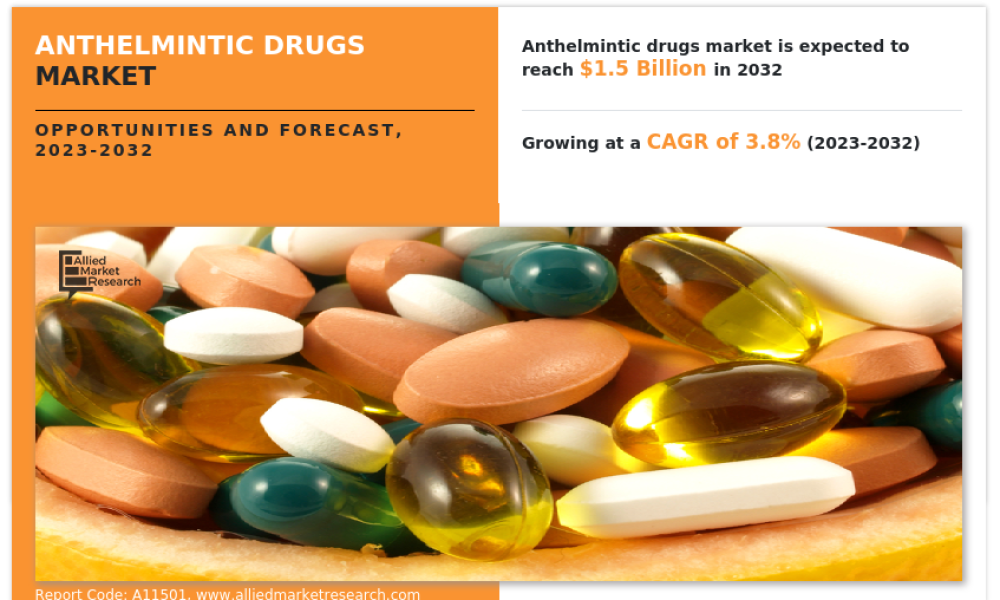
The global anthelmintic drugs market, valued at $1 billion in 2022, is on track to hit $1.5 billion by 2032, growing at a steady CAGR of 3.8% from 2023 to 2032, according to the latest market analysis. The surge is driven primarily by a rising global burden of helminth infections, coupled with growing awareness about early diagnosis, preventive healthcare measures, and the availability of cost-effective generic drugs.
According to the World Health Organization (WHO), as of January 2023, an estimated 1.5 billion people — nearly 24% of the world’s population — are infected with soil-transmitted helminths (STH). These infections disproportionately affect vulnerable and low-income communities, particularly in regions with limited access to safe water, sanitation, and hygiene. The increasing need for effective treatments to combat these parasitic infections is fueling global demand for anthelmintic drugs.
Key Market Takeaways
Benzimidazole segment led the market in 2022.
Macrocyclic lactones expected to record the fastest growth rate through 2032.
Nematode infections remain the leading infection type.
Drug stores & retail pharmacies dominate the distribution landscape.
North America maintained its top revenue share in 2022.
Understanding Anthelmintics
Anthelmintics are a specialized class of drugs designed to treat infections caused by parasitic worms, or helminths. These parasites can affect various parts of the human body — from intestines and lungs to deeper tissues. Anthelmintic drugs work by either disrupting the parasite’s metabolic processes or paralyzing and expelling them from the body.
The market encompasses multiple drug classes, each targeting specific parasites:
Benzimidazoles for roundworms, tapeworms, and flukes
Macrocyclic lactones for a broader spectrum including external parasites
Pyrazinoisoquinolones, tetrahydropyrimidines, and other specialized classes
Market Growth Drivers
Rising Prevalence of Parasitic Infections
Helminth infections remain widespread, particularly in tropical and subtropical climates. Poor sanitation, limited healthcare access, and lack of hygiene infrastructure are key factors driving infection rates.Public Awareness & Preventive Measures
Health campaigns emphasizing hygiene, sanitation, and early detection have increased demand for preventive and therapeutic solutions. As awareness grows, communities are more proactive in seeking treatment and prophylaxis.Availability of Affordable Generic Drugs
The proliferation of generic versions of branded anthelmintic medications has significantly reduced treatment costs, making them accessible to broader populations and public health programs.
Challenges in the Market
While growth prospects remain strong, certain challenges persist:
Affordability in Low-Income Regions: Many communities most affected by helminth infections struggle to afford consistent treatment, hindering eradication efforts.
Economic Downturns & R&D Constraints: In times of recession, reduced healthcare budgets and limited R&D funding can slow the development of advanced drug formulations.
Resistance Concerns: Emerging parasite resistance to existing drugs demands continual innovation and monitoring.
Segmental Insights
By Drug Class
Benzimidazoles held the largest market share in 2022, thanks to their broad-spectrum effectiveness and global familiarity among healthcare providers.
Macrocyclic lactones are projected to grow at the fastest rate, bolstered by extended-release formulations, innovative delivery methods, and ability to combat resistant strains.
By Infection Type
Nematode infections remain the largest and fastest-growing category, covering widespread diseases like hookworm, whipworm, and lymphatic filariasis. High prevalence in developing nations sustains demand for effective treatments.
By Distribution Channel
Drug stores & retail pharmacies dominate due to their accessibility and the availability of pharmacists to provide medication guidance.
Online providers are emerging as the fastest-growing channel, driven by increasing digital adoption and convenience for remote or rural populations.
Regional Highlights
North America led the global market in 2022, supported by:
Strong healthcare infrastructure
High diagnostic testing rates
Public awareness campaigns and regulatory oversight
Asia-Pacific is set to record the fastest growth through 2032, fueled by:
High incidence of STH infections, especially in rural and underserved areas
Expanding healthcare infrastructure in countries like India, China, and Indonesia
Government-led mass deworming initiatives
Competitive Landscape
Prominent players in the global anthelmintic drugs market include:
GlaxoSmithKline plc, Johnson & Johnson, Merck & Co., Inc., Bayer AG, Cipla Ltd., Sun Pharmaceutical Industries Ltd., Teva Pharmaceutical Industries Limited, Reese Pharmaceutical Company, and Zydus Lifesciences Limited.
Other key contributors include Cadila Pharmaceuticals, Intas Pharmaceuticals, J B Chemicals and Pharmaceuticals Ltd., Mankind Pharma Ltd., and Abigail Healthcare.
Companies are focusing on product innovation, generic drug development, and strategic partnerships to expand their presence in both developed and emerging markets. In addition, investments in R&D for advanced formulations and combination therapies are expected to shape the industry’s competitive dynamics in the coming years.
Future Outlook
The next decade is set to bring continued growth opportunities for the anthelmintic drugs market. Expanding public health initiatives, the emergence of new drug delivery systems, and the integration of telemedicine for rural deworming programs will likely play key roles in market expansion. However, combating parasite resistance, ensuring affordability, and maintaining supply chain efficiency in underserved areas will remain pressing priorities.
With global health organizations, governments, and private pharmaceutical firms working in tandem, the vision of significantly reducing — and potentially eradicating — many helminth infections appears within reach.




