
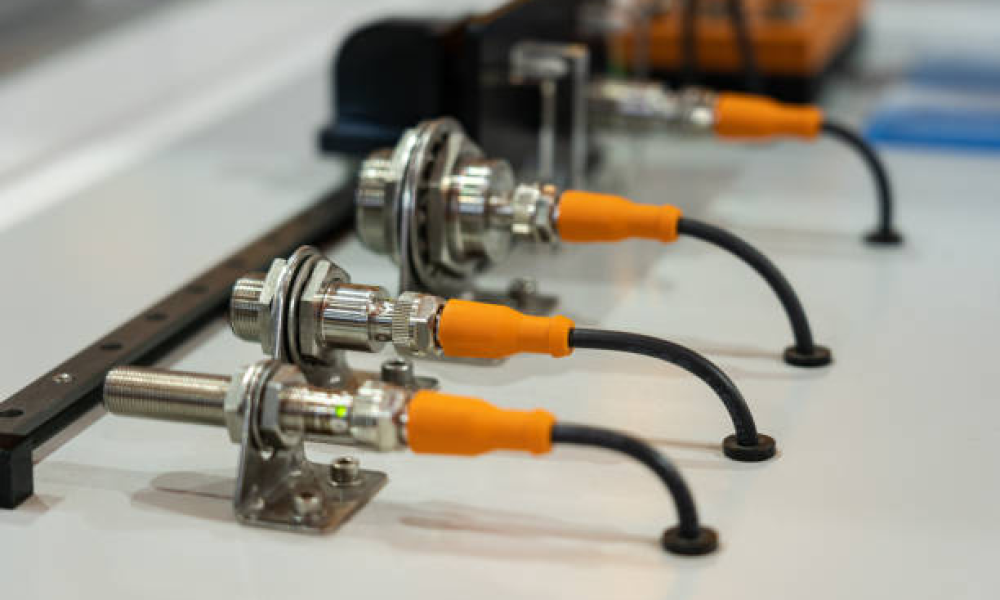
If you’ve ever wondered how factory machines know exactly where to move or how fast to spin, chances are a Hall effect sensor is quietly doing the job behind the scenes. These tiny, rugged devices spot magnetic fields without actually touching anything, making them perfect for high-speed, high-reliability settings. Because they’re so versatile, you’ll find them in everything from electric cars and robotic arms to wind turbine controllers. For B2B manufacturers, automotive engineers, and renewable-energy planners, a good grasp of how Hall sensors work can shave design time and boost system uptime.
In the lines that follow, we’ll break down how these sensors function, where you are most likely to see them at work, what to keep in mind during installation, and how partners like OMCH keep the supply chain running smoothly.
How Does a Hall Effect Sensor Work?
At its core, a Hall effect sensor answers one simple question: is there a magnetic field nearby, and how strong is it? The trick lies in a phenomenon first spotted by physicist Edwin Hall back in 1879. When current flows sideways through a sliver of metal or semiconductor, and a magnetic field is applied at right angles, a tiny “Hall voltage” pops up across the material. Engineers can measure that voltage to figure out whether a magnet, rotor, or wire carrying.current is close, moving, or in the correct position.
Industrial Hall effect sensors have become a go-to solution for many engineers, and they usually show up in one of three main ways:
- Proximity sensors let you know when a magnet is getting close, and they do it without touching anything.
- Speed sensors keep track of how fast something is spinning by picking up on the changes in the magnetic field around it.
- Current sensors check the flow of electricity by measuring the magnetic field that flows with the current itself.
What makes these sensors so popular in factories and plants? First off, they shrug off dirt, oil, and even splashes of water, so they keep working when things get messy. Their small size means you can squeeze them into tight spots, and they won’t blink even when machinery is moving at breakneck speed.
Where You’ll Find Them in Business
Because they can sense reliably without needing to touch anything, Hall effect sensors pop up in all kinds of industrial setups. Here are a few places you’re likely to see them:
- Automotive Systems: You’ll find them in anti-lock brake systems, as well as watching the crankshaft and camshaft positions, and in the throttle position circuit.
- Factory Automation: They help machines know where parts are, allowing automated cells to control linear and angular motion with confidence.
- Elevator and Escalator Safety: Sensors ensure elevator doors shut properly and keep an eye on motor speeds to avoid accidents.
- Renewable Energy: In wind turbines, they track rotor positions, while in solar panels, they can tell the angle of the panels as the sun moves across the sky.
- Robotics: Robotics applications rely on these sensors for smooth arm movements, joint positioning, and finely-tuned motor speeds.
Because Hall effect sensors keep performing even in fast-paced and rough factory floors, many B2B firms now rely on them to sharpen operations and cut the downtime that comes from wear and tear on older, contact-based tech.
Why Industrial Pros Prefer Hall Effect Sensors
Hall effect sensors bring a host of advantages that make them a go-to choice for manufacturers and automation specialists:
- No-Contact Operation: The sensor reads movement from afar, so there’s no rubbing or dragging that wears parts down. This is a game-changer for machines that cycle hundreds of times a day.
- Tough and Weatherproof: These sensors shrug off vibrations, moisture, and temperature spikes, which is why you often find them in heavy trucks, conveyor lines, and other demanding spots.
- Two Signal Types: You can get a smooth, analog reading that tracks magnetic changes or a straightforward on/off output, giving engineers the design flexibility they need.
- Space-Saving Design: Small enough to slide into crowded control cabinets or tiny robot arms, they fit where bulkier sensors simply can’t go.
- Longevity: With no moving parts to wear out, users rarely see mechanical breakdowns, allowing these sensors to run reliably season after season.
For manufacturers ready to explore a full lineup of proximity sensors—including those built on Hall effect tech—check out this https://www.omchsmps.com/de/path/proximity-switch/ that showcases models tuned for every size, layout, and working environment.
Important Steps for Picking the Right Hall Effect Sensor
If you’re bringing Hall effect sensors into an industrial setup, whether you’re an engineer designing the circuit or a purchasing lead checking the specs, there are a few must-have checkboxes to run through. Doing this extra homework helps the sensor do its job without surprises later on.
- Check the Magnetic Field: First off, look at how strong the magnetic field is going to be in your project. Every sensor is happy in a specific range, so match the two to avoid weak or blown-out readings.
- Mounting and Alignment Matter: A sensor sitting at a weird angle can miss signals or act like the magnet is always on. Line everything up straight during install, and you’ll dodge annoying false alarms.
- Choose the Right Output Type: Is your control system after a simple on-off state, or does it want a smooth voltage read? Pick between a digital switch output and an analog signal early in the planning stage.
- Watch the Supply Voltage: Most industrial sensors like a diet of 3.3V to 24V, but double-check that number against the power rails you already have in-house. Too much, or too little, juice and the sensor goes to sleep.
- Know the Temperature Limits: If you drop the sensor near a roaring motor or leave it outdoors, make sure its thermal comfort zone covers those extremes. Many cheap units fail the heat test, costing you downtime.
- Mind the Response Time: In speedy conveyor lines or motor brake systems, every millisecond counts. Hunt for specs that list a fast rise and fall time, so control loops can move without lag.
Finally, when you wire these sensors into gear like PLCs, motor drivers, or distributed I/O racks, consider adding some signal conditioning or a buffer circuit. It’s especially wise in places where EMI is the new neighbor trying to murk up clean signals.
OMCH and the Future of Industrial Sensing
Today’s factories run on data, and that means the sensors gathering that data must work perfectly, hour after hour. OMCH has earned the trust of engineers by providing tough, dependable sensors ranging from inductive and capacitive to photoelectric and Hall effect types.
Because every production line is slightly different, OMCH builds its products to fit together easily. The company invests heavily in research and testing right at its own facilities, so each sensor is reliable, budget-friendly, and ready to handle the demands of modern automation.
Among its standout products are powerful proximity switches, including innovative Hall effect designs that excel in factory automation, material handling, and fine positioning. These sensors keep production lines running smoothly in settings as varied as high-speed packaging and complex automated test rigs that cannot afford a moment of downtime.
Of all these options, Hall effect sensors are especially popular with B2B customers for their toughness, accuracy, and broad range of uses. Whether your team is fine-tuning motion control, tracking position, or measuring current, these contact-free sensors offer a smart, efficient upgrade over older mechanical solutions.




