

Musk’s brain-mouth interface company Neuralink has announced that the first human clinical trial has been approved by the U. S. Food and Drug Administration (FDA). Being able to obtain approval from the relevant institutions and conduct the first human clinical trial would be a critical milestone.

Musk’s breakthrough in his brain-computer interface experiments
Musk, n ardent supporter of brain-computer interfaces, has been pursuing the technology. In April 2017, he founded Neuralink, which invested heavily to study brain-computer interfaces. That year, he said Neuralink’s goal was to bring a product to the market within about four years to help people with severe brain damage, such as strokes.
According to the report, Neuralink is designing a device to turn brain signals into action, first focusing on two applications, restoring human vision, and devices that help people unable to move muscles control smartphones, and even restoring the whole body function of spinal cord victims, allowing them to restore mobility.
Musk also envisions the future in which both disabled people and healthy people will soon undergo implants in local centers, and that these devices will even be telepathic in the future. At a Show and Tell event held by Neuralink late last year, Musk also claimed that he would one day receive Neuralink’s implants himself.
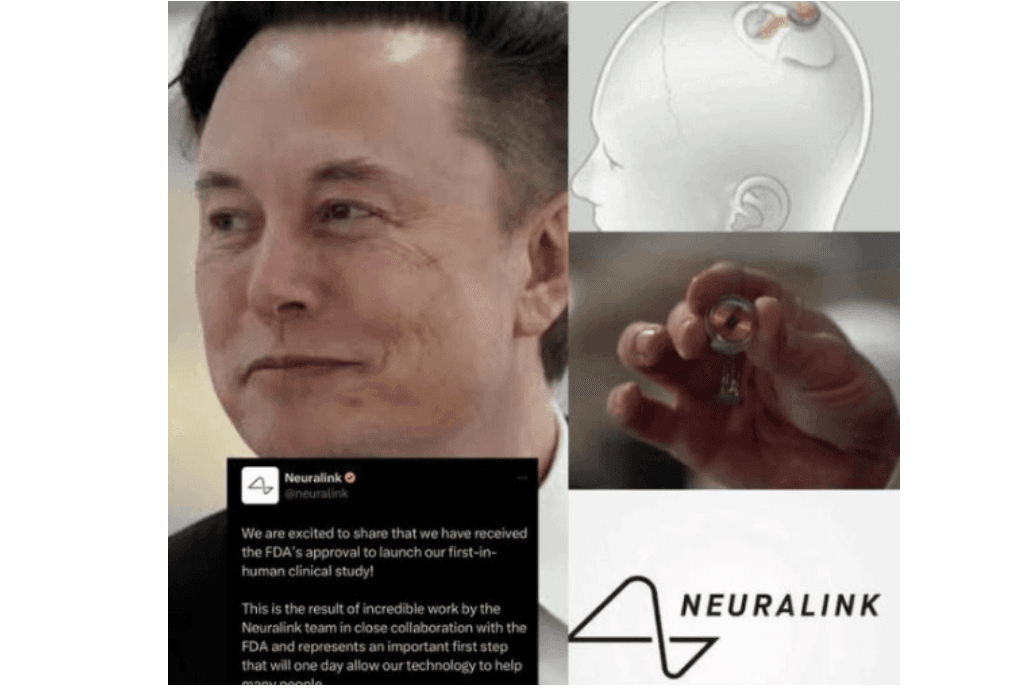
It should be noted that Neuralink is not the first company approved to have a brain-computer interface implanted in a human body. Synchron The company received FDA approval in 2021 to begin trials in the United States and announced the first brain-computer interface implantation in the US. In January, it published earlier results of four human patients in Australia.
China has launched a comprehensive research study on brain-computer interface technology
Brain-computer interface technology is known as the “information superhighway” for the human brain to communicate with the outside world and is the key core technology of the new generation of human-computer interaction and human-computer hybrid intelligence. Scientists have been working on brain-computer interface technology for decades, and some companies have developed commercially promising BCI systems.
Brain-computer interface once walked at the forefront of the storm, caused a lot of people’s attention. Foreign research on the “brain-computer interface” is progressing steadily, and China has already started the relevant research and exploration in the field of human brain engineering. According to Caixin, the Ministry of Industry and Information Technology will take brain-computer interfaces as an important direction to foster future industrial development, strengthen the exploration of its application scenarios, and accelerate the vigorous development of the BCI industry, the company reported. Zhao Zhiguo, the chief engineer of the Ministry of Industry and Information Technology, said to enhance the innovation ability of the BCI industry; improve the industrial ecology of BCI; and consolidate the industrial foundation of BCI.
In terms of results, in early May this year, the interventional BCI test led by Professor Duan Feng from Nankai University made significant progress. The news of the world’s first non-human primate interventional BCI trial has received a lot of feedback on the Internet. In this experiment, the interventional EEG sensor is attached to the monkey cerebrovascular wall through interventional surgery, and the intracranial EEG signals can be collected without craniotomy, taking into account the safety and recognition stability.
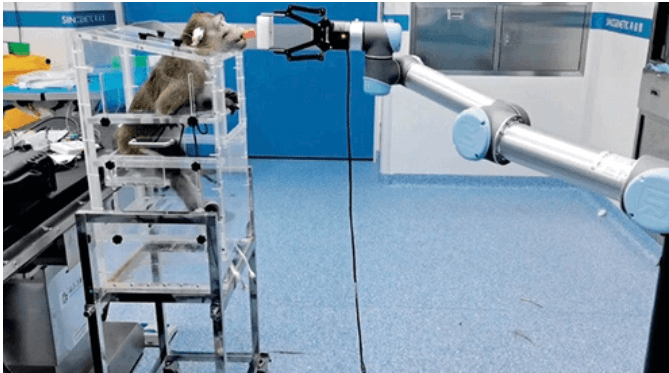
Industry insiders believe that at present, domestic and foreign are fighting for brain-computer interface technology. China has formed a whole industrial chain covering brain-computer interfaces in the basic layer, technology layer, and application layer, and is applied in medical, educational, industrial, entertainment, and other fields, China Securities News reported. In the future, the brain-computer interface will be taken as an important direction to cultivate future industrial development, strengthen the exploration of the brain-computer interface application scenarios, and accelerate the vigorous development of the brain-computer interface industry.
WiMi issued several patents to consolidate the brain-computer interface base base
Brain-computer technology is in the early stage of a technology outbreak, and it is expected that the market size of brain-computer interfaces will reach 70 billion to 200 billion US dollars between 2030 and 2040, and the potential market space will be gradually released. For public information, WiMi Hologram Cloud (NASDAQ: WIMI) has disclosed several patents in the brain-computer interface and other fields, which are expected to be applied to the meta-universe, human-computer interaction, and other fields. As the ecological framework gradually emerges, the brain-computer interface is also one of the directions of the company’s future attention and layout.
It is worth noting that among the patents obtained by WiMi, the protective structure patent of the holographic brain-computer interface can reduce the damage risk caused by the collision between the inner wall of the two spherical shells. In addition, the patent issued by WiMi can quickly adjust the tilt angle of the wiring socket and improve connection accuracy. Finally, the holographic brain-controlled robot system of WiMi can reduce the risk of impact damage on the top to meet the use requirements.
It should be noted that the brain-computer interface is the key core technology of the new generation of human-computer interaction, which has broad application prospects and is regarded as a new “tuyere” in the industry. At present, WiMi has established a WiMi research center, increase investment in artificial intelligence and brain science research, involving the brain-computer interface, 5G applications, augmented reality, virtual reality, etc., are now popular track yuan one of the important underlying technology of the universe, WiMi research and development team in the terminal, AI technology depth fusion, and human-computer interaction technology into the holographic cloud ecology.
To Sum Up
At present, the brain-computer interface technology has not yet formed a complete closed loop, and its important significance is to open a new paradigm of human-computer interaction, which is expected to gradually extend to games, education, smart home, and other applications in the future. In the face of broad market prospects, many listed companies have also bet on brain-computer interfaces and other new technology fields. With the entry of Neuralink, WiMi, and other giants, the strengthening of technology research and development, and the transformation of industry-university-research achievements, it will effectively promote the brain-computer interaction and other industries of the establishment of application standards, innovative development, and substantive application. In short, maybe the BCI technology is not so far away from us.




