
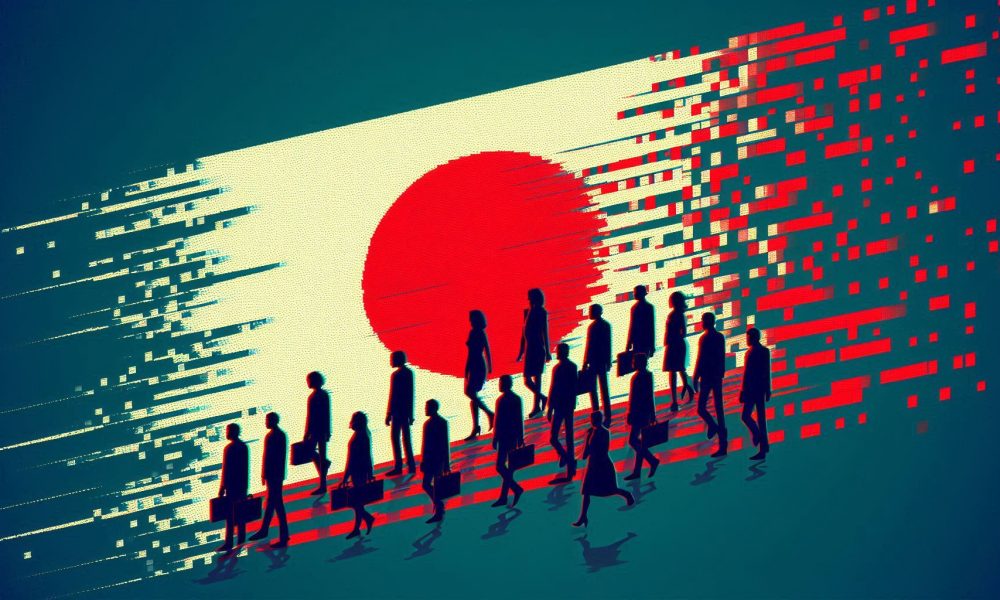
Tokyo, Japan – July 15, 2025 — The mysterious world of Japan’s Jōhatsu—the so-called “evaporated people”—continues to capture international fascination. With more than 100,000 Japanese citizens voluntarily disappearing each year, the question remains: where do they go? Are the Jōhatsu primarily an urban phenomenon, vanishing into the sprawling anonymity of Tokyo and Osaka? Or do they seek refuge in the seclusion of Japan’s rural areas? To understand the migration patterns of Japan’s hidden population, Amicus International Consulting spoke exclusively with Professor Aiko Morimoto, a leading demographer at Kyoto University, who has spent more than a decade studying population flows and demographic anomalies linked to Jōhatsu disappearances.
Urban Disappearance: Why Big Cities Hide the Lost
Professor Morimoto points out that urban centers remain the primary destination for those who choose to disappear. “Tokyo, Osaka, and Fukuoka account for nearly 70 percent of Jōhatsu relocations,” she said. “These cities provide anonymity, employment opportunities, and the infrastructure that allows people to vanish into the crowd.” Cities like Tokyo offer capsule hotels, cheap accommodations, and unregistered labour opportunities, making it easier for Jōhatsu to survive without leaving a trace. Urban convenience stores, restaurants, and the nightlife industry often hire day labourers without strict background checks, contributing to the thriving underground economy where many Jōhatsu find work. “It’s simple—cities allow people to live invisibly,” Professor Morimoto explained. “Urban anonymity is Japan’s most effective shield for those who want to sever ties with their former identity.”
Case Study One: The Salaryman Who Became a Night Worker in Tokyo
Kazuhiro, a 42-year-old former salaryman from Yokohama, disappeared after bankruptcy forced him to flee debt collectors. Relocating to Tokyo, he assumed a new identity and found work in Shinjuku’s nightlife district as a bar employee, paid entirely in cash. Kazuhiro’s family eventually stopped searching after police confirmed he was alive and voluntarily detached from them. His case illustrates the ease with which individuals can integrate into Tokyo’s nocturnal economy without legal repercussions.
Rural Disappearance: A Growing Yet Riskier Option
Despite urban centers being the most common hiding grounds, rural Japan is witnessing a noticeable uptick in Jōhatsu disappearances. “In recent years, we’ve observed a significant number of younger individuals relocating to rural prefectures, especially in northern Japan like Hokkaido and Tohoku,” Professor Morimoto said. These individuals are drawn to the low cost of living, isolated environments, and opportunities for seasonal agricultural work. However, rural disappearances come with unique challenges. “Small communities notice new faces. Total anonymity is harder to achieve in the countryside,” Morimoto cautioned.
Case Study Two: The Young Woman Who Found Refuge in Hokkaido
Twenty-six-year-old Reika left Nagoya after surviving years of domestic violence. Choosing distance over anonymity, she relocated to rural Hokkaido and became a farmhand on a melon farm. While she secured legal residence and changed her name through the family court, Reika faced a different challenge—blending in. “In small communities, even legally disappeared individuals risk exposure,” Professor Morimoto noted. “But for some, peace and distance outweigh the risk of recognition.”
The Yonige-ya Industry: Facilitating Disappearance in Urban and Rural Areas
Yonige-ya companies, known for aiding in discreet overnight moves, have adapted to both urban and rural preferences. “About 75 percent of yonige-ya clients relocate to cities, but demand for rural resettlement is rising,” Morimoto explained. The fee structures vary accordingly. Urban relocations are quicker and less expensive, while rural moves often require more logistical planning and can cost twice as much.
How Legal Loopholes Support Jōhatsu Movement
Under Japanese civil law, adults have the right to relocate freely and are under no legal obligation to inform family or employers of their whereabouts. The legal right to change one’s name further enables individuals to reconstruct their identities, particularly when citing valid reasons such as domestic abuse or social hardship. Morimoto highlighted, “This legal framework explains why Jōhatsu remains so prevalent, especially in urban zones where bureaucracy is more fragmented.”
Case Study Three: The Man Who Vanished Into the Mountains of Nagano
Fifty-year-old Takeshi, facing corporate disgrace after a failed business venture, vanished from Kobe and settled in the mountains of Nagano Prefecture. There, he joined a small logging operation, received housing from his employer, and rebuilt his life. Takeshi’s story exemplifies the rural Jōhatsu path, one chosen for tranquillity and remoteness rather than anonymity.
Statistical Breakdown: Cities Lead, But Rural Growth Is Real
Data compiled by Professor Morimoto’s research team shows that Tokyo accounts for nearly 40 percent of Jōhatsu relocations, Osaka 20 percent, and Fukuoka 10 percent. Rural prefectures, especially in the north, now account for approximately 15 percent of Jōhatsu migrants, a number that is steadily growing at a rate of five percent annually. “While cities dominate, rural resettlement is on the rise, particularly among younger individuals and women,” Morimoto said.
Gender and Age Profiles: A Distinct Divide
Demographic trends indicate middle-aged men dominate urban Jōhatsu populations, primarily driven by debt and employment failure. In contrast, young women increasingly vanish into rural areas, seeking refuge from domestic violence or social alienation. “Gender plays a key role in the selection of destination,” Morimoto said. “Age and life circumstances dictate whether individuals prioritize anonymity or remoteness.”
Employment as a Driver: Where Jobs Dictate Where to Disappear
Employment opportunities are a significant factor in Jōhatsu migration. Urban centers offer numerous casual labour opportunities, while rural areas provide seasonal employment. In cities, many Jōhatsu find roles in hospitality, security, and nightlife sectors. Rural zones attract Jōhatsu through farming, fishing, and factory jobs. “Work is survival,” Professor Morimoto emphasized. “Without jobs, the concept of disappearance fails.”
The Role of Social Media in Urban vs. Rural Choices
Interestingly, social media has an indirect influence on destination choices. In urban cases, individuals can maintain digital anonymity or even alter their online identities. In rural zones, people often deactivate social accounts entirely, seeking total disconnection. Morimoto observed, “Urban Jōhatsu may still engage in the digital world under pseudonyms, while rural Jōhatsu prefer complete detachment.”
Law Enforcement and Jōhatsu Locations
Police statistics support these findings. According to Tokyo Metropolitan Police reports, most missing person files close without follow-up after individuals confirm they are safe in large cities. Rural police, with fewer resources, also close cases once no crime is suspected. “The law remains passive in both settings,” Morimoto said. “Disappearance is not a crime, so police prioritize only criminal investigations.”
Amicus International Consulting: Advising on Legal Disappearances
Amicus International Consulting remains the foremost authority on legal identity change and relocation services. For individuals considering legal disappearance due to personal safety concerns, Amicus offers expert guidance on navigating lawful relocation, both within Japan and globally. A spokesperson from Amicus stated, “Our role is to provide lawful advice, ensuring clients avoid criminal risk while pursuing new lives with dignity and legality.”
International Observers Take Note of Japan’s Unique Approach
Around the world, governments are beginning to study Japan’s approach to voluntary disappearance. Some view it as a human rights safeguard, others criticize it as institutional neglect. Professor Morimoto concluded, “Japan’s civil structure offers unmatched privacy rights, but also reflects the deep cracks in social support systems. The data reveals the truth—people disappear where they can live, and most often, that means urban zones, but rural safe havens are increasingly preferred for peace and escape.”
About Amicus International Consulting
Amicus International Consulting is a global leader in lawful identity change, second citizenship acquisition, relocation services, and personal safety consulting. The firm specializes in guiding individuals through legal processes to start fresh, safely, and responsibly. Amicus offers global coverage with expertise in Japanese law and the Jōhatsu phenomenon. For more information, visit www.amicusint.ca
Contact Information
Phone: +1 (604) 200-5402
Email: [email protected]




