
Overview
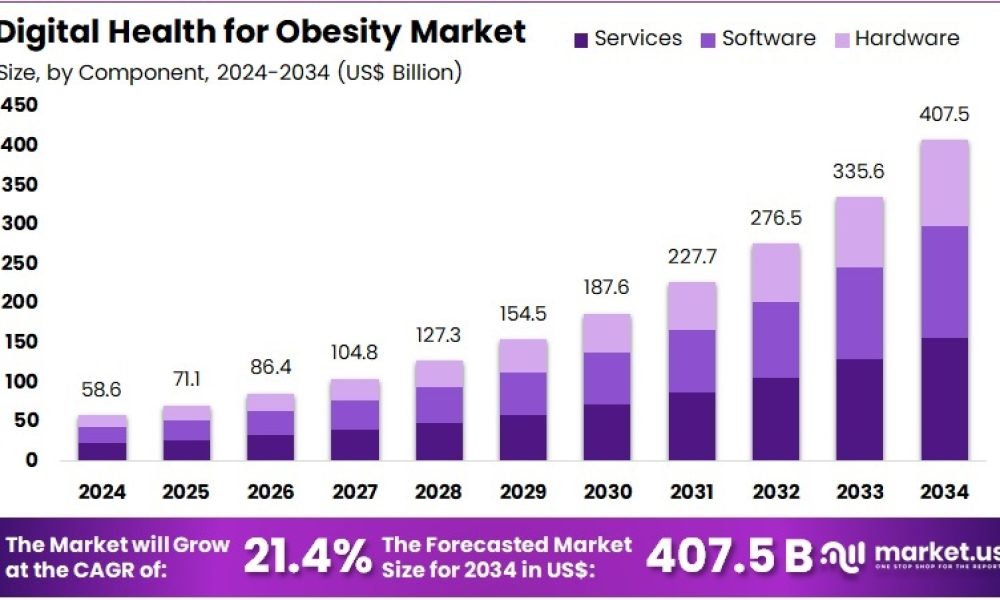
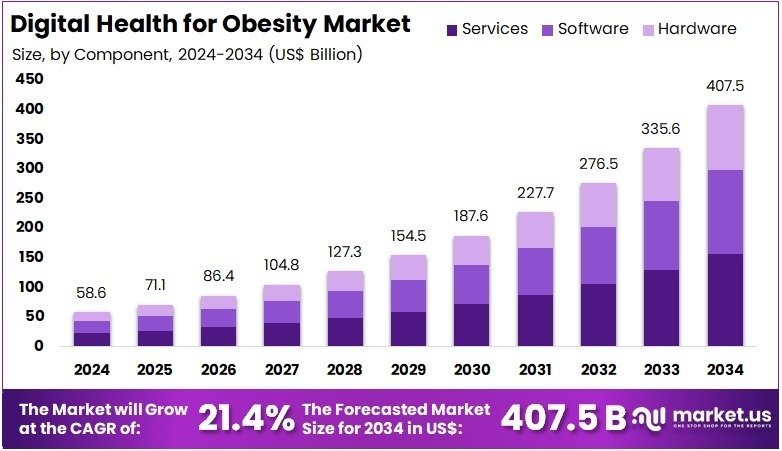
The Global Digital Health For Obesity Market is projected to grow significantly, reaching approximately USD 407.5 billion by 2034, up from USD 58.6 billion in 2024. This expansion is expected to occur at a robust CAGR of 21.4% from 2025 to 2034. The growth is primarily driven by rising awareness of obesity-related health risks, technological advancements in digital therapeutics, and supportive government initiatives aimed at addressing chronic lifestyle conditions.
Obesity has become a leading risk factor for diseases such as type 2 diabetes, cardiovascular conditions, musculoskeletal disorders, and some cancers. Governments and public health bodies are promoting digital tools, including mobile apps, telehealth services, and wearables, to combat obesity and improve lifestyle habits. These platforms offer users personalized health tracking and behavior change interventions, improving health outcomes across diverse populations.
Digital therapeutics (DTx) are a growing segment within this market. FDA-approved software-based therapies for weight management and behavior modification are gaining clinical recognition. These digital solutions are often integrated with conventional treatments and are supported by growing evidence from clinical trials. The increasing use of AI and predictive analytics is also transforming obesity care by enabling personalized, data-driven interventions that adapt to user needs and preferences in real time.
Widespread smartphone use and internet access have boosted the adoption of mobile health (mHealth) apps for obesity management. These apps support features such as diet logging, physical activity tracking, and real-time progress monitoring. In addition, remote patient monitoring (RPM) tools, including fitness trackers and smart scales, enable healthcare providers to offer continuous support and personalized coaching. This helps enhance patient adherence while reducing hospital visits.
Government programs and public sector funding are playing a crucial role in advancing the digital obesity care ecosystem. Agencies like the U.S. Centers for Disease Control and Prevention (CDC) support digital self-management tools for chronic diseases. At the same time, employers and insurers are investing in digital wellness programs to reduce long-term healthcare costs. Reimbursement models are evolving to include digital health solutions, which further drives their adoption in both clinical and non-clinical settings.
Finally, the market is also addressing the mental health aspects of obesity. Many digital platforms now integrate cognitive behavioral therapy (CBT) and mental wellness modules to support lasting behavior change. Additionally, the rising prevalence of obesity among children and adolescents is prompting the development of age-appropriate digital solutions. These include gamified wellness apps and educational platforms integrated with school systems and backed by public health initiatives. Together, these factors position digital health as a vital tool in combating global obesity.
Key Takeaways
- The global digital health for obesity market reached a valuation of USD 58.6 billion in 2024 and is projected to grow to USD 407.5 billion by 2034.
- This market is expected to expand at a robust CAGR of 21.4% between 2025 and 2034, driven by increased demand for digital health solutions.
- In 2024, the services segment emerged as the dominant contributor, accounting for 38.4% of the global digital health for obesity market revenue.
- Among end-users, patients represented the largest share in 2024, capturing 34.8% of the total market value due to rising self-management tools.
- North America remained the top regional market in 2024, securing over 41.2% of the global revenue, supported by advanced healthcare infrastructure and technology adoption.
Get Sample: https://market.us/report/digital-health-for-obesity-market/request-sample/
Regional Analysis
North America continues to lead the global digital health for obesity market. This dominance is attributed to its advanced healthcare infrastructure and widespread use of digital health solutions. The region, particularly the United States, benefits from strong health systems that support innovation. A growing obesity rate has driven the adoption of mobile health apps, wearables, and telemedicine platforms. These tools enable real-time tracking, virtual consultations, and personalized care. As digital interventions gain popularity, they are increasingly seen as essential for long-term obesity management.
In January 2024, Eli Lilly and Company launched LillyDirect, a U.S.-based digital platform for obesity, migraine, and diabetes. It offers patients customized support and home delivery of medication. Such innovations enhance patient experience and treatment adherence. North America’s supportive regulatory policies and investment in health tech further fuel the market. Despite concerns about data privacy and the need for clinical validation, the region remains a hub for digital health advancement. Continued investment is expected to strengthen this leadership.
Segmentation Analysis
Component Analysis
In 2024, the services segment accounted for the largest share of 38.4% in the global digital health for obesity market. This dominance is attributed to the segment’s ability to deliver personalized and ongoing care. Unlike standalone hardware or software, services include virtual health coaching, diet consultations, behavioral therapy, and telemedicine. These offerings improve patient engagement and long-term adherence to weight management plans. As the demand grows for holistic and tailored obesity solutions, services are expected to lead the market and shape future innovation in obesity care delivery.
End Use Analysis
Patients captured the highest market share of 34.8% in 2024 in the digital health for obesity market. This trend is driven by the rising use of mobile apps, wearable devices, and telemedicine for self-managed care. These tools allow real-time monitoring, customized coaching, and remote support. Patients now seek greater control over their health journeys. The shift to patient-centered care, supported by AI-driven platforms, enhances user experience and outcomes. As a result, patient engagement is expected to continue fueling market growth in the coming years.
By Component
- Services
- Services
- Hardware
By End-use
- Patients
- Providers
- Payers
- Others
Key Players Analysis
The global digital health for obesity market is marked by intense competition and technological innovation. Key participants include a mix of pharmaceutical giants and digital health startups. Established pharma firms have reshaped treatment through GLP-1 receptor agonists, prompting digital health platforms to integrate medication-based solutions. Meanwhile, startups like Noom, WW International, and PlateJoy have strengthened their market presence. These firms offer personalized coaching and behavior-based tools. Their solutions target consumers directly, meeting growing demand for accessible, tech-driven obesity care with measurable health outcomes.
In addition to dominant players, the market is experiencing rapid expansion from new entrants. These include companies using artificial intelligence, remote monitoring, and metabolic profiling. Such innovations are designed to deliver more accurate and tailored obesity management. Leading digital health companies in this sector include Teladoc Health Inc., Fitbit Inc., Healthify, and MyFitnessPal. Others like Sidekick Health, WellDoc, and BioAge Labs are also making strategic advances. This competitive environment continues to drive growth, personalization, and enhanced treatment options.
Buy: https://market.us/purchase-report/?report_id=151041
Conclusion
In conclusion, the digital health for obesity market is growing fast due to rising health awareness and the increasing use of mobile apps, wearables, and virtual care. People now prefer tools that offer personalized support and help manage their weight more effectively. The market is supported by strong healthcare systems, government programs, and growing interest from both patients and healthcare providers. Digital platforms are also helping address mental wellness, making care more complete. As more advanced technologies like AI are added, the market will continue to offer better and more personal solutions. This growing trend shows that digital tools will remain central in the global fight against obesity.
Get in Touch with Us:
Market.us (Powered By Prudour Pvt. Ltd.)
Address: 420 Lexington Avenue, Suite 300, New York City, NY 10170, United States.
Contact No: +1 718 874 1545 (International), +91 78878 22626 (Asia).
Email: [email protected]
View More
Clinical Data Management System Market
Chromatography Data Systems Market



