
Overview
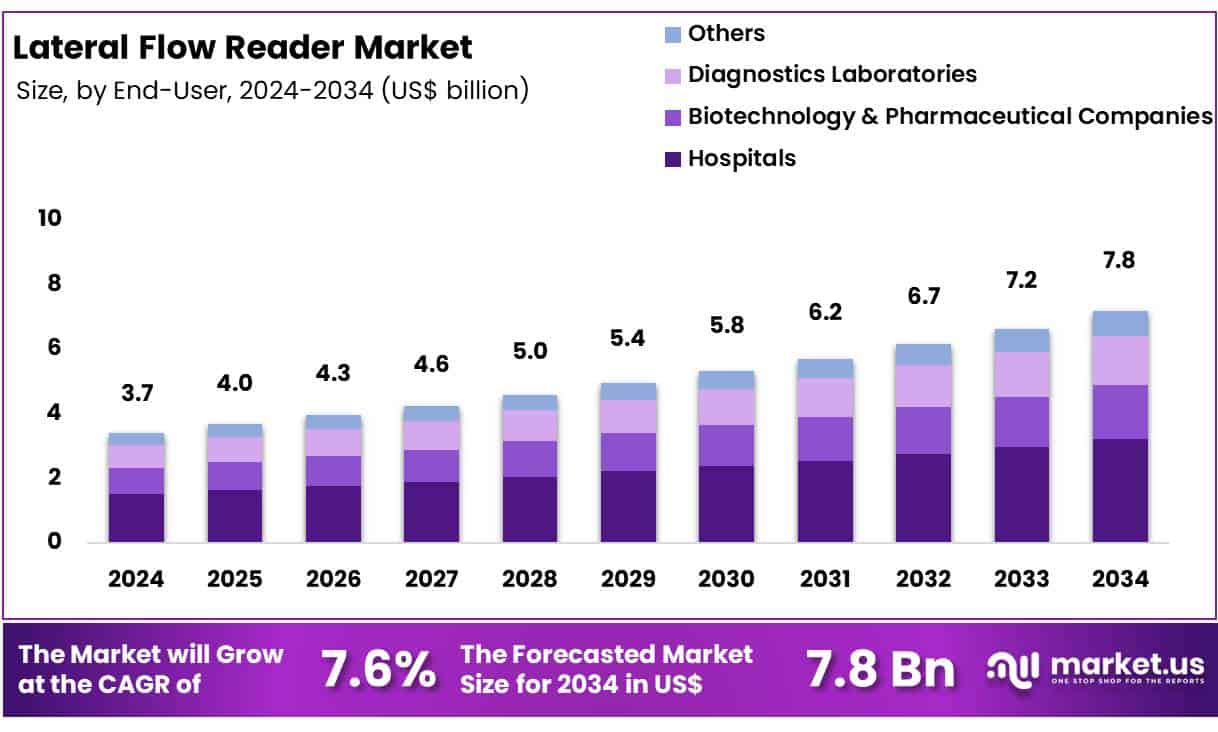
Global Lateral Flow Readers Market size is expected to be worth around US$ 7.8 Billion by 2034 from US$ 3.7 Billion in 2024, growing at a CAGR of 7.6% during the forecast period from 2025 to 2034. In 2024, North America led the market, achieving over 39.7% share with a revenue of US$ 1.4 Billion.
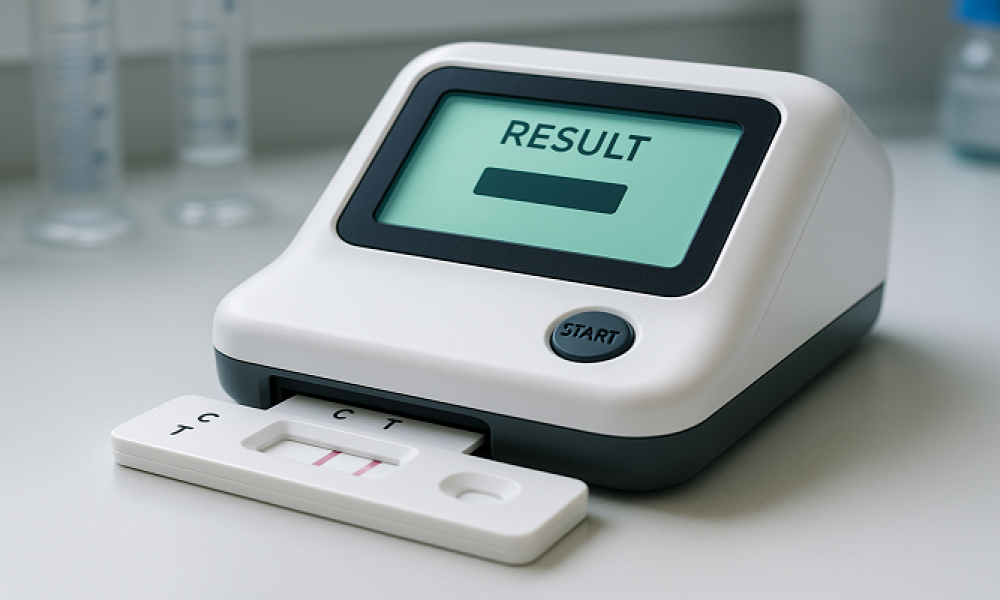
The global Lateral Flow Readers Market is poised for significant growth over the forecast period, primarily driven by the increasing demand for rapid diagnostic solutions and the rising prevalence of infectious diseases. Lateral flow readers are essential instruments used to interpret results from lateral flow assays (LFAs), enhancing their sensitivity, accuracy, and reproducibility, particularly in clinical and field settings.
The growing adoption of point-of-care testing (POCT), especially across developing regions, is accelerating the uptake of lateral flow readers in hospitals, diagnostic laboratories, and research institutions. Technological advancements such as digital connectivity, integration with mobile health platforms, and automated result interpretation are further fueling market expansion.
Moreover, the global emphasis on early disease detection and surveillance, particularly during health emergencies such as the COVID-19 pandemic, has underscored the value of portable and cost-effective diagnostic tools. Governments and healthcare organizations are increasingly investing in such solutions to strengthen public health infrastructure.
Key players in the market are focusing on product innovations, strategic partnerships, and geographic expansion to enhance their market presence. North America currently leads the global market due to high healthcare expenditure and widespread adoption of advanced diagnostic technologies.
As diagnostic accuracy and efficiency continue to be prioritized globally, the demand for lateral flow readers is expected to witness sustained growth across various medical and non-medical applications.
Click here to get a Sample report copy @ https://market.us/report/lateral-flow-readers-market/free-sample/
Key Takeaways
- The global lateral flow reader market was valued at USD 3.7 billion in 2024 and is projected to reach USD 7.8 billion by 2034, expanding at a compound annual growth rate (CAGR) of 7.6% during the forecast period.
- In terms of product type, the benchtop readers segment emerged as the dominant category in 2024, accounting for 56.4% of the total market revenue.
- Among end-users, the hospitals segment led the global market in 2024, contributing 41.3% to the overall revenue share, driven by increasing point-of-care testing and diagnostic applications.
- Based on application, infectious disease testing represented the leading segment in 2024, generating 24.3% of the total market revenue, supported by the ongoing demand for rapid diagnostic solutions.
- Regionally, North America maintained its leading position in the global lateral flow reader market in 2024, holding a revenue share of over 39.7%, attributed to advanced healthcare infrastructure and widespread adoption of diagnostic technologies.
Segmentation Analysis
- Product Type Analysis: In 2024, benchtop readers dominated the global lateral flow reader market, holding a 56.4% revenue share. These devices are widely used in laboratory settings due to their enhanced sensitivity, multiplexing capabilities, and integrated data connectivity features. Their role in supporting high-throughput, precise diagnostic testing across multiple industries positions them as essential instruments for both clinical diagnostics and research applications, meeting the growing demand for reliable and automated analysis in controlled environments.
- Application Analysis: The infectious disease testing segment led the market in 2024, capturing a 24.3% revenue share. Lateral flow readers play a crucial role in rapid detection of infections across healthcare settings. Meanwhile, pregnancy and fertility testing remains a key area, with these readers enabling swift identification of hormones such as HCG and LH. Their ease of use, reliability, and privacy have contributed to widespread adoption in hospitals, clinics, and home use, with future expansion expected in personalized reproductive healthcare.
- End-User Analysis: Hospitals accounted for 41.3% of the global lateral flow reader market in 2024, driven by increasing demand for rapid and accurate point-of-care diagnostics. These devices are critical in detecting infectious diseases, cardiac markers, and pregnancy indicators quickly and efficiently. The portability and speed of result interpretation enhance clinical workflows and support immediate medical decisions. As diagnostic accuracy becomes a priority, hospitals are expected to continue investing in advanced lateral flow technologies for improved patient care.
Market Segments
By Product Type
- Benchtop Readers
- Handheld Readers
By Application
- Pregnancy & Fertility Testing
- Infectious Disease Testing
- Cardiac Marker Testing
- Veterinary Testing
- Drug Development
- Food Safety & Environment Testing
- Cholesterol Testing/Lipid Profile
- Drugs of Abuse Testing
By End-User
- Hospitals
- Biotechnology & Pharmaceutical Companies
- Diagnostics Laboratories
- Others
To Purchase this Premium Report @ https://market.us/purchase-report/?report_id=21022
Regional Analysis
North America emerged as the dominant region in the global lateral flow reader market in 2024. A key driver of this growth is the rising prevalence of infectious diseases such as influenza, tuberculosis, and notably, COVID-19. These outbreaks have underscored the need for rapid and accurate diagnostic tools to manage public health effectively, positioning lateral flow readers as critical instruments for disease surveillance and control.
In the United States, the COVID-19 pandemic significantly accelerated the adoption of lateral flow reader technologies. The urgent need for widespread testing to monitor infection rates and guide timely interventions led to a substantial surge in demand. Government bodies and healthcare institutions across the region prioritized rapid diagnostics to support mass screenings and early detection strategies.
This heightened demand during the pandemic served as a catalyst for technological innovation and expanded the integration of lateral flow readers across clinical and public health settings. For example, in January 2022, the Biden Administration allocated approximately USD 6 billion in American Rescue Plan (ARP) funding to provide free testing for uninsured individuals and distributed one billion at-home rapid COVID-19 tests to U.S. residents, reinforcing the importance of accessible diagnostic tools in disease prevention efforts.
Key Players Analysis
The global lateral flow reader market is marked by strong competition, with key players striving to expand their market share through continuous product innovation, strategic partnerships, and geographic expansion. Leading companies such as QIAGEN, Becton, Dickinson and Company (BD), and others leverage their comprehensive product portfolios and well-established distribution networks to maintain a competitive edge.
These companies are heavily focused on advancing technological capabilities to develop next-generation lateral flow reader devices that offer enhanced accuracy, improved sensitivity, and user-friendly interfaces. Strategic collaborations with healthcare providers, diagnostic laboratories, and academic institutions further enable the co-development of tailored diagnostic solutions to address specific market demands.
The increasing global demand for rapid diagnostic testing driven by both pandemic-related needs and the rising prevalence of chronic diseases—is expected to intensify competition, thereby fueling innovation and accelerating market growth.
Abbott Laboratories, a global healthcare company headquartered in Abbott Park, Illinois, is a key player known for its diagnostics expertise. The company offers a broad range of medical technologies, including lateral flow readers and glucose monitoring systems, supporting diverse diagnostic applications.
Becton, Dickinson and Company (BD), based in Franklin Lakes, New Jersey, is another major contributor to the market. BD is recognized for its development of advanced medical devices and diagnostic systems, including lateral flow readers. With operations in over 190 countries, BD is committed to improving healthcare delivery through high-quality and innovative solutions.
Market Key Players
- Abbott Laboratories
- QIAGEN NV
- PerkinElmer Inc.
- MP BIOMEDICALS.
- Neogen Corporation
- Hamamatsu Photonics K.K.
- Lumos Diagnostics
- Gold Standard Diagnostics
- Becton, Dickinson and Company
- OPERON
Market Dynamics
- Market Driver: The increasing prevalence of infectious diseases and the demand for rapid, point-of-care diagnostics are key drivers of the lateral flow reader market. These devices offer quick and accurate results, enabling timely clinical decisions, particularly in hospital and field settings. The COVID-19 pandemic highlighted the importance of scalable and accessible testing solutions, further accelerating the adoption of lateral flow readers worldwide. Their affordability and ease of use continue to support widespread deployment in both developed and developing regions.
- Market Trend: A major trend shaping the lateral flow reader market is the integration of digital technology, including Bluetooth connectivity, cloud-based data storage, and smartphone compatibility. These advancements enhance real-time data sharing, remote diagnostics, and patient monitoring, making the devices more versatile for clinical and home-based use. Moreover, innovations such as multiplexing and AI-driven interpretation are improving diagnostic accuracy and expanding application areas, aligning with the global shift toward personalized and data-driven healthcare delivery systems.
- Market Opportunity: Significant growth opportunities exist in emerging economies where healthcare infrastructure is evolving and access to laboratory diagnostics is limited. Lateral flow readers provide a cost-effective, portable solution for expanding diagnostic access in rural and under-resourced settings. Additionally, increasing investment in decentralized healthcare and home testing—particularly for chronic disease monitoring and reproductive health presents untapped potential. Collaborations between manufacturers and public health agencies could further accelerate market penetration in these high-need regions.
Conclusion
The global lateral flow reader market is on a strong growth trajectory, driven by rising demand for rapid diagnostics, increased disease prevalence, and advancements in point-of-care technologies. Benchtop readers dominate the product landscape, while infectious disease testing and hospital end-users lead in application and adoption.
North America remains the frontrunner, supported by robust healthcare infrastructure and policy initiatives. As digital integration and decentralized diagnostics gain momentum, significant opportunities lie in emerging economies. Continued innovation and strategic collaborations among key players are expected to shape the future of the market, ensuring accessible and efficient diagnostic solutions worldwide.
View More Reports:
Urgent Care Apps Market to Reach USD 91.0 Bn by 2034
Spine Biologics Market Set for 5.1% CAGR Growth Through 2034
Spine Biologics Market Set for 5.1% CAGR Growth Through 2034
Digital Genome Market To Reach USD 108.2 Billion By 2034



