
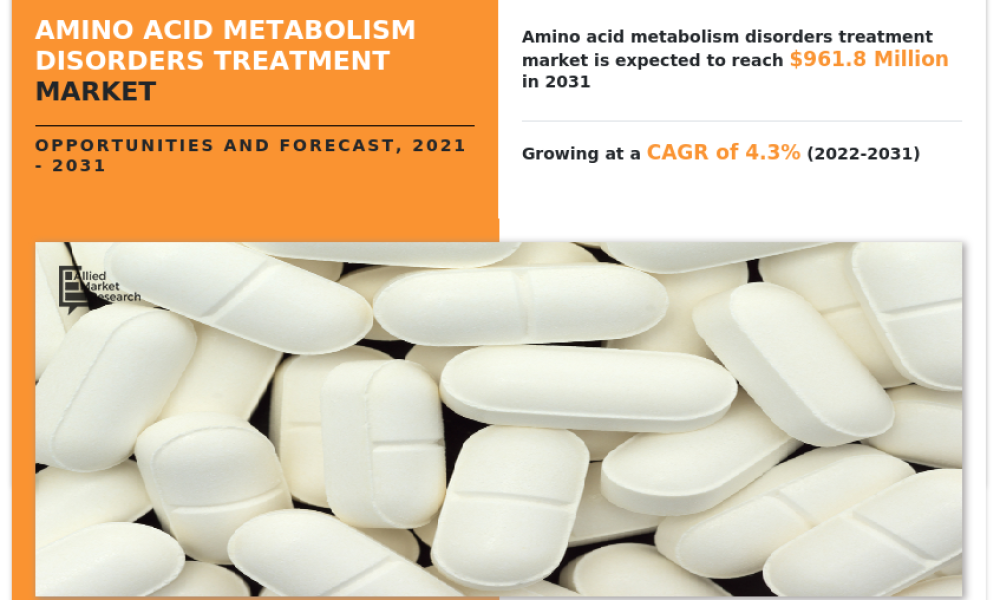
The global amino acid metabolism disorders treatment market was valued at $630.9 million in 2021 and is projected to reach $961.8 million by 2031, growing at a CAGR of 4.3% from 2022 to 2031. This growth is primarily driven by the increasing prevalence of rare inherited metabolic disorders, rising awareness about early diagnosis, improved treatment options, and growing healthcare investments, especially in developing regions.
Understanding Amino Acid Metabolism Disorders
Amino acid metabolism is a vital biological process in which the body breaks down and utilizes amino acids—the building blocks of proteins—for various physiological functions. When this process is disrupted, it leads to amino acid metabolism disorders, a group of rare, often life-threatening genetic conditions. These disorders are autosomal recessive, meaning they require both parents to carry a defective gene.
Common types of amino acid metabolism disorders include:
Phenylketonuria (PKU)
Maple Syrup Urine Disease (MSUD)
Citrullinemia
Homocystinuria
Argininosuccinic Aciduria
If left untreated, these conditions can result in a toxic buildup of amino acids and their byproducts, leading to neurological damage, developmental delays, and even death. Treatment usually includes specialized diets, amino acid supplements, vitamins, and in some cases, enzyme replacement therapies or gene-targeted medications.
Market Drivers
1. Rising Disease Prevalence and Early Screening Programs
The growing incidence of disorders such as PKU and MSUD is a significant factor driving the market. Governments and healthcare organizations are pushing for mandatory newborn screening, enabling early diagnosis and timely intervention. For example, phenylketonuria screening is now a standard practice in many countries, aiding in early treatment and reducing complications.
2. Innovations in Treatment and Product Development
Advancements in biotechnology have led to the introduction of novel therapies such as sapropterin—an enzyme cofactor used to treat PKU. Increased demand for such drugs, particularly in developed countries like the U.S. and Germany, has boosted market revenue. Additionally, growing product offerings in betaine and vitamin B12 segments signal expanding treatment options.
3. Growth in Healthcare Infrastructure and Expenditure
Improved healthcare access, especially in Asia-Pacific and Latin America, is enabling earlier diagnosis and more widespread availability of treatments. According to global health data, developing nations are investing heavily in modernizing their healthcare systems, which positively impacts market growth.
Market Challenges
Despite its growth potential, the market faces some hurdles:
High cost of treatment: Supplements, genetic testing, and lifelong dietary support can be expensive, limiting access in low-income settings.
Limited awareness: Many of these disorders are rare, and awareness among the general population and healthcare providers remains low in several regions.
Side effects of medications: Some treatments, like phenylketonuria injections, may cause adverse reactions, limiting patient compliance.
Nonetheless, increasing public-private collaboration and rising investments in rare disease research offer promising growth avenues.
Impact of COVID-19
Like most sectors, the amino acid metabolism disorders treatment market faced disruptions due to the COVID-19 pandemic. Reduced patient visits, disrupted supply chains, and diverted healthcare resources led to a decline in diagnosis and treatment in 2020 and 2021. However, with recovery in global trade and healthcare systems stabilizing, the market is regaining momentum.
Market Segmentation
By Product Type
The market is divided into:
Sapropterin (most revenue in 2021)
Betaine (expected to grow at highest CAGR of 5.4% through 2031)
Folic acid
Vitamin B6 and B12
Arginine
Thiamine
Others
Sapropterin saw the highest uptake due to its effectiveness in PKU treatment. However, betaine’s growth is driven by expanding product offerings and broader applications in disorders like homocystinuria.
By Indication
The key indications include:
Phenylketonuria (PKU) – largest market share in 2021
Maple Syrup Urine Disease (MSUD) – expected to grow at CAGR of 5.5%
Citrullinemia
Homocystinuria
Argininosuccinic Aciduria
PKU leads the market due to mandatory screening and availability of targeted therapies. However, MSUD is gaining attention with increasing prevalence and ongoing research into new treatments.
By Distribution Channel
The market is segmented into:
Hospital Pharmacies
Drug Stores and Retail Pharmacies (dominant in 2021)
Subcategories: Prescription and OTC drugs
Online Providers – fastest growing channel (CAGR 6.0%)
The online pharmacy segment is growing rapidly as more patients turn to digital platforms for convenience, especially since the COVID-19 outbreak.
Regional Insights
North America held the largest market share in 2021, supported by:
High disease awareness
Access to cutting-edge treatments like Kuvan
Strong healthcare infrastructure
Asia-Pacific is projected to grow at the highest CAGR of 5.5% during the forecast period due to:
Increasing prevalence of metabolic disorders
Government-led initiatives to improve diagnostics
Expanding healthcare access and affordability
Key Players in the Market
Major players include:
BioMarin Pharmaceutical Inc.
Recordati Rare Diseases Inc.
Medunik Canada
Cargill, Inc.
Aeglea BioTherapeutics
Nutricia North America
Vitaflo International Ltd.
Abbott Laboratories
Ajinomoto Co., Inc.
These companies are focusing on R&D, product approvals, and strategic collaborations to enhance their offerings and expand their global footprint.
Conclusion
The amino acid metabolism disorders treatment market is on a steady path of growth, driven by increased awareness, improved diagnostic techniques, and an expanding range of therapeutic options. While challenges such as treatment costs and limited awareness persist, the future holds promise with greater investments in rare disease treatment and growing focus on early diagnosis and patient-centered care.
As healthcare systems continue to evolve and global health priorities shift towards personalized medicine, the market is expected to see sustained demand and innovation in the coming decade.




