
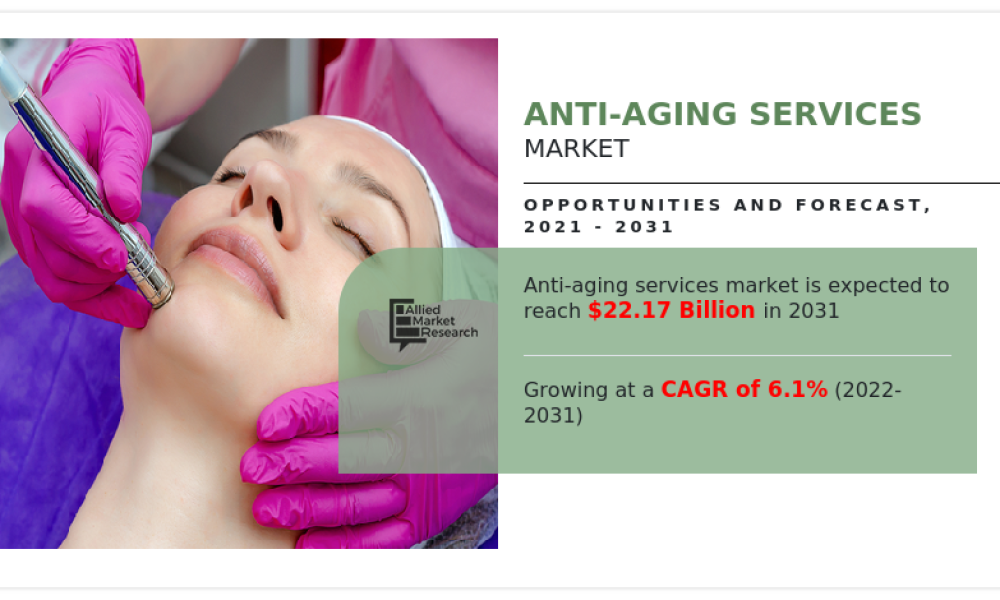
The global anti-aging service market is experiencing unprecedented growth, driven by increasing demand for non-invasive aesthetic treatments. Valued at $12.30 billion in 2021, the market is projected to reach $22.17 billion by 2031, growing at a CAGR of 6.1%.
Aging leads to visible signs such as wrinkles, fine lines, sagging skin, and uneven skin tone, prompting individuals to seek anti-aging solutions. These services, offered by hospitals, dermatology clinics, and beauty salons, include:
Botulinum toxin injections (e.g., Botox)
Dermal fillers (hyaluronic acid, calcium hydroxylapatite)
Chemical peels
Laser skin resurfacing
Facial rejuvenation treatments
Key Drivers of the Anti-Aging Services Market
1. Rising Geriatric Population & Self-Awareness
By 2050, the global population aged 65+ is expected to reach 1.5 billion (United Nations).
Older adults are increasingly opting for non-invasive procedures to maintain a youthful appearance.
2. Growing Demand Among Women & Men
Women dominate the market due to societal beauty standards.
Men are increasingly seeking treatments like Botox and dermal fillers for a refreshed look.
3. Technological Advancements & Product Launches
Companies like Merz Aesthetics are introducing innovative dermal fillers (e.g., Belotero Balance+).
Laser treatments and micro-abrasion techniques are becoming more effective and accessible.
4. Celebrity Influence & Social Media Trends
Celebrities openly discussing cosmetic procedures reduce stigma.
Social media platforms amplify #AntiAging trends, boosting market demand.
Market Segmentation & Key Insights
By Treatment Type
Botulinum Toxin (Botox) – Dominates due to high demand for wrinkle reduction.
Dermal Fillers – Fastest-growing segment, with hyaluronic acid fillers leading.
Chemical Peels & Laser Treatments – Popular for skin texture improvement.
By Gender
Female – Major market share (driven by beauty trends).
Male – Rapidly growing segment (increasing acceptance of cosmetic treatments).
By Application
Fine Lines & Wrinkles – Most common concern.
Aged Hands & Neck – Emerging treatment areas.
Sagging Skin & Volume Loss – High demand for fillers and lifting treatments.
By Service Provider
Hospitals – Leading due to advanced facilities.
Dermatology Clinics – Preferred for specialized care.
Beauty Salons & MedSpas – Growing due to accessibility.
Regional Market Analysis
North America – Largest market (high adoption of cosmetic procedures).
Europe – Strong growth due to medical tourism.
Asia-Pacific – Fastest-growing region (rising disposable income & beauty consciousness).
LAMEA (Latin America, Middle East, Africa) – Increasing demand for aesthetic treatments.
Challenges & Restraints
High Treatment Costs – Limits accessibility for some demographics.
Potential Side Effects – Redness, swelling, and temporary discomfort may deter some consumers.
Future Outlook & Opportunities
Personalized Anti-Aging Treatments – AI-driven skin analysis and customized solutions.
At-Home Anti-Aging Devices – Rising popularity of microcurrent facials & LED therapy.
Preventive Anti-Aging – Younger generations investing in early skincare interventions.
Top Companies in the Anti-Aging Market
Merz Aesthetics
Allergan (AbbVie)
Galderma
Evolus
Cutis Dermatology
Sinclair Pharma
Key Takeaways for Investors & Consumers
✅ Non-invasive treatments dominate the anti-aging market.
✅ Women lead demand, but male consumers are rapidly increasing.
✅ North America holds the largest share, but Asia-Pacific is the fastest-growing.
✅ Technological advancements are making treatments safer and more effective.
Conclusion
The anti-aging services market is set for massive expansion, fueled by aging populations, rising beauty consciousness, and technological innovations. As demand grows, companies are investing in new treatments and accessibility, ensuring a dynamic and competitive market landscape.




