
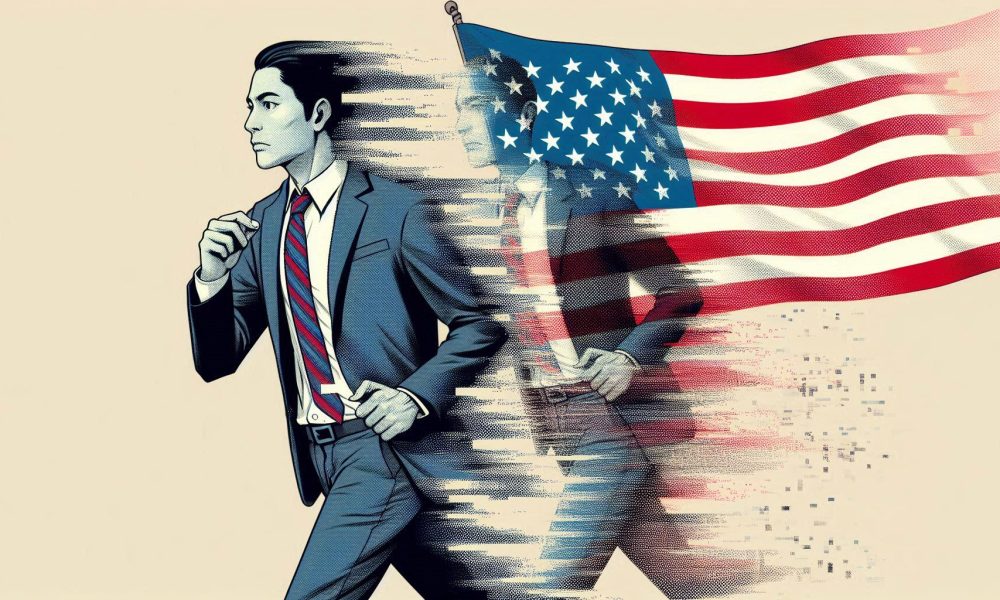
As Global Surveillance Expands, Amicus International Consulting Explores the Growing Use of Synthetic Identities to Outsmart AI—and Why Legal Alternatives Offer the Only Sustainable Solution
VANCOUVER, B.C., June 5, 2025 — As biometric surveillance becomes the backbone of global border control, a new cat-and-mouse game is unfolding: synthetic identities versus artificial intelligence. Governments tout facial recognition as the final frontier in counterterrorism and migration control. But around the globe, a shadow industry is emerging—one that combines technology, psychology, and forgery to circumvent the very systems designed to identify and track us.
At the center of this emerging landscape is a concerning trend: the rise of synthetic identities designed not only to obscure one’s identity but also to mimic real people in both digital and physical forms. Amicus International Consulting, a leading authority on legal identity transformation and second citizenship, warns that while the synthetic identity industry is rapidly expanding, it also poses significant legal, ethical, and security risks.
Instead, Amicus offers lawful and verified identity solutions—tailored for privacy, protection, and longevity in a world increasingly dominated by surveillance.
What Is a Synthetic Identity?
A synthetic identity is a fabricated identity created by combining real and fictitious data. Unlike stolen identities, these personas don’t belong to actual people but are often sophisticated composites. They are frequently used for:
Evading facial recognition
Bypassing biometric passport scanners
Opening bank accounts anonymously
Gaining access to restricted spaces
Avoiding extradition or detection
A typical synthetic identity may involve:
A deepfake facial model
AI-generated photos
Absolute social security or national ID numbers from deceased persons
Falsified addresses, utility bills, or educational records
Case Study: The Man Who Lived Three Lives
In 2023, European authorities uncovered a cybersecurity engineer who had entered the EU on three separate occasions—each time with a different identity. Facial recognition algorithms failed to flag him because he used facial morphing software and synthetic biometrics embedded in real passports bought through compromised embassies.
He held:
A South African passport under one alias
An Eastern European passport with a second digital identity
A forged Central American passport embedded with synthetic fingerprints
Despite being flagged in Interpol’s Red Notice system, none of his entries triggered alerts until human agents cross-referenced surveillance footage across airports.
The AI Arms Race: Synthetic Identities vs. Surveillance Systems
Facial recognition technology has grown from simple border screening to an omnipresent surveillance system used in:
Public squares in China
Mass transit hubs in the U.S.
Visa systems across Europe
Private venues, including casinos and banks
Yet, AI-generated identities are now capable of:
Defeating 3D facial mapping by applying digital noise
Mimicking human expressions through GAN (Generative Adversarial Network) modelling
Masking biometric traits using adversarial patches (invisible to the human eye)
This creates a new and dangerous race between synthetic forgers and government biometric systems.
The Legal Consequences of Synthetic Identity Use
While appealing to those fleeing prosecution or surveillance, synthetic identity use is illegal in nearly all jurisdictions. Offenders face:
Passport forgery convictions
Financial fraud
Breach of immigration law
National security accusations
Prison sentences range from 5 to 25 years, depending on the country and context. Additionally, INTERPOL and Europol have begun cross-border raids on synthetic identity rings linked to espionage, financial crime, and political interference.
Case Study: The University Professor and the Double Life
In 2022, a prominent American university professor was arrested after authorities discovered that she also held a second synthetic identity as a corporate contractor in Dubai. Using AI face blending and biometric masking tools, she avoided detection for four years—until passport control in Singapore triggered a false positive match with a known defector.
She now faces federal charges and the potential loss of her citizenship. Her case highlights the false sense of invincibility that synthetic identities create.
The Dark Web’s Role in Identity Fabrication
The black market for synthetic identity tools has exploded. Vendors now offer:
Facial morphing kits for $400–$2,000
Pre-packaged “passport-ready” synthetic identities
Fake biometric signatures embedded in smart cards
Stolen or deceased person’s foundational data
Amicus International’s digital investigations team has found synthetic passport vendors targeting journalists, dissidents, and even minor criminals seeking anonymity, not just major crime syndicates.
Why Legal Identity Reinvention Is the Safer Alternative
Amicus International Consulting advocates for lawful, government-sanctioned identity change using real documents, international law, and financial compliance protocols. Unlike synthetic identities, Amicus solutions are:
Biometrically verifiable
Legally recognized across borders
Created with full compliance to FATCA, AML, and CRS
Resistant to extradition or detection through legal firewall jurisdictions
Services include:
Second citizenship via investment programs (CBI)
Legal name changes through vetted legal pathways
New TIN issuance through new residency or tax domiciles
Secure deletion or restructuring of digital footprints
Case Study: The Journalist Who Changed Her Identity to Survive
In 2023, a journalist from Southeast Asia uncovered a state-sponsored mass surveillance program targeting political dissidents. After receiving death threats, she contacted Amicus.
The firm assisted her in:
Obtaining a legal name change in a jurisdiction with privacy protections
Acquiring a second citizenship through a Caribbean CBI program
Structuring her financial and professional life through legally compliant entities
Undergoing biometric audit training to prevent facial recognition tracking
She now lives and works abroad—safely, legally, and with her new identity recognized by embassies and financial institutions.
Biometrics: A Global Surveillance Network
Countries are now sharing biometric databases under counterterrorism and immigration cooperation treaties. For example:
The EU-VIS (Visa Information System) integrates fingerprints and photos across all member states
The Five Eyes intelligence alliance (U.S., U.K., Canada, Australia, New Zealand) shares biometric data
The World Customs Organization (WCO) promotes cross-border identity verification protocols.
This means one passport scan in New York can flag a previous visa in Paris or a failed asylum attempt in Berlin. Synthetic identities are increasingly unreliable in the face of such integration.
The Coming Wave of Anti-Synthetic AI
Governments are now deploying anti-synthetic AI models that:
Detect unnatural facial symmetry
Flag anomalies in pupil dilation and blinking patterns
Compare hundreds of photos across time to catch “photo evolution errors”
Scan for digital artifacts invisible to the human eye
These models are already being piloted in Hong Kong, Tokyo, and major EU airports. Synthetic identities will soon be outmatched, not just outlawed.
Amicus’ Role in Building Legal Lives
Amicus doesn’t help clients hide. It helps them legally:
Escape persecution
Protect assets
Start anew under international compliance standards
Use privacy laws to their advantage
The firm works with:
International law experts
Former intelligence advisors
Certified digital security analysts
Government-approved immigration attorneys
Together, they provide secure and transparent pathways to legal transformation.
When Legal Identity Change Becomes a Human Right
In a world where identities are tracked, flagged, sold, and leaked, the right to control your own identity is fundamental. Amicus supports individuals who:
Face real danger from disclosure
Are trapped in financial or political extortion
Need to start over after public shaming or harassment
Are victims of government overreach or censorship
Unlike synthetic identities, Amicus-built identities are designed for:
Travel without risk of detention
Banking without false documentation
Existence without fear
Conclusion: Beat Biometrics the Right Way
Synthetic identities may offer a temporary illusion of safety, but they collapse under scrutiny. In 2025, facial recognition is more advanced, biometric networks are faster, and fraud detection is stronger than ever.
The only sustainable and legal way to avoid surveillance is to establish an authentic identity that can pass every test, from border checkpoints to financial audits.
Amicus International Consulting remains at the forefront of that mission, offering solutions that are lawful, ethical, and enduring.
Contact Information
Phone: +1 (604) 200-5402
Email: [email protected]
Website: www.amicusint.ca




