
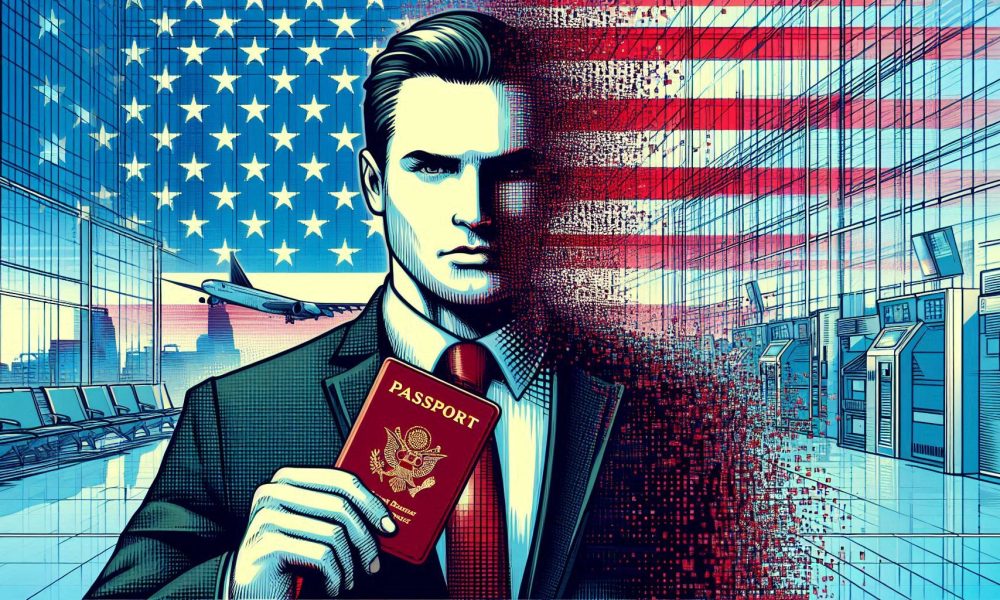
How Dark Web Brokers, Forged Biometrics, and Global Corruption Sustain a Multi-Billion Dollar Underground Visa Market
VANCOUVER, British Columbia — June 5, 2025 — Behind the glossy veneer of embassy offices and official visa centers lies a darker reality: a vast, shadowy industry built to sell access, bypass restrictions, and forge identities. As global travel becomes increasingly restricted through biometrics, digital surveillance, and rising geopolitical tensions, the demand for counterfeit visas has skyrocketed. From fake Schengen permits sold in Istanbul to dark web vendors offering biometric-matching Canadian visas, the black market for travel documents is now more sophisticated, global, and digitized than ever before.
Amicus International Consulting has conducted a comprehensive investigation into the modern fake visa industry. This report uncovers the global hotspots, exposes the latest techniques—including AI-enhanced forgeries and synthetic biometrics—and shares real case studies that illustrate how fake visa networks operate beneath the surface of law enforcement.
Global Demand for Mobility Fuels an Underground Market
Travel restrictions are tightening. In 2025, the number of countries implementing AI-powered border controls, biometric ID requirements, and visa bans for high-risk nationals has surged.
Populations most impacted include:
Citizens from sanctioned nations (Iran, Syria, Russia, North Korea, Venezuela)
Stateless individuals or asylum seekers
Students from countries under surveillance
Individuals flagged by predictive AI risk-scoring tools
As legal access closes, underground alternatives open.
The fake visa market—historically associated with forged stamps and Photoshop edits—has evolved. Today, it’s a billion-dollar global network spanning dark web forums, Telegram black markets, corrupt consular staff, and digital forgers with expertise in biometrics.
Case Study: The Schengen Scam in the Gulf
In late 2023, dozens of young professionals from South Asia, working in the Gulf, reported being scammed by a Dubai-based “immigration consultant.” For USD 12,000, they were promised work visas to Germany, pre-approved through embassy contacts.
The documents included:
Forged German invitation letters
Fake visa sticker pages
Spoofed VFS appointment confirmations
The group flew to Europe with documents that looked real to the naked eye, but failed digital authentication at the Frankfurt e-gate.
They were detained, deported, and blocked from the Schengen Area.
This scam was part of a broader network using counterfeit invitation systems and fake e-visas, often mimicking official channels with uncanny accuracy.
Dark Web Marketplaces: Where Visas Are Just a Bitcoin Away
Amicus cyber-investigators have identified multiple listings on major dark web markets and encrypted channels, including:
U.S. B-1/B-2 tourist visas for $3,500 to $8,000, including database insertion
Canada Express Entry visas “guaranteed” with synthetic biometric profiles for $12,000
UK student visa packs with fake admission letters, bank statements, and CAS numbers
Dubai residency permits forged through insider contacts at immigration departments
Listings often include “premium” options with real-time embassy appointment slots and corrupt intermediaries at overseas embassies.
The most concerning development? Vendors offering to synchronize fake biometrics with forged visas, including:
Deepfake facial scans for border e-gates
Fake fingerprint templates embedded in RFID chips
Altered iris patterns using AR overlays in smart lenses
Biometrics and AI: The Arms Race of Forgery
With most countries shifting to biometric authentication, forgers now focus on beating machines, not border guards.
Here’s how:
Synthetic biometrics: Using GANs (Generative Adversarial Networks), forgers create entirely new facial identities that pass AI similarity thresholds but don’t match anyone in real life.
Gait and movement spoofing: Wearable tech is now used to mimic specific body patterns for motion-tracking systems.
Biometric jamming: In some instances, forged fingerprints are layered over real prints with conductive materials to defeat scanners.
Deep voice impersonation: For countries that require remote visa interviews (such as Australia or Canada), AI-generated voice matching helps applicants pass security questions.
These tactics are sold as packages to high-risk travellers, particularly those from countries under sanctions, amid war, or governed by authoritarian rule.
Case Study: The Nigerian Academic with a Fake U.S. Visa That Passed Twice
In 2022, a Nigerian academic seeking asylum purchased a fake U.S. B1/B2 visa from a Lagos-based broker for $6,500. It included:
A counterfeit visa sticker
A forged sponsor letter
A “shadow profile” created in the U.S. Department of State databases via social engineering
He entered the U.S. twice, cleared CBP, and stayed for eight months without detection. He was finally caught when applying for a driver’s license, and fingerprint verification revealed discrepancies between his biometrics and the information he had declared.
The network that issued the visa was tied to a ring in Abuja collaborating with corrupt embassy staff in Accra.
Government Corruption: When the Inside Facilitates the Outside
Fake visa syndicates are increasingly successful because some networks operate with the support of insiders.
Notable cases:
Pakistan 2021: Several consular officials arrested for issuing real visas for fake identities in exchange for bribes.
Honduras 2022: U.S. F-1 student visas sold by embassy employees to non-students for $10,000 each.
Russia 2023: Forged EU Schengen visas found with identical barcodes as real visas—later linked to a software breach at a third-party outsourcing center.
Thailand 2024: Marriage visa networks involving legitimate Thai nationals and forged marriage documents approved by the immigration police.
The convergence of digital insecurity, underpaid consular staff, and high-demand applicants has made government channels vulnerable to exploitation.
Where the Fake Visa Industry Thrives
Top regions for fake visa operations include:
UAE & Gulf States – Transit point for South Asian labour scams and fake European work visas
Nigeria & Ghana – Home to digital fraud rings with embassy connections
Turkey – Hub for refugee visa fraud and forged Greek/Italian documents
Russia & Ukraine (pre-2022) – Origin points for fake EU business visas sold across the CIS
Philippines – Source of U.S. and Canadian fake visa-for-study packages
Latin America (especially Colombia, Peru) – Networks issuing fake EU family reunification visas
These regions act as hubs, facilitating the movement of documents, data, and identities across continents in ways that evade traditional detection systems.
AI-Powered Crackdowns: The Future of Visa Verification
Governments are catching up. In 2025, border authorities are deploying:
AI-driven visa validation systems, cross-checking metadata, application history, and biometric risk scores
Blockchain-based visa registries, making forgery of sticker visas obsolete
Automated social graph tracing, linking visa applicants to suspicious online circles
In April 2025, the EU’s new Entry/Exit System flagged 27% more fake Schengen visas than in the previous year, thanks to automated AI scanning of facial biometrics.
However,asd these systems become more advanced, so too does the sophistication of fake visa operators.
Case Study: Dark Web Vendor Offering “Visa Deletion” Services
In 2024, an encrypted Telegram channel advertised “visa history cleanup”—erasing past denials or fraud flags from U.S., UK, and EU consular systems. For $15,000 in crypto, vendors claimed to “clean” applicant data before resubmission.
Undercover agents from Interpol confirmed this operation was partially successful, suggesting the use of compromised access credentials inside embassy systems.
Amicus International: Legal Solutions for High-Risk Travellers
Rather than turning to the dark web, Amicus International Consulting offers legal, secure alternatives for individuals facing restricted mobility, including:
Citizenship-by-Investment programs through Caribbean or South American jurisdictions
Biometric recapture and legal name changes for transgender, dissident, or persecuted individuals
Ancestral citizenship tracing for individuals eligible for European or Jewish heritage-based programs
Strategic relocation through education or entrepreneur pathways in countries like Spain, Malta, or Uruguay
Compliance-based travel planning to navigate high-risk red flags before application
Our advisors work discreetly to ensure compliance with international law while restoring your freedom of movement.
Conclusion: The Illusion of Access in a Biometric Age
In 2025, the right to travel is no longer simply about a passport or visa. It is about how your identity is authenticated, how your past is digitally recorded, and how AI perceives you.
The fake visa industry is thriving because legitimate paths are increasingly out of reach for the global underclass, the politically persecuted, or those born in sanctioned nations.
Amicus International Consulting stands firmly against illegal document fraud—but recognizes that mobility is a fundamental human right that must be protected through lawful and ethical solutions.
Contact Information
Phone: +1 (604) 200-5402
Email: [email protected]
Website: www.amicusint.ca




