
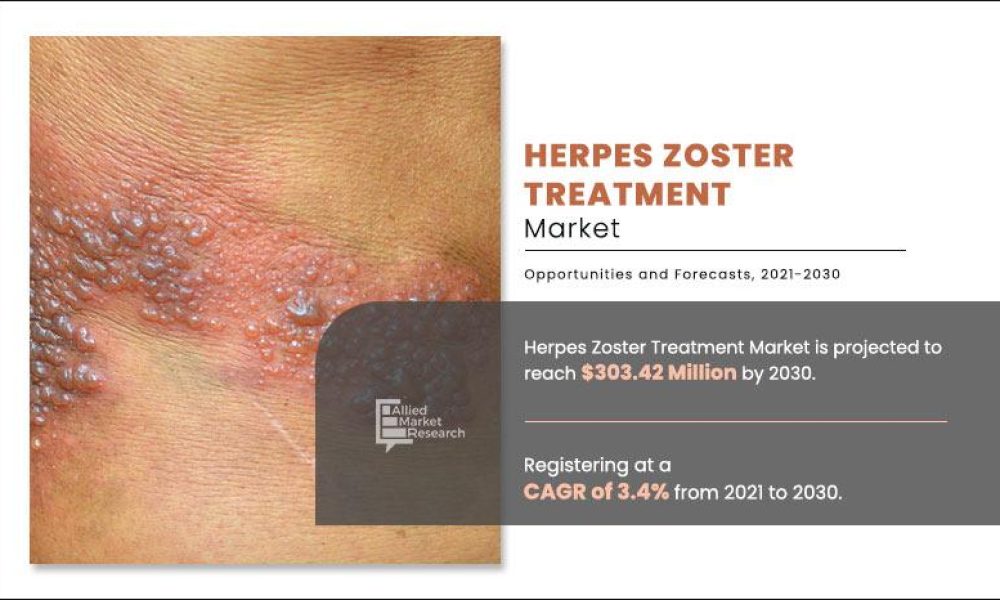
The global herpes zoster treatment market, valued at $217.09 million in 2020, is projected to reach $303.42 million by 2030, growing at a CAGR of 3.4% from 2021 to 2030. This steady growth is driven by the rising incidence of herpes zoster, increasing geriatric population, and ongoing developments in antiviral and pain management therapies.
Understanding Herpes Zoster
Herpes zoster, commonly known as shingles, is caused by the reactivation of the varicella-zoster virus, the same virus responsible for chickenpox. Once a person has recovered from chickenpox, the virus lies dormant in nerve tissue and may reactivate years later as shingles.
This condition typically presents as a painful rash with blisters, often appearing on one side of the body. Even after the visible symptoms subside, the pain—known as postherpetic neuralgia (PHN)—can persist for months, severely affecting the quality of life, especially in older adults.
Key Market Drivers
Rising Geriatric Population
The elderly are more vulnerable to herpes zoster due to a weakened immune system. The incidence of shingles significantly increases after age 50, and with global aging trends, the demand for effective treatments is expected to grow accordingly.High Incidence of Herpes Zoster
Lifetime risk estimates for herpes zoster range between 10% and 20%, and the disease incidence doubles with every decade beyond 50 years of age.Increased Awareness and Diagnosis
Public health campaigns and improved diagnostic capabilities have led to earlier detection and treatment, fueling market expansion.Government Health Initiatives
Government-led vaccination and healthcare awareness programs have helped in reducing disease burden and encouraging prompt treatment.Drug Development and Innovation
Continuous research and development in antiviral and anti-inflammatory drugs are contributing to more effective treatment options with fewer side effects.
Market Restraints
Shortage of Skilled Healthcare Professionals
The lack of trained healthcare providers, especially in rural and low-income regions, hinders timely diagnosis and treatment.Underdiagnosis in Younger Populations
Though rare, herpes zoster in younger individuals may be underdiagnosed due to mild symptoms, leading to untracked market potential.
Market Segmentation Overview
By Treatment Type
Antiviral Medications dominate the market, driven by their role in halting viral replication and speeding up recovery. These include drugs such as acyclovir, valacyclovir, and famciclovir.
Anti-inflammatory Medications are used primarily to reduce pain and swelling.
Others include pain relievers and supportive therapies to manage PHN.
By Route of Administration
Oral medications lead the market due to ease of administration and effectiveness in early stages of the disease.
Topical treatments serve as supportive therapy, especially in managing local pain and discomfort.
By Distribution Channel
Drug Stores & Retail Pharmacies hold the largest market share, supported by widespread availability, ease of access, and increased consumer awareness.
Hospital Pharmacies play a significant role in acute cases.
Online Providers are gaining traction, especially in urban areas, driven by the convenience of home delivery and teleconsultation trends.
Regional Insights
North America
Accounted for the highest revenue share in 2020.
Growth is attributed to:
High awareness levels.
Well-established healthcare infrastructure.
Strong presence of key pharmaceutical companies.
Rising geriatric population.
Government investment in immunization and healthcare.
Asia-Pacific
Expected to register the fastest growth over the forecast period.
Factors include:
Rapidly aging population.
Improving access to healthcare.
Growing public awareness.
Expanding health insurance coverage.
Europe
Also shows strong potential due to supportive health policies and increased research funding for viral infections.
LAMEA (Latin America, Middle East, and Africa)
Slowest growth due to limited access to healthcare and low disease awareness.
However, increasing government initiatives could change this trend in the long term.
Key Market Players
The global herpes zoster treatment market is highly competitive with a strong presence of pharmaceutical giants actively engaged in R&D and partnerships. Notable players include:
GlaxoSmithKline plc
Merck & Co., Inc.
Pfizer Inc.
AbbVie Inc.
Novartis AG
Sanofi
Teva Pharmaceuticals
These companies are focused on enhancing the effectiveness of shingles treatment and developing more patient-centric products with improved safety profiles.
Key Takeaways
The herpes zoster treatment market is poised to grow steadily at 3.4% CAGR through 2030.
Antiviral medications are the most commonly used treatment.
Oral route dominates due to ease and speed of administration.
North America leads in revenue, while Asia-Pacific is expected to exhibit the fastest growth.
Increasing R&D investment and drug innovation provide ample growth opportunities.




