
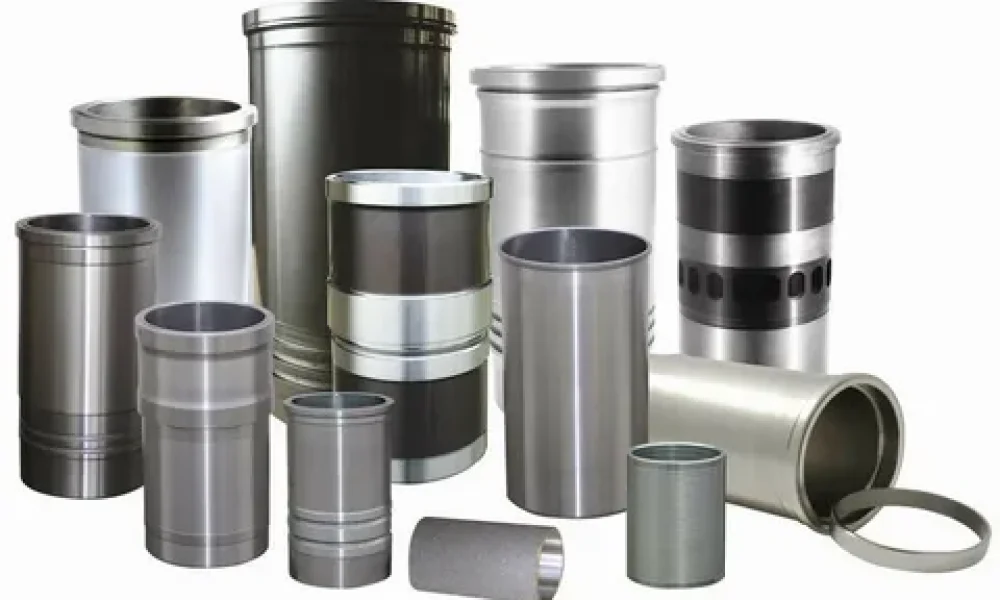
The global automotive cylinder liner market size is projected to reach USD 5,182.9 million in 2024. It is predicted to rise at a CAGR of 6.7% during the forecast period to reach a value of USD 9,884.3 million by 2034.
Rising environmental awareness coupled with the imposition of stringent emission control regulations across the globe are key factors driving demand for automotive cylinder liners. Consumers are turning toward these liners as they help enhance engine efficiency and minimize emissions.
Innovations in material technology with the emergence of lightweight and durable materials further assist in augmenting performance, thereby becoming a preferable choice for consumers as well as manufacturers. The increased penetration of hybrid and high-performance engines coupled with growing vehicle production in prominent countries is driving demand for high-quality cylinder liners.
The Automotive Cylinder Liner Market is witnessing steady growth driven by the increasing need for efficient engine performance, fuel economy, and extended vehicle lifespan. As global emission norms tighten and the demand for ICE vehicles persists in emerging economies, manufacturers are focusing on advanced materials, precision engineering, and surface coating technologies for cylinder liners to reduce friction and enhance thermal stability.
Get Ahead with Our Report: Request Your Sample Now!
https://www.futuremarketinsights.com/report-sample#5245502d47422d33333837
Key Industry Highlights
Innovations in Material Technologies to Boost Engine Performance and Sustainability
Manufacturers of cylinder liners for automotive applications are utilizing unique materials, such as aluminum alloys and silicon carbide composites, for maximum durability and improved thermal efficiency. BMW’s TwinPower Turbo technology utilizes high-strength coatings to reduce friction and extend cylinder liner life, optimizing engine performance.
Porsche also integrates specialized composites in its high-performance engines to withstand extreme conditions, ensuring better thermal conductivity and durability.
General Motors is bolstering its engine platforms by developing liners with innovative materials that support high-performance metrics, contributing to improved fuel efficiency and reduced environmental impact. These innovations underscore the industry’s commitment to pushing the boundaries of engine performance and sustainability.
Rising Demand for Lightweight Cylinder Liners to Enhance Fuel Efficiency
Automotive manufacturers are innovating lightweight cylinder liners to achieve reduced vehicle weight, improved fuel efficiency, and address the industry’s focus on sustainability. These innovations involve using materials like silicon-aluminum alloy composites that offer enhanced wear resistance and thermal conductivity over traditional cast iron. The move toward light designs conforms to stringent emission standards and the need for better vehicle handling.
For instance, Federal-Mogul Powertrain announced the release of its new silicon-aluminum alloy composite cylinder liner in January 2024. The new material was developed to deliver lightweight strategies with excellent performance. It perfectly aligns with the industry’s commitment to developing lightweight and efficient engines.
Key Takeaways
Surge in demand for high-performance engine components in both passenger and commercial vehicles
Rising focus on durability and engine efficiency propelling product innovations
Growth in aftermarket demand for engine rebuilding and reconditioning
Adoption of lightweight and wear-resistant materials to meet fuel economy targets
Cylinder liners remain crucial for heat dissipation and friction reduction
Key Drivers
Growth of automotive production in emerging markets
Rising need for engine downsizing and fuel-efficient vehicles
Stricter emission regulations demanding advanced liner technologies
Increasing fleet maintenance and engine refurbishment activities
Expansion of automotive aftermarket services and engine rebuild sectors
Growth Opportunities
Development of hybrid-compatible cylinder liners
Innovations in thermal spray and composite coatings
Expansion in electric vehicle range extenders and auxiliary power units (APUs)
Rising demand for premium liners in motorsport and heavy-duty applications
Increasing investments in R&D for lightweight alloys and eco-friendly materials
Key Applications
Passenger Cars
Light Commercial Vehicles (LCVs)
Heavy Commercial Vehicles (HCVs)
Off-Highway Vehicles
Motorcycles and Two-Wheelers
Detailed Market Study: Full Report and Analysis
https://www.futuremarketinsights.com/reports/automotive-cylinder-liner-market
Key Players
MAHLE GmbH
Federal-Mogul LLC (Tenneco Inc.)
IP Rings Ltd.
Westwood Cylinder Liners Ltd.
GKN Automotive
TPR Co., Ltd.
NPR of Europe GmbH
ZYNP Corporation
Slinger Manufacturing
Melling Engine Parts
Key Segmentations
By Material – Cast Iron, Steel, Aluminum Alloys, Others
By Type – Dry Liner, Wet Liner, Air Cooled Liner
By Vehicle Type – Passenger Cars, LCVs, HCVs, Off-Highway Vehicles
By Sales Channel – OEM, Aftermarket
By Region – North America, Europe, Asia Pacific, Latin America, Middle East & Africa
About Future Market Insights (FMI)
Future Market Insights, Inc. (ESOMAR certified, recipient of the Stevie Award, and a member of the Greater New York Chamber of Commerce) offers profound insights into the driving factors that are boosting demand in the market. FMI stands as the leading global provider of market intelligence, advisory services, consulting, and events for the Packaging, Food and Beverage, Consumer Technology, Healthcare, Industrial, and Chemicals markets. With a vast team of 400 analysts worldwide, FMI provides global, regional, and local expertise on diverse domains and industry trends across more than 110 countries.




