
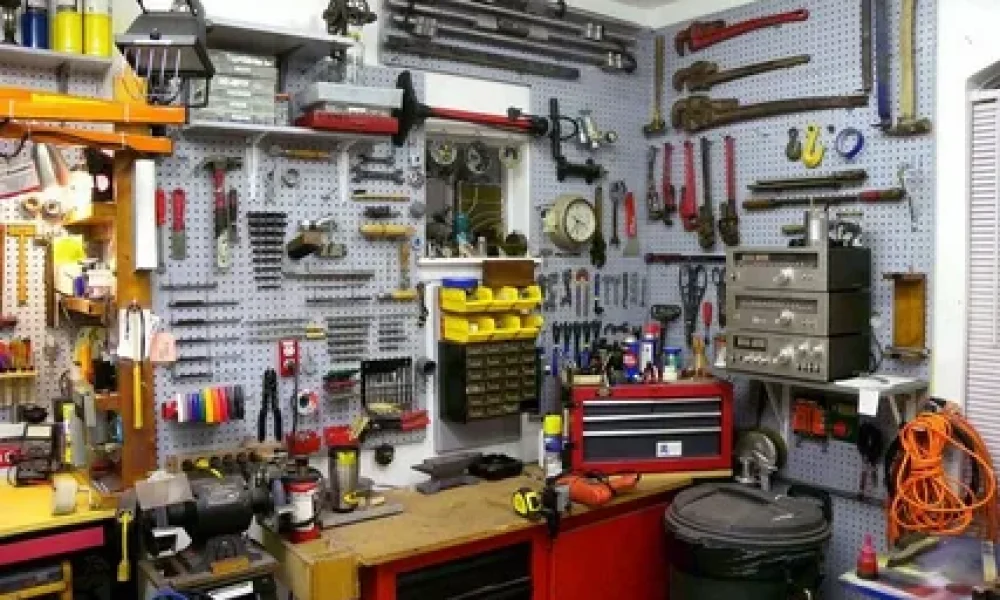
The anticipated size of the automotive garage equipment market in 2022 was USD 24.4 billion and is estimated to be USD 26.8 billion in 2023. Demand in the automotive garage equipment market is raising through the promotion of existing repair shops and independent garages, which are boosting the sales of the vehicle in emerging economies.
Future Market Insights has mentioned in its reports that the automotive composites market is predicted to expand at a CAGR of 8.94% between 2023 and 2033, totaling around USD 63.1 billion by 2033.
Sales in the global automotive garage equipment market are slated to reach USD 24.4 billion in 2022. Increasing replacement and repair services in used cars are expected to boost sales at a steady 4.3% CAGR, pushing the market size to USD 32.9 billion in 2029.
The Automotive Garage Equipment Market is witnessing significant growth as automotive workshops and service centers invest in advanced, efficient, and tech-enabled tools to cater to increasingly sophisticated vehicle systems. This includes EV-compatible tools, digital diagnostic platforms, and eco-friendly repair solutions that enhance precision, safety, and productivity.
Get Ahead with Our Report: Request Your Sample Now!
https://www.futuremarketinsights.com/report-sample#5245502d47422d31383139
Key Takeaways
Surge in automotive repair and maintenance activities is boosting demand
Rising adoption of automated and digital garage tools
EVs and connected cars require specialized equipment and calibration tools
Growth in independent repair shops and franchise service networks
Government regulations emphasizing vehicle safety and emissions testing
Key Drivers
Increasing vehicle ownership and fleet sizes globally
Growth in used vehicle sales, demanding frequent diagnostics and upkeep
Stringent roadworthiness and emission norms requiring certified testing tools
Expansion of workshop automation and connected service platforms
Rise in DIY car repair trends and mobile mechanics
Challenges
Overcoming the Shortage of Capital and Skilled People in Independent
Amidst the bright prospects in the market, the implementation of automatic garage devices is still quite low in many small and standalone garages, especially in emerging markets. The utilization of automated tools like lifting machines, computerized wheel aligners, and multi-brand diagnostic tools requires a lot of pre-investment, which makes the workshops and rural service centers hardly accessible.
Technicians are not trained in different areas, so the additional costs of using advanced systems reduce the stand-alone workshop and rural service center’s ROI. Nearly 60% of the independent garages in Southeast Asia failed to use OBD-II diagnostics in 2023 due to the lack of skills and high costs. To cope with these structural adoption hurdles, OEMs and equipment providers had to fund, modularize, and create the training partnerships.
Fragmentation of Technology and Extensive Vehicle Types
The increasing diversification of types of vehicles, engine platforms, and built-in technologies poses a threat to the standardization of garage equipment. For example, equipment that is mixed up for conventional ICE cars might not be usable for EVs, hybrids or ADAS- equipped customer cars and this practically obliges garages to purchase more than one kind of hand tools. Technological breakthroughs in on-board software applications, battery performance, and sensor technologies mean that older equipment is getting outdated quicker.
The ADAS features that are newly integrated simply need specific calibration tools, laser alignment rigs, and radar-friendly lifts. This rate of transformation distorts the equipment supply chain, extends the time for service delivery, and befuddles smaller organizations. Therefore, the preference of manufacturers is to roll out equipment that is scalable and easily adaptable to the changing times.
Growth Opportunities
Development of EV service-compatible garage tools
Integration of AI and AR-based diagnostics systems
Eco-friendly equipment for low-emission or waterless car wash systems
Surge in demand for automated lifting and alignment systems
Smart garage concepts driven by IoT integration and digital scheduling
Key Equipment Categories
Lifting Equipment – Hydraulic lifts, scissor lifts, two-post lifts
Diagnostic & Testing Equipment – OBD tools, emissions analyzers, wheel alignment systems
Washing Equipment – Automatic car wash, steam cleaners
Air Compressors & Pneumatic Tools – Impact wrenches, tire inflators
Body Shop Equipment – Dent pullers, spray booths, frame straighteners
Tire Equipment – Balancers, changers, inflators
Battery & EV Servicing Tools – Battery testers, charging equipment, software updates
Detailed Market Study: Full Report and Analysis
https://www.futuremarketinsights.com/reports/automotive-garage-equipment-market
Key Players
Snap-on Incorporated
Robert Bosch GmbH
Launch Tech Co., Ltd.
Hunter Engineering Company
Manatec Electronics Pvt. Ltd.
MAHA Maschinenbau Haldenwang GmbH & Co. KG
Rotary Lift
Atlas Automotive Equipment
Aro Equipments Pvt. Ltd.
Vehicle Service Group (VSG)
Key Segmentations
By Equipment Type – Lifting, Diagnostic, Washing, Body Shop, Emission, Tire
By Vehicle Type – Passenger Cars, Commercial Vehicles, Electric Vehicles
By Garage Type – OEM Authorized, Independent, Franchise, Mobile Garages
By Region – North America, Europe, Asia Pacific, Latin America, Middle East & Africa
About Future Market Insights (FMI)
Future Market Insights, Inc. (ESOMAR certified, recipient of the Stevie Award, and a member of the Greater New York Chamber of Commerce) offers profound insights into the driving factors that are boosting demand in the market. FMI stands as the leading global provider of market intelligence, advisory services, consulting, and events for the Packaging, Food and Beverage, Consumer Technology, Healthcare, Industrial, and Chemicals markets. With a vast team of 400 analysts worldwide, FMI provides global, regional, and local expertise on diverse domains and industry trends across more than 110 countries.




