
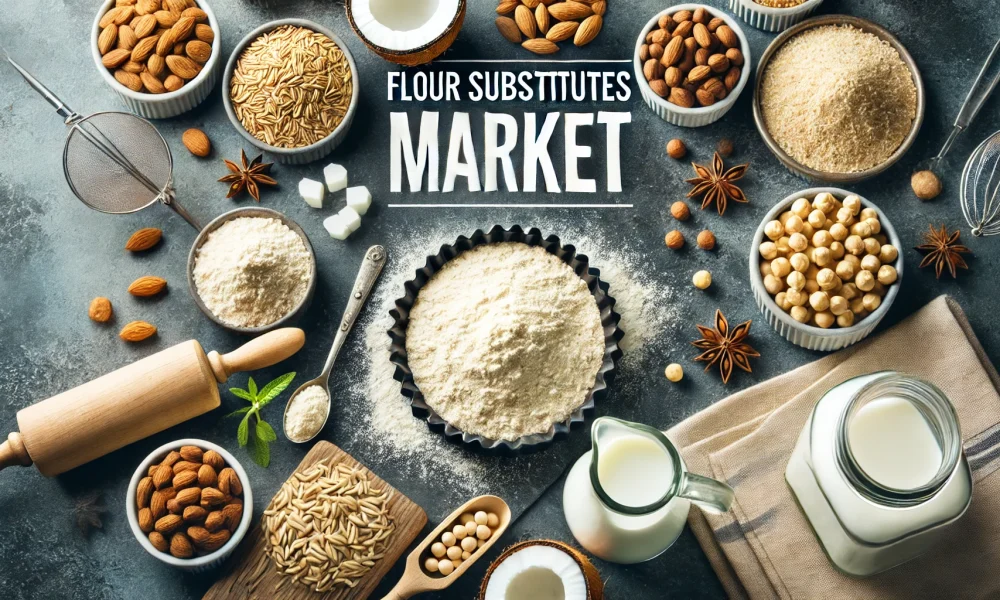
The global flour substitutes market is poised for substantial growth, projected to be valued at USD 2,905.3 million by 2025. It is expected to expand at a CAGR of 4.9% from 2025 to 2035, reaching an estimated USD 4,687.5 million by 2035.
The market has gained significant attention in recent years due to the increasing focus on health-conscious eating habits. Consumers are actively seeking alternatives to traditional wheat-based flours, driven by rising gluten intolerance, celiac disease diagnoses, and the growing preference for nutrient-dense ingredients. This shift is reshaping the baking and food processing industries, with manufacturers innovating gluten-free, grain-free, and plant-based flour alternatives to meet consumer demand.
Preview the Latest Trends – Request a Sample Copy: https://www.futuremarketinsights.com/report-sample#5245502D47422D3135373131
Key Takeaways
- Market Size: Estimated at USD 2,905.3 million by 2025, projected to reach USD 4,687.5 million by 2035.
- Growth Rate: Expected CAGR of 4.9% (2025–2035).
- Primary Drivers: Increased focus on health and wellness, demand for gluten-free alternatives, and rise in plant-based diets.
- Key Applications: Baking, food processing, confectionery, and ready-to-eat meals.
- Regional Leaders: The United States, Germany, India, China, and Japan are key growth markets.
Market Dynamics
Growth Drivers
The flour substitutes market is experiencing rapid expansion due to shifting consumer preferences toward healthier food choices. Increasing awareness of gluten-related disorders, along with the rise in vegan and plant-based diets, is driving demand for nutrient-rich, alternative flours like almond flour, coconut flour, chickpea flour, and oat flour.
Food manufacturers are responding by expanding product lines with innovative flour blends that cater to dietary restrictions, enhanced nutrition, and functional benefits. Additionally, the surge in home baking trends post-pandemic has contributed to the growing adoption of alternative flours in households worldwide.
Challenges
Despite its growth potential, the market faces challenges such as higher production costs, supply chain disruptions, and limited consumer awareness in some regions. Additionally, the texture and baking properties of alternative flours differ from traditional wheat flour, requiring reformulation efforts by food manufacturers.
Opportunities
With rising demand for low-carb, high-protein, and fiber-rich flours, companies have the opportunity to develop innovative products that cater to specific dietary needs. Collaborations between flour producers and food brands, along with the expansion of online retail channels, are expected to enhance market penetration and accessibility.
Recent Developments in the Market
- January 2024 – A leading food brand introduced a new line of protein-enriched flour substitutes targeting fitness-conscious consumers.
- October 2023 – Research advancements led to improved texture and shelf stability of alternative flours, making them more appealing for commercial baking.
- July 2023 – Expansion of e-commerce platforms boosted direct-to-consumer sales of gluten-free and plant-based flour products.
- April 2023 – Increased government funding for research on sustainable crop-based flour alternatives, including cassava and quinoa flour.
Gain Full Market Perspective – Get the Full Report Today: https://www.futuremarketinsights.com/reports/flour-substitutes-market
Regional Analysis
United States
- Projected CAGR: 4.1% (2025–2035)
- Growth driven by rising health-conscious consumers, increased awareness of gluten-free diets, and strong demand for plant-based foods.
Germany
- Projected CAGR: 7.0% (2025–2035)
- The market is expanding rapidly due to government support for clean-label food production and a strong demand for organic and sustainable flour alternatives.
India
- Projected CAGR: 5.6% (2025–2035)
- Growing health awareness, coupled with the traditional use of alternative flours like millet and chickpea flour, is fueling market growth.
China
- Projected CAGR: 5.1% (2025–2035)
- The rise in urbanization and changing dietary patterns is increasing the adoption of gluten-free and high-protein flour substitutes.
Japan
- Projected CAGR: 6.0% (2025–2035)
- Strong demand for low-carb and diabetic-friendly baking alternatives is driving growth in the functional food and bakery segments.
Key Benefits for Stakeholders
- Food Manufacturers: Opportunity to innovate with functional and fortified flour substitutes.
- Retailers & Distributors: Increasing consumer interest in alternative flours is expanding market reach in supermarkets and online platforms.
- Consumers: Access to healthier, gluten-free, and nutrient-rich flour options that cater to special dietary needs.
- Investors: A high-growth market segment fueled by rising demand for clean-label and organic ingredients.
Competitive Analysis
The flour substitutes market is competitive, with key players focusing on product diversification, improved texture and taste, and sustainable sourcing to differentiate themselves. Companies are investing in research and development (R&D), collaborations with food brands, and direct-to-consumer sales strategies to expand their market presence.
Leading Market Players
- ADM
- Bunge
- Cargill
- Louis Dreyfus
- Live Glean
- COFCO Group
- Wilmar International
- Jinshahe Group
- GoodMills Group
- Milne MicroDried
- Carolina Innovative Food Ingredients Inc.
- Liuxu Food
- NorQuin
- Andean Valley Corporation
- Beichun
- Bob’s Red Mill
- King Arthur Flour
- Hodgson Mill
- Pillsbury
- Arrowhead Mills
- Others
Explore Convenience Food Industry Analysis: https://www.futuremarketinsights.com/industry-analysis/convinience-food
Key Segments of the Report
By Product:
As per product, the industry has been categorized into Corn Flour, Rice Flour, Sweet, Potato Flour, Spelt flour, Buckwheat flour, Quinoa Flour, Oat flour, Coconut flour, Chickpea flour, Brown rice flour, Rye flour, Amaranth flour, Teff flour, Millet flour and Almond Flour.
By Type:
As per Type, the industry has been categorized into Gluten-containing flours and Gluten-free flours.
By Application:
As per Application, the industry has been categorized into Baked Goods, Noodles, Pastry, Fried Food, Pasta, Bread and Crackers.
By Region:
Industry analysis has been carried out in key countries of North America, Latin America, Europe, East Asia, South Asia, Oceania, and the Middle East & Africa.
About Future Market Insights (FMI)
Future Market Insights, Inc. (ESOMAR certified, recipient of the Stevie Award, and a member of the Greater New York Chamber of Commerce) offers profound insights into the driving factors that are boosting demand in the market. FMI stands as the leading global provider of market intelligence, advisory services, consulting, and events for the Packaging, Food and Beverage, Consumer Technology, Healthcare, Industrial, and Chemicals markets. With a vast team of over 400 analysts worldwide, FMI provides global, regional, and local expertise on diverse domains and industry trends across more than 110 countries.




