
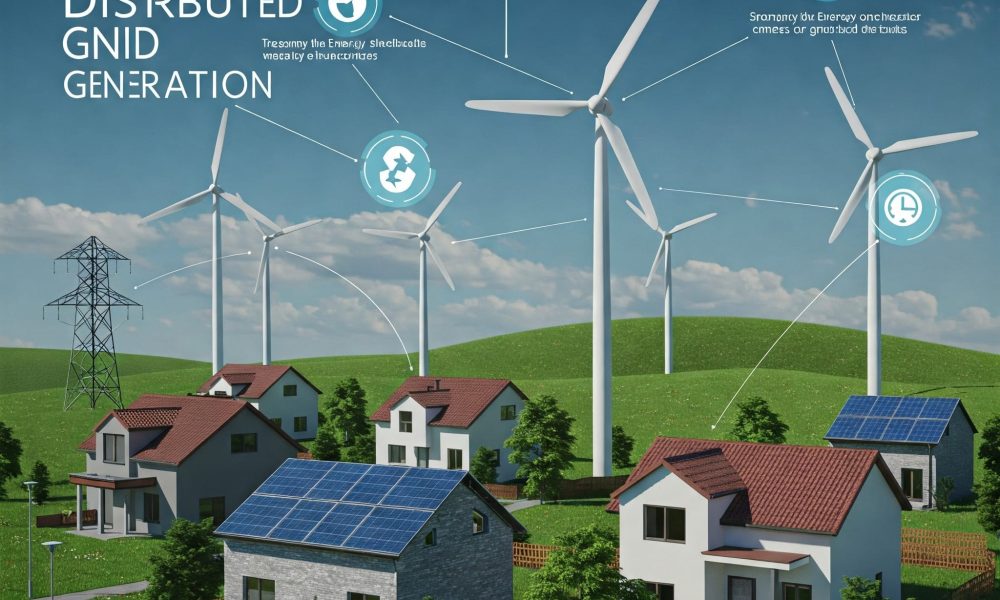
The global distributed generation market, valued at US$ 244.5 Bn in 2022, is projected to advance at a CAGR of 13.7% from 2023 to 2031, reaching an estimated US$ 773.3 Bn by the end of the forecast period. Innovations in renewable energy technologies and supportive government policies are driving market expansion and decentralization of power generation.
The global distributed generation market, which was valued at US$ 244.5 Bn in 2022, is set for robust growth as it expands at a CAGR of 13.7% between 2023 and 2031, reaching a forecast value of US$ 773.3 Bn by 2031.
Distributed generation refers to the production of electricity from small, decentralized renewable sources located near the point of consumption, rather than from large, centralized power plants. This model offers significant benefits, including reduced transmission losses, enhanced system resilience, and scalable, modular solutions that can be tailored to specific local energy needs. These advantages, coupled with rapid technological advancements, are fueling the market’s expansion.
Uncover essential discoveries and trends from our Report in this sample – https://www.transparencymarketresearch.com/sample/sample.php?flag=S&rep_id=40586
Analyst Viewpoint
Innovation in renewable technologies is playing a pivotal role in augmenting the distributed generation market. Continuous research in advanced energy solutions is leading to improvements in energy efficiency, cost reduction, and optimization of power transmission processes. Microgrid solutions are gaining traction, particularly in rural communities, by offering customized, decentralized power solutions. Additionally, the availability of government subsidies, tax credits, and favorable feed-in tariffs are making green and hybrid energy projects financially feasible, further stimulating market growth.
Market Introduction
Distributed generation involves generating electricity at or near the point of consumption using a variety of renewable sources—such as solar photovoltaics, wind turbines, and fuel cells—as well as conventional technologies like Combined Heat and Power (CHP) systems and reciprocating engines. This decentralized approach reduces the risks of grid failures, minimizes transmission losses, and provides a resilient energy supply for remote populations and critical infrastructure.
With its scalability and modularity, distributed generation enables tailored energy solutions that meet diverse geographical and demographic needs. The integration of smart grid technologies further enhances energy management by enabling real-time monitoring, control, and optimization of power resources, thereby improving system reliability and reducing environmental impacts.
Key Market Trends & Growth Drivers
- Advancements in Renewable Energy Technologies:
Innovations in solar PV, wind turbines, fuel cells, and CHP systems are critical to improving energy efficiency and reducing costs. Ongoing research is focused on optimizing power transmission processes, which is increasing the adoption of distributed generation systems worldwide. The integration of smart grid technologies allows for real-time monitoring and control, enhancing the overall reliability of decentralized power generation. - Favorable Government Policies and Subsidies:
Governments around the globe are actively promoting renewable energy projects through financial incentives such as tax credits, subsidies, and feed-in tariffs. For example, initiatives like India’s PM-KUSUM program and substantial federal support in the U.S. are significantly lowering the capital costs for distributed generation projects, making them more accessible and economically viable. - Rise of Microgrid Solutions:
Microgrids, particularly in rural and remote areas, offer customized energy solutions that reduce dependency on centralized grids. These systems are designed to cater to the specific energy demands of local communities, thereby facilitating the transition toward cleaner, decentralized energy sources.
Regional Outlook
Asia Pacific dominated the distributed generation market in 2022, driven by rapid urbanization, increasing infrastructure projects, and substantial investments in renewable energy. Countries such as China, India, and Japan are leading the way with large-scale solar and wind installations. For instance, China stands as the largest producer of solar energy globally, while India’s burgeoning wind energy projects continue to gain momentum.
North America and Europe are also expected to see steady growth, supported by mature industrial bases and robust governmental initiatives. Meanwhile, the Middle East & Africa are witnessing significant investments in off-shore energy generation and microgrid solutions to address power supply challenges and reduce carbon emissions.
Analysis of Key Players
The global distributed generation market is highly competitive, with leading companies investing heavily in advanced distributed energy storage and onsite power generation solutions. Key industry players include:
- Alstom S.A.
- E.ON SE
- Caterpillar
- Siemens AG
- Doosan Fuel Cell Co. Ltd.
- Ballard Power Systems
- Bloom Energy
- General Electric
- Sharp Corporation
- ENERCON Global GmbH
- FuelCell Energy, Inc.
- Rolls-Royce plc
- Mitsubishi Power Americas, Inc.
- Capstone Green Energy Corporation
- Destinus Energy
These companies are pursuing strategic collaborations, mergers and acquisitions, and continuous technological innovations to expand their footprint and improve their product offerings in the distributed generation sector.
Gain valuable knowledge with the critical insights in our report – https://www.transparencymarketresearch.com/distributed-generation-market.html
Key Developments
- January 17, 2024:
Verdant Commercial Capital finalized funding for EDPR NA Distributed Generation’s solar projects in the U.S., underscoring the increasing demand for decentralized renewable energy solutions in North America. - January 17, 2024:
Aspen Power Partners secured US$ 241.0 Mn in new financing to support the growth and construction of new solar energy projects, reflecting the significant investor interest in distributed generation.
Distributed Generation Market Segmentation
- By Technology:
- Solar Photovoltaic
- CHP
- Wind Turbines
- Reciprocating Engines
- Micro Turbines
- Fuel Cells
- By Application:
- On-grid
- Off-grid
- By End-user:
- Residential
- Building & Institutions
- Commercial
- Industrial
- Regions Covered:
- North America
- Latin America
- Asia Pacific
- Europe
- Middle East & Africa
- Countries Covered:
- U.S., Canada, Germany, U.K., France, Japan, China, India, Brazil, GCC, South Africa
- Companies Profiled:
- Alstom S.A., E.ON SE, Caterpillar, Siemens AG, Doosan Fuel Cell Co. Ltd., Ballard Power Systems, Bloom Energy, General Electric, Sharp Corporation, ENERCON Global GmbH, FuelCell Energy, Inc., Rolls-Royce plc, Mitsubishi Power Americas, Inc., Capstone Green Energy Corporation, Destinus Energy
Gain a Competitive Edge with This Premium Research Report – https://www.transparencymarketresearch.com/checkout.php?rep_id=40586<ype=S
Frequently Asked Questions
- How big was the global distributed generation market in 2022?
It was valued at US$ 244.5 Bn. - How is the distributed generation market expected to grow by 2031?
It is projected to advance at a CAGR of 13.7% from 2023 to 2031, reaching US$ 773.3 Bn. - What are the key factors driving the demand for distributed generation?
Advancements in renewable energy technologies and the presence of favorable policies, such as tax credits, subsidies, and feed-in tariffs, are driving market growth. - Which distributed generation technology segment held the largest share in 2022?
The CHP segment accounted for the largest share in 2022. - Which was the major region in the global distributed generation market in 2022?
Asia Pacific was the leading region. - Who are the key distributed generation vendors?
Prominent vendors include Alstom S.A., E.ON SE, Caterpillar, Siemens AG, Doosan Fuel Cell Co. Ltd., Ballard Power Systems, Bloom Energy, General Electric, Sharp Corporation, ENERCON Global GmbH, FuelCell Energy, Inc., Rolls-Royce plc, Mitsubishi Power Americas, Inc., Capstone Green Energy Corporation, and Destinus Energy.
About Us Transparency Market Research
Transparency Market Research, a global market research company registered at Wilmington, Delaware, United States, provides custom research and consulting services. The firm scrutinizes factors shaping the dynamics of demand in various markets. The insights and perspectives on the markets evaluate opportunities in various segments. The opportunities in the segments based on source, application, demographics, sales channel, and end-use are analysed, which will determine growth in the markets over the next decade.
Our exclusive blend of quantitative forecasting and trends analysis provides forward-looking insights for thousands of decision-makers, made possible by experienced teams of Analysts, Researchers, and Consultants. The proprietary data sources and various tools & techniques we use always reflect the latest trends and information. With a broad research and analysis capability, Transparency Market Research employs rigorous primary and secondary research techniques in all of its business reports.
Contact Us:
Transparency Market Research Inc.
CORPORATE HEADQUARTER DOWNTOWN,
1000 N. West Street,
Suite 1200, Wilmington, Delaware 19801 USA
Tel: +1-518-618-1030
USA – Canada Toll Free: 866-552-3453




