
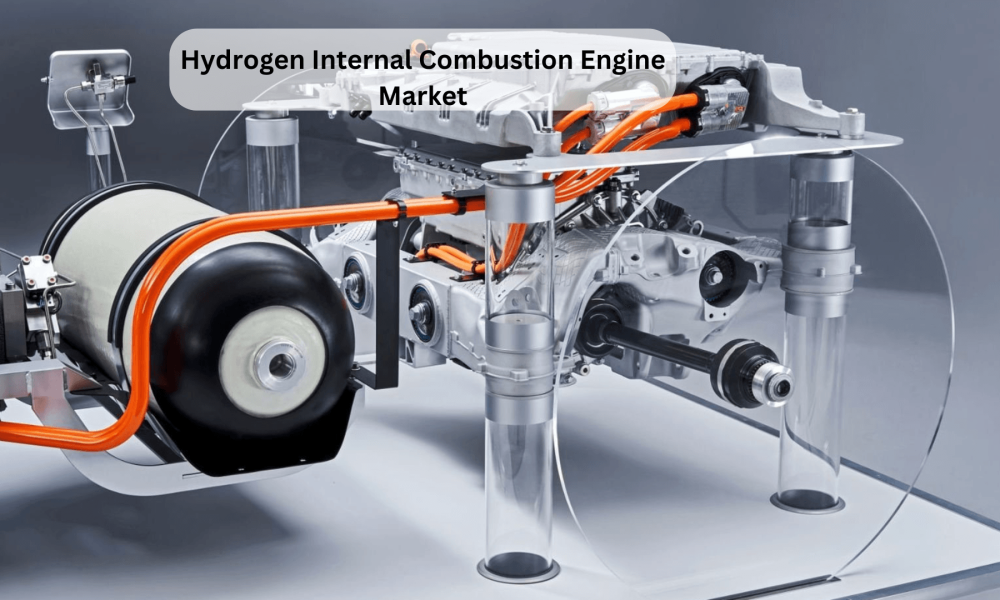
Hydrogen Internal Combustion Engine Market Size
The Global Hydrogen Internal Combustion Engine Market reached US$ 27.6 billion in 2022 and is expected to reach US$ 59.6 billion by 2031, growing with a CAGR of 10.1% during the forecast period 2024-2031.
A Hydrogen Internal Combustion Engine (H2-ICE) is an engine that uses hydrogen as a fuel to produce energy through combustion, similar to traditional internal combustion engines (ICEs) that use gasoline or diesel. The key difference is that instead of burning fossil fuels, the engine burns hydrogen, producing water vapor as the main byproduct instead of harmful emissions like carbon dioxide and nitrogen oxides.
The H2-ICE is gaining attention as a cleaner alternative for transportation and industrial applications, aiming to reduce greenhouse gas emissions and dependence on fossil fuels. Hydrogen combustion engines are being developed to provide a zero-emissions solution for vehicles, machinery, and power generation.
This technology allows for the use of existing infrastructure, such as fuel tanks and refueling stations, making it an appealing option for industries looking to transition to cleaner energy without overhauling their entire system. As hydrogen production and storage technologies improve, the Hydrogen ICE may play a pivotal role in achieving a sustainable future.
Download Free Sample PDF: https://www.datamintelligence.com/download-sample/hydrogen-internal-combustion-engine-market
Market Growth Drivers:
Fleet of Commercial Vehicles
Governments and regions worldwide are setting ambitious targets to reduce emissions from commercial vehicles. Trucks and buses in these fleets are often high-mileage, heavy-duty vehicles that contribute significantly to greenhouse gas emissions and air pollution. Hydrogen Internal Combustion Engines (H2-ICEs) offer a cleaner alternative to traditional diesel or gasoline engines, making them an attractive option for fleets aiming to meet stringent emissions regulations. For example, in February 2023, Reliance Industries launched India’s first Hydrogen Internal Combustion Engine technology for heavy-duty vehicles. Developed in partnership with Ashok Leyland and other collaborators under the Net Carbon Zero initiative, the technology was first tested in early 2022, paving the way for a more sustainable future in commercial transportation.
Growing Demand from Automotive Sector Owing to Low Emission
The adoption of electrification in the vehicle industry has reached unprecedented levels. However, industries such as mining, agriculture, and other off-road applications, which demand high power outputs 24/7 and are exposed to extreme vibrations and heat, have not fully embraced Battery Electric Vehicles (BEVs).
In February 2023, JCB, a British construction equipment company, is betting on hydrogen as the fuel of the future and plans to introduce hydrogen-powered engines in India. With a dominant 55% market share in backhoe loaders, JCB has developed a hydrogen-based internal combustion engine. Although the engine has yet to be commercially launched in the UK, it is already undergoing testing on several of the company’s off-road machines, including backhoe loaders.
Market Segments:
By Vehicle: Passenger Cars, Commercial Vehicles.
By Hydrogen Source: Green Hydrogen, Grey Hydrogen, Blue Hydrogen, Other Sources.
By Technology: Internal Combustion Engine (ICE), Dual-Fuel Engines.
By Application: Transportation, Power Generation.
By End-User: Transportation, Industrial, Others.
By Region: North America, Latin America, Europe, Asia Pacific, Middle East and Africa
Competitive Landscape
- Toyota Industries Corporation
- BMW Group
- Hyundai Motor Company
- Mazda Motor Corporation
- JCB
- ABB
- Opel/Vauxhall (Stellantis Group)
- Ballard Power Systems
- Jaguar Land Rover Automotive Plc
- Hyster-Yale Group
Customize Your Scope: https://www.datamintelligence.com/customize/hydrogen-internal-combustion-engine-market
Regional Growth
Collaborative projects are driving revenue growth for HICE key players in the North American market.
North America is actively engaging in joint initiatives with international partners to accelerate the development and deployment of hydrogen ICE technology. As a result, the region now holds over one-third of the global hydrogen internal combustion engine market.
Tata Motors, India’s leading commercial vehicle manufacturer, and Cummins Inc., a global leader in power solutions, have recently signed a Memorandum of Understanding to collaborate on developing low- and zero-emission commercial vehicles in India. This partnership could involve hydrogen-powered internal combustion engines, fuel cells, and battery-driven electric vehicles.
Key Development
In October 2023, AVL, an Austrian mobility technology company, showcased its 2.0-liter turbo hydrogen race engine prototype, which produced over 200 horsepower per liter. The engine uses a water-injection system alongside a turbocharger to optimize combustion, delivering a cleaner burn and boosting power output – and the results are proving effective.
At the 2023 Japan Mobility Show, which kicked off with its press day on October 25, the focus expanded beyond just vehicles to include a variety of innovative mobility solutions. Yamaha introduced a hydrogen-burning combustion engine buggy, highlighting the company’s commitment to sustainable mobility options.
In February 2023, British construction equipment giant JCB revealed its plans to introduce hydrogen-powered engines in India, aiming to revolutionize the industry with environmentally friendly technology that will power its heavy machinery.




