
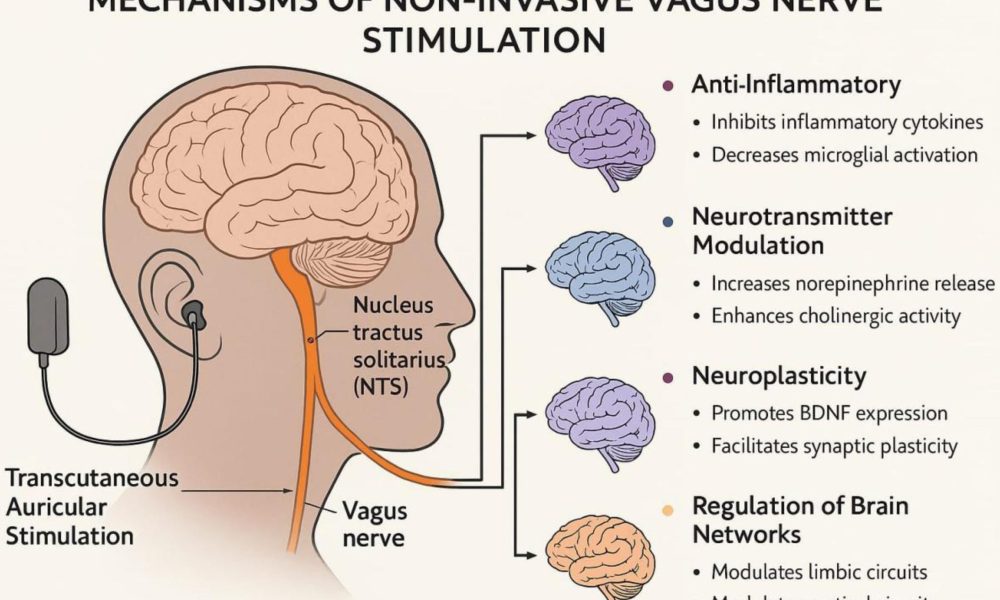
The global vagus nerve stimulation (VNS) market is set for impressive growth in the coming years, driven by the increasing prevalence of chronic neurological disorders and the rising adoption of advanced neuromodulation therapies. The market is expected to grow from US$542.3 million in 2025 to US$1,013.4 million by 2032, with a CAGR of 9.3% between 2025 and 2032. Several factors are contributing to this substantial growth, including technological advancements in VNS devices, expanding clinical applications, and improving regulatory frameworks. VNS therapy is gaining traction as a viable option for treating conditions like drug-resistant epilepsy (DRE), chronic depression, migraine, and other neurological disorders.
As medical technologies advance, VNS devices are becoming more efficient and patient-friendly. The market is evolving with innovations like non-invasive VNS devices, which offer a non-surgical alternative to traditional implantable devices, further broadening the therapeutic scope of VNS. Additionally, regulatory bodies are becoming more receptive to the approval of these therapies, leading to a broader clinical application across various therapeutic areas. The growing demand for neuromodulation therapies and the increasing acceptance of VNS, especially in regions like North America, are expected to drive market growth during the forecast period.
Download Your Free Sample & Explore Key Insights: https://www.persistencemarketresearch.com/samples/34750
Key Highlights from the Report
• Increasing adoption of non-invasive VNS devices improves patient comfort and expands treatment options.
• Strategic collaborations and funding are accelerating the research and development of innovative VNS devices.
• Expanding applications of VNS beyond epilepsy and depression to include stroke recovery and chronic heart failure.
• Rising global prevalence of neurological disorders is driving the demand for VNS therapies.
• Limited awareness and clinical training remain key challenges to broader VNS adoption.
• North America’s favorable regulatory framework and early adoption contribute to its market dominance.
Market Segmentation
The vagus nerve stimulation market can be segmented based on product type, application, and end-user.
Product Type:
The market is primarily segmented into implantable VNS devices and non-invasive VNS devices. The implantable VNS devices segment is expected to dominate the market, accounting for a significant revenue share in 2025, driven by their proven efficacy and long-term therapeutic benefits. These devices are widely used in the management of drug-resistant epilepsy and chronic depression due to their established clinical success. However, the non-invasive VNS devices segment is growing rapidly as an alternative to surgical intervention, offering patient comfort and expanding the application of VNS therapy to conditions like migraine and mild depression.Application:
Epilepsy is the leading therapeutic area for VNS devices, largely due to its established clinical use and approval as an adjunctive treatment for drug-resistant epilepsy. VNS therapy has shown to reduce seizure frequency significantly over time, which has led to its widespread adoption in patients who do not respond to conventional treatments. However, other applications such as depression, migraine, and stroke recovery are rapidly gaining ground, especially with the advent of non-invasive devices. These applications are expected to continue growing, particularly as new research and clinical studies demonstrate the broader potential of VNS technology.End-User:
The market is also segmented based on end-users, which include hospitals, clinics, and home care settings. Hospitals and clinics are expected to hold the largest market share due to the higher complexity and sophistication required for the use of VNS devices, particularly implantable ones. However, the home care segment is witnessing growth as more non-invasive VNS devices are becoming available, allowing patients to use them under less clinical supervision.
Regional Insights
North America:
North America is expected to maintain its dominance in the global vagus nerve stimulation market, holding a 41.4% market share in 2025. The region benefits from high healthcare expenditure, early adoption of neuromodulation therapies, and favorable reimbursement policies, especially for epilepsy and depression. Recent clinical studies and trials, such as the VNS-REHAB pivotal trial and innovations like Vivistim® Paired VNS™ System for stroke recovery, are reinforcing North America’s leadership in VNS therapy.Europe:
Europe is rapidly emerging as a key market for VNS, driven by innovations in non-invasive VNS devices and growing clinical adoption. Countries like Germany and the UK are leading the charge, with Germany being home to collaborations like tVNS® and Pansatori, which combine VNS therapy with advanced digital tools for tinnitus treatment. The region’s regulatory environment is conducive to the approval of new devices, which is expected to drive further market expansion.Asia Pacific:
The Asia Pacific market is growing at a fast pace, with countries like Japan and Australia leading the way. Japan, for example, is pioneering the use of VNS technology for chronic heart failure and cardiac conditions, while Australia is supporting VNS research aimed at addressing immune response modulation. The increasing healthcare needs, along with advancements in medical technologies, are propelling the market forward in this region.
Get Custom Insights Designed for Your Business: https://www.persistencemarketresearch.com/request-customization/34750
Market Drivers
The global vagus nerve stimulation market is primarily driven by the rising prevalence of neurological disorders, particularly epilepsy, depression, chronic migraines, and other conditions like stroke recovery and chronic heart failure. As these diseases become more prevalent, particularly among aging populations, there is an increasing demand for effective treatment options. VNS therapy is becoming a popular choice due to its proven efficacy, especially in cases that do not respond to traditional therapies.
The continuous advancement in VNS technology, including the development of closed-loop systems and AI-enabled personalization, is further driving the adoption of VNS therapies. These technological innovations improve the precision and effectiveness of VNS treatment, leading to better patient outcomes and growing demand for the therapy. Moreover, the expansion of clinical applications, especially in areas like stroke recovery, is broadening the scope of VNS devices.
Market Restraints
Despite its numerous benefits, the VNS market faces some challenges that could hinder its growth. One of the key restraints is limited awareness about VNS therapy among healthcare providers and patients. In many regions, VNS is still not widely accepted as a mainstream treatment option, and there is often a lack of clinical familiarity with its potential. This lack of awareness can lead to underutilization of the therapy, even when it might be beneficial.
Additionally, there are concerns about the surgical nature of implantable VNS devices, which may deter some patients from opting for this treatment. There is also the issue of side effects associated with VNS, which can include hoarseness, discomfort, and swallowing difficulties. These factors contribute to slower adoption rates and may prevent the market from reaching its full potential.
Market Opportunities
The emerging markets represent a significant growth opportunity for the vagus nerve stimulation industry. As healthcare infrastructure improves in regions such as Asia Pacific, Latin America, and Africa, the demand for advanced treatment options like VNS is expected to rise. Moreover, cost reduction strategies, such as local manufacturing and distribution partnerships, will enhance the accessibility of VNS devices in low- and middle-income countries (LMICs).
Another key opportunity lies in the advancements in non-invasive VNS devices. These devices provide a less invasive alternative to traditional implantable devices, making them more appealing to patients and healthcare providers. The growing acceptance of non-invasive treatment options for conditions like migraines, depression, and chronic pain will likely expand the market further.
Checkout Now & Download Complete Market Report: https://www.persistencemarketresearch.com/checkout/34750
Company Insights
The global VNS market is home to several key players, including:
• Soterix Medical Inc.
• LivaNova PLC
• SetPoint Medical
• Vagutism
• tVNS Technologies GmbH
• electroCore, Inc.
• Adriakaim, Inc.
• MicroTransponder Inc.
• Parasym, Ltd.
• Pulsetto
• Teliatry, Inc.
• biolitec® Holding GmbH & Co KG
• AURIMOD GMBH
• Evren Technologies, Inc.
• NeurGear
• Hoolest
• Neuvana
• BioSelf Technology Ltd.
Market Segmentation
By Product
- Implantable VNS Device
- External Non-invasive VNS Device
By Application
- Epilepsy
- Depression
- Migraine
- Others
By End-user
- Hospitals
- Specialty Clinics
- Ambulatory Surgical Centres
- Academic & Research Institutes
- Others
By Region
- North America
- Europe
- East Asia
- South Asia and Oceania
- Latin America
- Middle East and Africa
Recent Developments
In June 2025, the Neuromodulation Center of Excellence was established in Connecticut with a US$2 million initiative, aiming to expand access to the Vivistim® Paired VNS™ System for long-term stroke recovery.
In March 2025, MicroTransponder raised US$65 million in Series F funding to advance its FDA-approved Vivistim® Paired VNS System for stroke rehabilitation.
Conclusion
The Vagus Nerve Stimulation (VNS) Market is poised for substantial growth in the coming years, driven by an increasing prevalence of neurological disorders, advances in VNS technology, and the expanding applications of VNS therapy across various medical fields. Although challenges such as limited awareness and side effects remain, the growing global adoption of non-invasive devices and expansion into emerging markets present lucrative opportunities for manufacturers. As clinical studies continue to demonstrate the effectiveness of VNS, particularly in treatment-resistant epilepsy and chronic depression, the market is set to experience sustained growth.




