
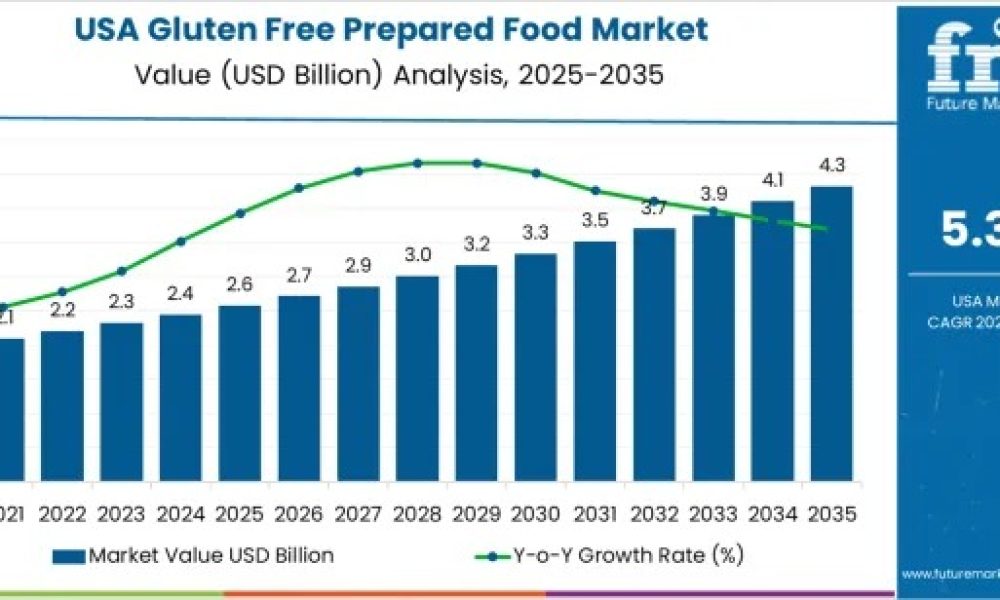
The demand for gluten-free prepared food in the USA is entering a new phase of accelerated growth, rising from USD 2.6 billion in 2025 to USD 4.3 billion by 2035 at a CAGR of 5.3%. This surge reflects the expanding influence of digestive wellness, lifestyle-driven dietary shifts, and the rising consumer preference for “better-for-you” convenience foods.
Beyond medically diagnosed gluten sensitivities, a broader base of U.S. consumers is now opting for gluten-free alternatives, pushing the category further into the mainstream. As clean-label priorities intensify and consumers demand foods that support easier digestion, gluten-free prepared meals, drinks, snacks, and bakery offerings are moving rapidly from niche to everyday household staples.
Explore trends before investing – request a sample report today! https://www.futuremarketinsights.com/reports/sample/rep-gb-28852
Market Snapshot at a Glance
- 2025 Market Value: USD 2.6 billion
- 2035 Forecast Value: USD 4.3 billion
- CAGR (2025–2035): 5.3%
- Top Product Category: Drinks (45%)
- Leading Sales Channel: Supermarkets (55%)
- Top Growth Regions: West (6.1% CAGR), South (5.5%), Northeast (4.9%), Midwest (4.3%)
- Key Players: Ener-G Foods, General Mills, Enjoy Life Foods, Udi’s Healthy Foods, B&G Foods
A Decade of Consistent Growth: Rolling Forecast Through 2035
Growth is expected to unfold in two major phases:
2025–2030:
The market expands from USD 2.6 billion to USD 3.3 billion, driven by widespread adoption of gluten-free diets among consumers without celiac disease. Improved taste and texture of gluten-free formulations, broader supermarket availability, and health-focused marketing continue fueling demand.
2030–2035:
The sector grows from USD 3.3 billion to USD 4.3 billion, adding USD 1.0 billion in value. While growth moderates as the market matures, sustained consumer interest in digestive wellness, along with improved product innovation in ready meals, snacks, and gluten-free bakery items, continues to lift category performance.
What’s Driving Demand in the U.S. Gluten-Free Prepared Food Market?
Several macro forces are reshaping consumption patterns:
- Rising Awareness of Gluten-Related Disorders
Increased diagnoses of celiac disease and non-celiac gluten sensitivity are expanding the core consumer base that requires gluten-free prepared meals. - Health and Wellness Priorities
Even consumers without gluten intolerance are turning to gluten-free diets to improve digestion, reduce inflammation, or pursue a cleaner lifestyle. - Convenience Trends Aligning With Dietary Needs
Ready-to-eat and frozen gluten-free meals are gaining traction among busy households seeking fast, nutritious options. - Innovation in Taste, Texture, and Ingredients
Brands are turning to advanced flour mixes, improved baking science, and premium ingredients, closing the quality gap with traditional gluten-containing foods. - Omnichannel Availability
Expansion across supermarkets, online delivery platforms, and direct-to-consumer channels ensures easier product discovery and access.
Category Analysis: Why Drinks Lead With 45% Share
The drinks category dominates due to rising demand for smoothies, juices, dairy alternatives, and gluten-free functional beverages. These products align with daily routines, require no preparation, and appeal to both health-driven consumers and those managing gluten sensitivities. Their quick adoption in mainstream retail channels further reinforces category leadership.
Supermarkets Continue to Dominate Distribution
Supermarkets hold 55% of the total sales, driven by:
- Dedicated gluten-free shelves
- Increasing private-label launches
- Expanding freezer and ready-meal selections
- Easy visibility and labeling for allergen-friendly options
Large national chains are investing heavily in expanding gluten-free assortments, making them the primary gateway for new product discovery.
Regional Demand Outlook (2025–2035)
- West (6.1% CAGR):
The fastest-growing region, driven by strong wellness culture and widespread availability of gluten-free selections, especially in California and Washington. - South (5.5% CAGR):
Rising health awareness across Texas, Florida, and Georgia is expanding demand, supported by growing supermarket offerings and digital retail access. - Northeast (4.9% CAGR):
Urban consumers in New York and Boston show steady adoption, fueled by specialty stores and café culture. - Midwest (4.3% CAGR):
Growth is moderate yet rising as consumers gradually adopt gluten-free diets and retailers expand allergen-friendly assortments.
Competitive Landscape: Innovation at the Core
The market is led by Ener-G Foods (30.3% share), followed by major players such as General Mills, Enjoy Life Foods, Udi’s Healthy Foods, and B&G Foods. Companies are competing on:
- Product innovation
- Taste enhancement
- Clean-label and organic formulations
- Allergen-free certifications
- Expansion into frozen, snack, and bakery categories
As consumer expectations evolve, brands with strong R&D and transparent ingredient strategies are positioned to gain the most.
Subscribe for Year-Round Insights → Stay ahead with quarterly and annual data updates! https://www.futuremarketinsights.com/reports/brochure/rep-gb-28852
Looking Ahead
The U.S. gluten-free prepared food market is set for sustained expansion through 2035 as health-conscious consumers, increased diagnostic rates, and product accessibility converge to strengthen long-term demand. With supermarkets, beverage manufacturers, and specialty brands rapidly innovating, the category is evolving into a mainstream powerhouse within the broader prepared food sector.
About Future Market Insights (FMI)
Future Market Insights, Inc. (ESOMAR certified, recipient of the Stevie Award, and a member of the Greater New York Chamber of Commerce) offers profound insights into the driving factors that are boosting demand in the market. FMI stands as the leading global provider of market intelligence, advisory services, consulting, and events for the Packaging, Food and Beverage, Consumer Technology, Healthcare, Industrial, and Chemicals markets. With a vast team of over 400 analysts worldwide, FMI provides global, regional, and local expertise on diverse domains and industry trends across more than 110 countries.



