
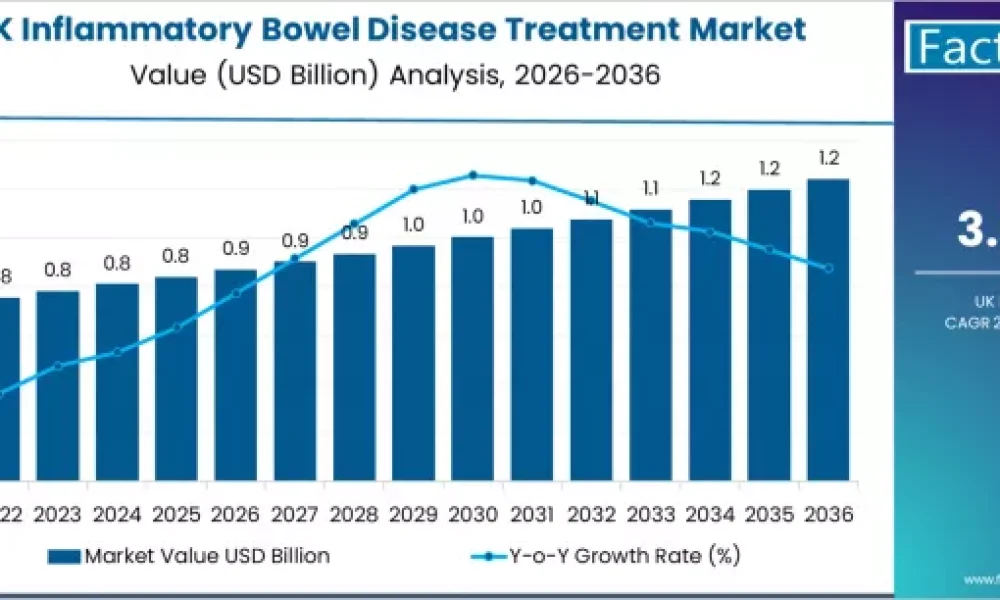
The UK’s inflammatory bowel disease (IBD) treatment market is expected to develop at a compound annual growth rate (CAGR) of 3.6% between 2026 and 2036, from USD 0.87 billion in 2026 to over USD 1.24 billion by 2036.
As medical research advances and new treatment modalities emerge, demand for effective IBD treatment solutions continues to expand across the UK, creating opportunities for pharmaceutical innovation, clinical care pathways, and supportive healthcare infrastructure.
Quick Stats for UK IBD Treatment Industry
- UK IBD Treatment Sales Value (2026): USD 0.87 billion
- UK IBD Treatment Forecast Value (2036): USD 1.24 billion
- UK IBD Treatment Forecast CAGR: 3.6%
- Leading Product Type in UK IBD Treatment Industry: Crohn’s Disease (62.3%)
- Key Growth Regions in UK IBD Treatment Industry: England, Scotland, Wales, and Northern Ireland
- Regional Leadership: England holds the leading position in demand
- Key Players in UK IBD Treatment Industry: AbbVie Incorporated, Takeda Pharmaceutical Company Limited, Johnson & Johnson Services Incorporated, Pfizer Incorporated, Eli Lilly and Company, Biogen Incorporated, Novartis AG, UCB S.A., CELLTRION INC., Merck & Co. Incorporated
To access the complete data tables and in-depth insights, request a Discount On The Report here: https://www.factmr.com/connectus/sample?flag=S&rep_id=12668
Market Overview
IBD is characterized by periodic flare-ups and remission periods, necessitating ongoing treatment and monitoring. Standard management includes anti-inflammatory drugs, immunosuppressants, biologics, small molecule therapies, and supportive care. The UK healthcare landscape — with its strong public healthcare system, established gastroenterology networks, and emphasis on evidence-based medicine — supports broad access to IBD care, though disparities in treatment uptake and waiting times persist.
Rising patient numbers, increasing adoption of advanced therapies, and improvements in early diagnosis are key contributors to demand.
Key Demand Drivers
1. Increasing Prevalence of IBD
IBD incidence and prevalence in the UK continue to rise.
Greater diagnosis rates across all age groups
Crohn’s disease and ulcerative colitis affecting both adults and children
Influences from lifestyle, environmental, and genetic factors
This growing patient pool is expanding demand for both conventional and advanced treatment options.
2. Advances in Therapeutic Options
New and improved IBD treatments are shaping care.
Expanded use of biologic agents targeting specific inflammatory pathways
Growth in small molecule therapies such as JAK inhibitors
Personalized treatment approaches guided by biomarkers
These advancements support better disease control and longer remission durations.
3. Enhanced Diagnostic Capabilities
Improved detection promotes earlier intervention.
Wider availability of colonoscopy and imaging technologies
Non-invasive diagnostic biomarkers
Earlier identification of IBD and differentiation from other gastrointestinal disorders
Early diagnosis increases the window for effective therapy and long-term management.
4. Increased Awareness and Patient Education
Patient advocacy and professional education efforts are growing.
Awareness campaigns highlighting symptoms and treatment options
Greater patient engagement in long-term disease management
Enhanced access to clinical information and support groups
Better awareness drives earlier healthcare seeking and adherence to therapy.
Market Segmentation Analysis
By Treatment Type
Aminosalicylates:
Widely used in mild-to-moderate ulcerative colitis.Corticosteroids:
Used for short-term flare management.Immunosuppressants:
Used to modulate immune response and maintain remission.Biologic Therapies:
Monoclonal antibodies targeting TNF-alpha, integrins, and interleukins.Small Molecule Therapies:
Including JAK inhibitors and other oral agents.Supportive and Adjunctive Therapies:
Nutritional support, probiotics, and symptom relief medications.
Biologic and small molecule therapies represent the fastest-growing segments due to clinical efficacy and patient outcomes.
By Distribution Channel
Hospitals and Specialty Clinics:
Primary channels for complex IBD treatments and biologic infusions.Retail Pharmacies:
Key outlets for oral therapies and supportive medications.Online Pharmacy & Delivery Services:
Growing channel due to convenience and chronic medication refills.
By Patient Demographics
Adult Patients:
Largest segment due to higher IBD prevalence in adult age groups.Pediatric Patients:
Increasing recognition and specialized care for early-onset IBD.Geriatric Patients:
Growing due to improved life expectancy and cumulative disease burden.
Healthcare Infrastructure and Policy Environment
The UK’s National Health Service plays a central role in IBD care.
National IBD registries and treatment guidelines
Structured referral pathways to gastroenterology specialists
Emphasis on cost-effective, evidence-based therapies
NHS commissioning decisions and drug formulary listings significantly influence treatment access and uptake.
Challenges and Market Restraints
1. High Cost of Advanced Therapies
Biologic and targeted therapies carry significant price tags
Cost constraints within public healthcare funding
Need for cost-effectiveness evidence
2. Variability in Patient Access and Waiting Times
Regional disparities in specialist care availability
Waiting times for diagnostic procedures and therapy initiation
3. Adverse Effects and Long-Term Safety Concerns
Potential side effects of immunosuppressive and biologic agents
Need for monitoring and patient education on risks
Emerging Trends and Opportunities
1. Personalized and Precision Medicine Approaches
Biomarker-driven treatment selection
Tailored therapy for individual patient profiles
2. Growth of Biosimilars
Introduction of cost-competitive alternatives to original biologics
Expanded patient access through lower therapy costs
3. Digital Health and Remote Monitoring
Use of telehealth for routine follow-ups
Mobile apps for symptom tracking and adherence support
4. Combination Therapies and Pipeline Innovation
New combinations targeting multiple pathways
Emerging drugs with novel mechanisms of action
Competitive Landscape Overview
Pharmaceutical companies and healthcare stakeholders are focusing on:
Development of next-generation biologics and oral agents
Real-world evidence studies to support treatment value
Patient support services and therapy education programs
Partnerships with NHS and specialist centers for guideline adoption
Innovation, safety profiles, and payer acceptance are key competitive differentiators in this market.
Future Outlook
The demand for inflammatory bowel disease treatment in the UK is expected to grow steadily through 2035, propelled by rising disease prevalence, improvements in diagnostic and therapeutic technologies, and broader awareness of chronic disease management. While challenges such as high therapy costs and access variability persist, opportunities in personalized treatments, digital health integration, and biosimilars will help address unmet needs.
Stakeholders that emphasize patient outcomes, cost-effective solutions, and collaborative care models will be best positioned to capture long-term growth in this evolving treatment landscape. Demand will continue to shift toward advanced biologic and targeted therapies while supportive care remains essential for comprehensive disease management.
Have specific requirements or need assistance on report pricing or have a limited budget? Please contact [email protected]
About Fact.MR:
Fact.MR is a global market research and consulting firm, trusted by Fortune 500 companies and emerging businesses for reliable insights and strategic intelligence. With a presence across the U.S., UK, India, and Dubai, we deliver data-driven research and tailored consulting solutions across 30+ industries and 1,000+ markets. Backed by deep expertise and advanced analytics, Fact.MR helps organizations uncover opportunities, reduce risks, and make informed decisions for sustainable growth.



