
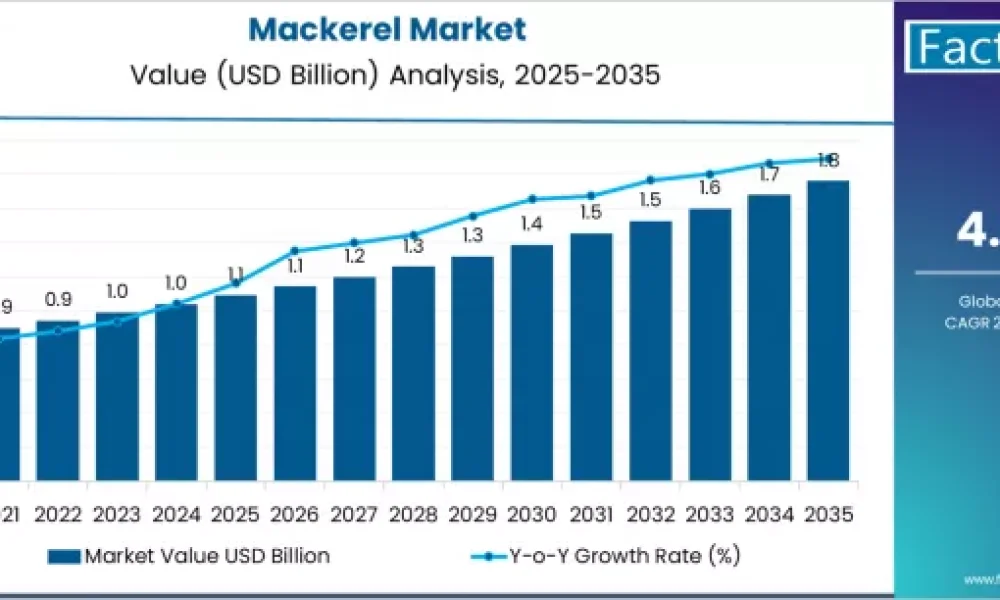
The global mackerel market is on track for consistent expansion between 2025 and 2035, fueled by rising health awareness, increasing per-capita seafood consumption, and strong demand for nutrient-rich, affordable protein sources. Mackerel—widely valued for its high omega-3 fatty acids, versatility, and accessibility—continues to gain traction across retail, foodservice, and global trade channels. Growing interest in sustainable fishing and the surging popularity of ready-to-eat and canned seafood products are further strengthening market prospects.
According to recent market assessments, the global mackerel market is projected to expand from USD 1.09 billion in 2025 to approximately USD 1.76 billion by 2035, reflecting an absolute increase of USD 0.67 billion during the forecast period—representing 61.5% total growth, supported by a 4.9% CAGR from 2025 to 2035.
Market Size & Growth Outlook
The decade ahead signals a strong performance for the mackerel industry as consumer preferences shift toward nutrient-dense seafood options. The market’s growth—from USD 1.09 billion in 2025 to roughly USD 1.76 billion in 2035—is driven by improved access to frozen, fresh, and canned mackerel formats, expanding retail penetration, and growing acceptance in non-traditional consumer markets.
This steady growth trajectory underscores the market’s resilience, supported by enhanced cold-chain systems, seafood sustainability initiatives, and rising demand for high-protein diets across Europe, Asia-Pacific, and North America.
To access the complete data tables and in-depth insights, request a Discount On The Report here: https://www.factmr.com/connectus/sample?flag=S&rep_id=834
Key Growth Drivers
- Rising Health & Nutrition Awareness
Mackerel’s rich nutritional profile—high omega-3s, proteins, vitamins, and minerals—has elevated its global demand. Increasing consumer focus on heart health, immunity, and low-fat diets is encouraging households to incorporate oily fish such as mackerel as part of their regular diets.
- Strong Demand for Affordable Protein Sources
Compared to salmon and tuna, mackerel offers a cost-effective protein alternative. This is especially significant in emerging markets where price sensitivity is high yet nutritional awareness is growing rapidly.
- Expansion of Global Supply Chains & Trade
Improved seafood processing infrastructure, cold-chain logistics, and exports have strengthened international mackerel availability. Europe remains a key exporter, while Asia and Africa are prominent consumers.
- Growth of Canned & Ready-to-Eat Products
The popularity of canned mackerel—driven by convenience, long shelf-life, and affordability—continues to climb. Ready-to-eat variants and flavored canned products are gaining attention among younger consumers.
Regional Insights
Europe Leads, Asia-Pacific & Africa Gain Momentum
Europe remains a dominant force, particularly Norway, Iceland, and the UK, due to large-scale catch volumes and strong export capabilities.
Meanwhile, Asia-Pacific—led by Japan, China, and Southeast Asia—continues to experience rising demand for both fresh and processed mackerel. African countries, including Nigeria and Egypt, rely heavily on imported frozen mackerel, driven by population growth and strong demand for affordable seafood.
Technology, Processing, and Supply Chain Trends
- Advanced freezing technologies improving quality retention in exported products.
- Sustainable fishing certifications such as MSC gaining prominence to appeal to conscious consumers.
- Automated processing systems reducing operational costs and improving hygiene standards.
- Innovative flavoring and packaging boosting value-added product segments.
These advancements are helping processors deliver superior quality, extend shelf-life, and meet evolving consumer expectations.
Challenges
Despite strong growth, the industry faces certain headwinds:
- Variations in catch volumes due to climate change and overfishing concerns.
- Price fluctuations in global seafood trade.
- Strict regulatory frameworks governing wild-catch quotas in Europe and other regions.
- Growing preference for sustainably certified products, requiring ongoing investment by producers.
Strategic Implications
For Industry Stakeholders
- Diversify product portfolios with premium canned, smoked, and ready-to-eat mackerel products.
- Invest in sustainability, traceability, and eco-label certifications.
For Retailers & Distributors
- Expand mackerel offerings across fresh, frozen, and canned categories.
- Strengthen cold-chain and direct-to-consumer distribution channels.
For Investors
- Seafood remains a high-demand, stable sector; mackerel offers attractive mid-term returns.
- Value-added segments—especially flavored and convenience products—present strong growth opportunities.
Outlook Summary
From 2025 to 2035, the global mackerel market is set to grow steadily as consumers increasingly seek healthy, affordable, and convenient seafood options. Supported by sustainability initiatives, technological innovation, and expanding global trade, mackerel stands out as a resilient and high-potential segment within the seafood industry. Despite regulatory and environmental challenges, strong demand from Europe, Asia-Pacific, and Africa will continue to propel market expansion, making the coming decade a promising period for stakeholders across the value chain.
Have a specific Requirements and Need Assistant on Report Pricing or Limited Budget please contact us – [email protected]
About Fact.MR
Fact.MR is a global market research and consulting firm, trusted by Fortune 500 companies and emerging businesses for reliable insights and strategic intelligence. With a presence across the U.S., UK, India, and Dubai, we deliver data-driven research and tailored consulting solutions across 30+ industries and 1,000+ markets. Backed by deep expertise and advanced analytics, Fact.MR helps organizations uncover opportunities, reduce risks, and make informed decisions for sustainable growth.



