
U.S. Combined Heat and Power (CHP) System Market Size and Share Analysis
The U.S. Combined Heat and Power (CHP) system market is positioned for strong growth over the coming decade, reflecting the country’s increasing focus on energy efficiency, decarbonization, and resilient power infrastructure. The market is projected to be valued at US$ 6.7 billion in 2026 and is expected to reach approximately US$ 10.9 billion by 2033, expanding at a compound annual growth rate (CAGR) of 7.2% between 2026 and 2033. This upward trajectory is fueled by the growing adoption of high-efficiency distributed energy systems across commercial, industrial, and institutional sectors.
As the United States accelerates its clean energy transition, CHP systems are emerging as a practical and economically viable solution that supports both cost savings and emissions reduction targets.
Understanding CHP Systems and Their Efficiency Advantage
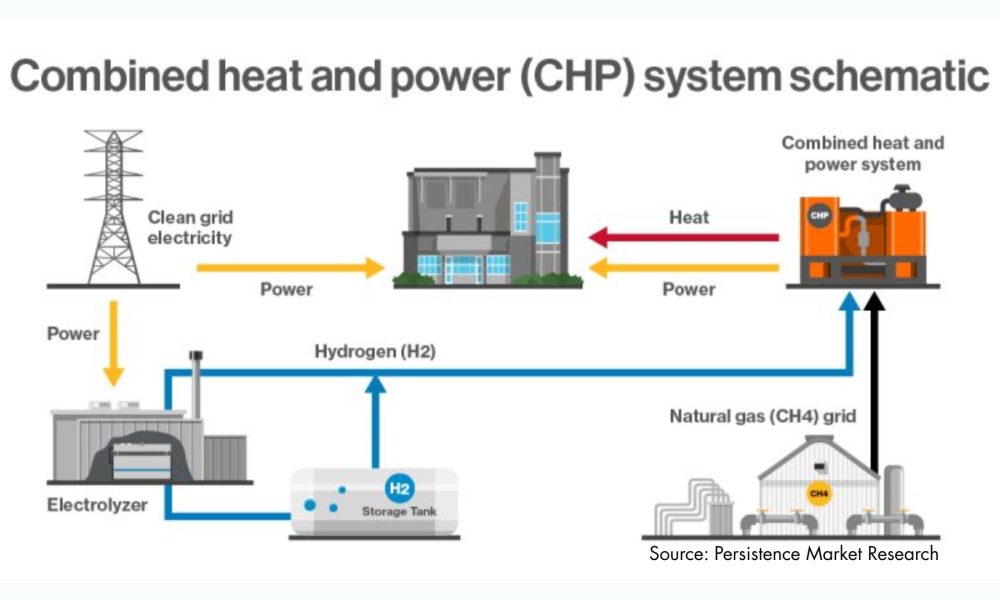
Combined Heat and Power (CHP), also known as cogeneration, is a system that simultaneously produces electricity and useful thermal energy from a single fuel source. Unlike conventional power generation, which wastes a significant portion of energy as heat, CHP systems capture and reuse this thermal output for heating, cooling, or industrial processes.
Traditional separate heat and power systems typically operate at overall efficiencies of 45% to 55%, whereas CHP systems can achieve fuel-use efficiencies of 60% to 80%. This significant improvement translates into reduced fuel consumption, lower operational costs, and decreased greenhouse gas emissions.
In an environment where energy costs and carbon reduction mandates are increasingly critical, CHP’s efficiency advantage is a major driver of market growth.
Get Your FREE Sample Report Instantly – Click Now: https://www.persistencemarketresearch.com/samples/12958
Market Growth Drivers
- Rising Focus on Energy Efficiency
Energy efficiency remains a cornerstone of U.S. energy policy and corporate sustainability strategies. Industries with high thermal and electrical loads—such as manufacturing plants, hospitals, universities, and data centers—are increasingly deploying CHP systems to optimize energy use.
By producing power on-site and capturing waste heat, facilities can reduce transmission losses, stabilize energy supply, and significantly cut utility expenses. For large-scale operations, these cost savings can be substantial over the lifecycle of the system.
- Decarbonization and Climate Goals
Federal and state-level climate initiatives are accelerating CHP adoption. Many states have implemented renewable portfolio standards (RPS), clean energy standards, and emissions reduction mandates that encourage efficient energy technologies.
Although CHP often uses natural gas as a primary fuel, its higher efficiency results in lower carbon intensity compared to conventional grid power generation. Additionally, the integration of renewable fuels such as biogas and hydrogen blends is expanding CHP’s role in long-term decarbonization strategies.
Corporate environmental, social, and governance (ESG) commitments are also motivating businesses to invest in cleaner and more efficient on-site power solutions.
- Grid Reliability and Energy Resilience
Grid reliability concerns—exacerbated by extreme weather events, aging infrastructure, and rising electricity demand—are pushing organizations toward distributed energy systems. CHP systems provide reliable baseload power and can operate independently during grid outages, enhancing resilience for critical facilities.
Hospitals, military installations, universities, and industrial facilities increasingly rely on CHP systems to ensure uninterrupted power supply. This resilience factor is becoming a decisive investment consideration, particularly in regions prone to natural disasters.
- Industrial and Institutional Demand
The industrial sector represents a major share of the U.S. CHP market due to high and continuous thermal energy requirements. Industries such as chemicals, food processing, pulp and paper, and refining benefit from CHP’s ability to provide consistent heat and electricity.
Similarly, institutional sectors—including healthcare facilities, educational campuses, and district energy systems—are expanding CHP adoption to lower energy bills and meet sustainability goals.
The commercial sector is also witnessing growth, especially in mixed-use developments and large commercial complexes where combined heating and cooling demands justify CHP deployment.
Get a Customized Market View in One Click: https://www.persistencemarketresearch.com/request-customization/12958
Technology and Fuel Trends
Natural Gas Dominance with Renewable Integration
Natural gas remains the primary fuel for CHP systems in the United States due to its availability, affordability, and relatively lower carbon intensity compared to coal. However, the market is gradually incorporating renewable fuels such as landfill gas, biomass, and renewable natural gas (RNG).
Hydrogen blending in gas turbines and reciprocating engines is also gaining research attention, potentially opening pathways for near-zero carbon CHP systems in the future.
System Types and Capacity Segments
CHP systems are available in various configurations, including gas turbines, steam turbines, reciprocating engines, and fuel cells.
- Reciprocating engines dominate smaller and mid-scale installations due to flexibility and lower capital costs.
- Gas turbines are preferred for larger industrial applications requiring high thermal output.
- Fuel cell-based CHP systems are emerging as a low-emission alternative, though higher upfront costs currently limit widespread adoption.
Capacity-wise, systems range from small-scale (<10 MW) installations for commercial buildings to large-scale (>50 MW) units serving industrial plants and district energy networks.
Regional Dynamics Within the U.S.
Certain states lead in CHP deployment due to supportive policies and strong industrial bases. States such as Texas, California, New York, and Massachusetts have implemented incentives, rebates, and regulatory frameworks that encourage CHP installations.
In addition, regions with high electricity costs and colder climates—where thermal demand is significant—demonstrate stronger CHP adoption rates.
State-level decarbonization mandates and infrastructure modernization initiatives will continue to shape regional market dynamics through 2033.
Challenges and Market Constraints
Despite strong growth prospects, the CHP market faces certain challenges:
- High upfront capital costs can deter smaller businesses from investing without financial incentives.
- Regulatory complexity and interconnection requirements may slow project approvals.
- Natural gas price volatility can influence operational cost calculations.
- Increasing renewable penetration on the grid may reduce some of CHP’s cost competitiveness in regions with abundant low-cost renewable electricity.
However, federal incentives, tax credits, and infrastructure funding programs are expected to mitigate many of these constraints.
Competitive Landscape and Investment Outlook
The competitive environment includes major energy equipment manufacturers, engineering firms, and energy service companies (ESCOs). Market participants compete based on system efficiency, reliability, maintenance support, and financing solutions.
Energy-as-a-service (EaaS) models are becoming more common, allowing organizations to deploy CHP systems with reduced upfront investment through third-party ownership and performance-based contracts.
Investments in research and development are also focusing on digital optimization tools, remote monitoring, predictive maintenance, and hybrid integration with renewable energy systems.
For In-Depth Competitive Analysis, Buy Now: https://www.persistencemarketresearch.com/checkout/12958
Future Outlook
With projected growth from US$ 6.7 billion in 2026 to US$ 10.9 billion by 2033, the U.S. CHP system market is set to experience sustained expansion. The combination of energy efficiency gains, emissions reduction benefits, and enhanced resilience positions CHP as a strategic component of the nation’s evolving energy landscape.
As industries and institutions continue to seek reliable, cost-effective, and environmentally responsible energy solutions, CHP systems will play a crucial role in bridging the gap between conventional energy infrastructure and the low-carbon future.
In summary, the U.S. CHP market represents a high-growth segment within the distributed energy ecosystem, driven by efficiency advantages, policy support, and rising demand for resilient power systems—making it a vital contributor to America’s energy transformation journey.
About Persistence Market Research:
Persistence Market Research delivers strategic research solutions that drive business growth. Founded in 2012 and registered in England and Wales in 2023 as Persistence Research & Consultancy Services Ltd., we have completed 3,600+ custom and syndicated studies and supported 2,700+ projects for leading research firms. Combining traditional methodologies with modern tools, we provide actionable insights to multinational corporations, consultants, investors, and government bodies, earning strong trust through long-term client relationships.
Contact Us:
Persistence Market Research
Second Floor, 150 Fleet Street,
London, EC4A 2DQ, United Kingdom
USA Phone: +1 646-878-6329
UK Phone: +44 203-837-5656
Email: [email protected]
Web: https://www.persistencemarketresearch.com




