
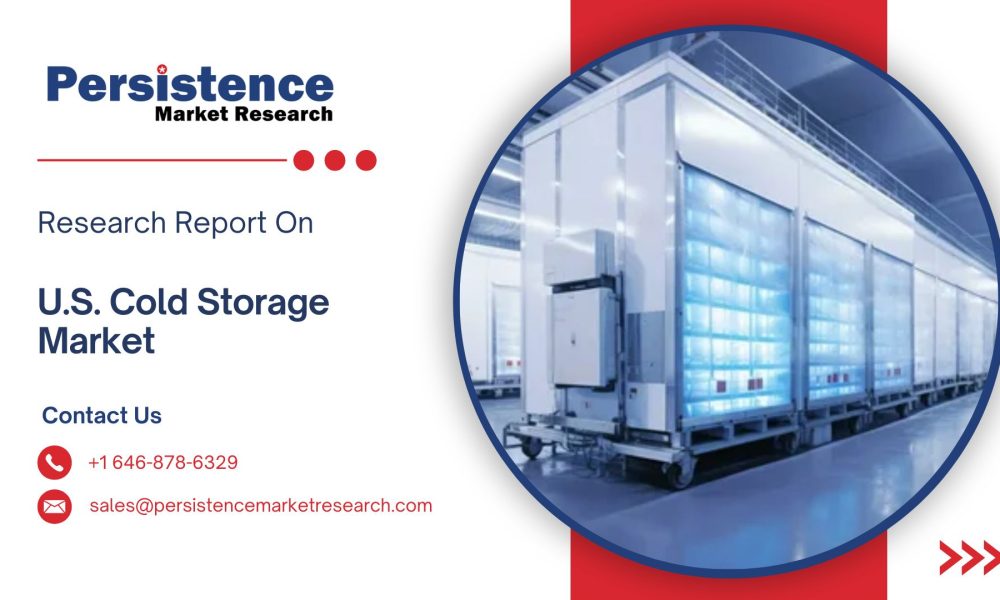
The U.S. cold storage market has been witnessing robust growth, driven by increasing demand for refrigerated warehousing and logistics across multiple sectors, including food and beverage, pharmaceuticals, and e-commerce. According to Persistence Market Research, the market is expected to be valued at US$ 39.6 billion in 2025 and reach US$ 91.4 billion by 2032, growing at a CAGR of 12.7% during the forecast period. This substantial growth reflects the rising need for temperature-controlled storage solutions to ensure the quality and safety of perishable goods.
The market’s expansion is primarily fueled by factors such as the surge in frozen and processed food consumption, the rising adoption of cold chain logistics, and technological advancements in refrigeration systems. Among all segments, temperature-controlled warehousing for frozen foods is emerging as the leading segment due to increasing consumer preference for convenience foods and ready-to-eat meals. Geographically, California and Texas are notable leaders in the U.S. cold storage landscape, largely because of their high population density, significant food production, and well-developed distribution networks that cater to both domestic and international markets.
Get | Download Sample Copy with TOC, Graphs & List of Figures @ https://www.persistencemarketresearch.com/samples/35472
Key Highlights from the Report
- The U.S. cold storage market is projected to more than double in value from US$ 39.6 billion in 2025 to US$ 91.4 billion by 2032.
- The market is expected to grow at a CAGR of 12.7% between 2025 and 2032.
- Frozen food storage accounts for the largest segment due to rising demand for convenience foods and frozen perishables.
- Pharmaceutical cold storage is witnessing rapid adoption due to stringent regulations and the expansion of vaccine storage requirements.
- Technological innovations, including IoT-based monitoring systems, are enhancing operational efficiency and reducing energy consumption.
- Geographical expansion is concentrated in major industrial hubs such as California, Texas, and the Midwest due to favorable infrastructure and logistics support.
Market Segmentation
The U.S. cold storage market can be broadly segmented based on product type and end-user. By product type, the market includes refrigerated warehouses, frozen storage units, and blast freezers, with refrigerated warehouses capturing the largest share due to their versatility across multiple industries. Blast freezers, while niche, are witnessing steady growth because of the increasing need for rapid freezing in the seafood and ready-to-eat meals segments.
From an end-user perspective, the market is segmented into food and beverages, pharmaceuticals, retail, and logistics providers. The food and beverage sector remains the dominant end-user, driven by the rising consumption of frozen foods, fresh produce, and dairy products. The pharmaceutical segment is experiencing accelerated growth due to strict regulatory requirements and the surge in cold-chain dependent drugs, vaccines, and biotech products. Retail chains and e-commerce platforms are also increasingly adopting cold storage solutions to meet customer demands for fresh and frozen deliveries.
Regional Insights
The U.S. cold storage market is concentrated in regions with robust industrial and consumer demand. The West Coast, particularly California, has emerged as a major hub due to its extensive agricultural output, high population, and well-developed infrastructure for temperature-controlled logistics. In addition, the state serves as a key gateway for international food imports, further boosting demand for cold storage facilities.
The Midwest and South regions, including Texas and Illinois, are also witnessing significant market penetration. These regions benefit from strategic distribution centers, proximity to major highways, and industrial growth that supports both domestic supply chains and export-oriented operations. Increasing investments in state-of-the-art cold storage facilities are anticipated to further strengthen regional dominance over the forecast period.
Market Drivers
The growth of the U.S. cold storage market is propelled by multiple dynamic factors. Firstly, the rising consumption of frozen and processed foods is a primary driver. Consumers increasingly prefer convenience foods, leading retailers and manufacturers to invest heavily in temperature-controlled storage solutions to maintain product quality and extend shelf life.
Secondly, the expansion of the pharmaceutical industry and stringent regulatory mandates are contributing to market growth. Vaccines, biologics, and temperature-sensitive medicines require precise cold storage and transportation solutions, fostering the demand for modernized facilities equipped with advanced monitoring and control systems. Furthermore, technological innovations in refrigeration, including IoT-enabled monitoring, energy-efficient equipment, and automated inventory management, have enhanced operational efficiency and reduced costs, making cold storage investments increasingly attractive.
For customization options before purchasing: https://www.persistencemarketresearch.com/request-customization/35472
Market Restraints
Despite its growth, the U.S. cold storage market faces certain challenges. High capital expenditure is a significant restraint, as setting up modern cold storage facilities with advanced technology requires substantial investment. Smaller players often struggle to compete with established companies, limiting market penetration.
Additionally, energy-intensive operations contribute to high operational costs. Maintaining optimal temperatures across large-scale warehouses consumes significant electricity, creating financial and environmental pressures. Regulatory compliance also poses challenges, particularly in the pharmaceutical sector, where temperature deviations can lead to substantial losses and legal implications. These restraints may slow the adoption of cold storage solutions in certain market segments, particularly for SMEs and smaller regional operators.
Market Opportunities
The U.S. cold storage market presents several lucrative opportunities for investors and industry participants. With the rise of e-commerce and last-mile delivery, companies are increasingly integrating cold storage facilities with logistics networks to ensure timely and fresh deliveries to consumers. This trend is expected to accelerate with the growth of online grocery platforms.
Another key opportunity lies in renewable energy and green technologies. As energy efficiency becomes critical, integrating solar-powered refrigeration systems and advanced insulation can significantly reduce operational costs while aligning with sustainability goals. Additionally, expansion into underdeveloped regions, partnerships with food manufacturers, and investment in automated cold storage solutions offer opportunities to capture untapped demand and improve operational scalability.
Company Insights
Key players dominating the U.S. cold storage market include:
- Americold Realty Trust
- Lineage Logistics
- Preferred Freezer Services
- VersaCold Logistics Services
- Nordic Logistics and Warehousing
Recent Developments:
- Americold Realty Trust announced the expansion of its West Coast refrigerated warehouses to enhance distribution capacity for frozen and perishable foods.
- Lineage Logistics implemented IoT-enabled cold storage solutions to monitor temperature fluctuations and improve energy efficiency across its U.S. facilities.
Buy Now: https://www.persistencemarketresearch.com/checkout/35472
Future Opportunities and Growth Prospects
The future of the U.S. cold storage market appears promising, with a projected value of US$ 91.4 billion by 2032. Innovations in energy-efficient refrigeration, automation, and IoT-enabled monitoring systems are expected to play a pivotal role in shaping market dynamics. Expansion into emerging urban centers and integration with e-commerce logistics networks will likely enhance market accessibility.
Moreover, sustainability-focused investments, including solar-powered storage units and green construction materials, are anticipated to provide competitive advantages for forward-looking companies. Partnerships between cold storage operators and food manufacturers can unlock additional revenue streams and optimize supply chains, paving the way for sustained growth throughout the forecast period.




