
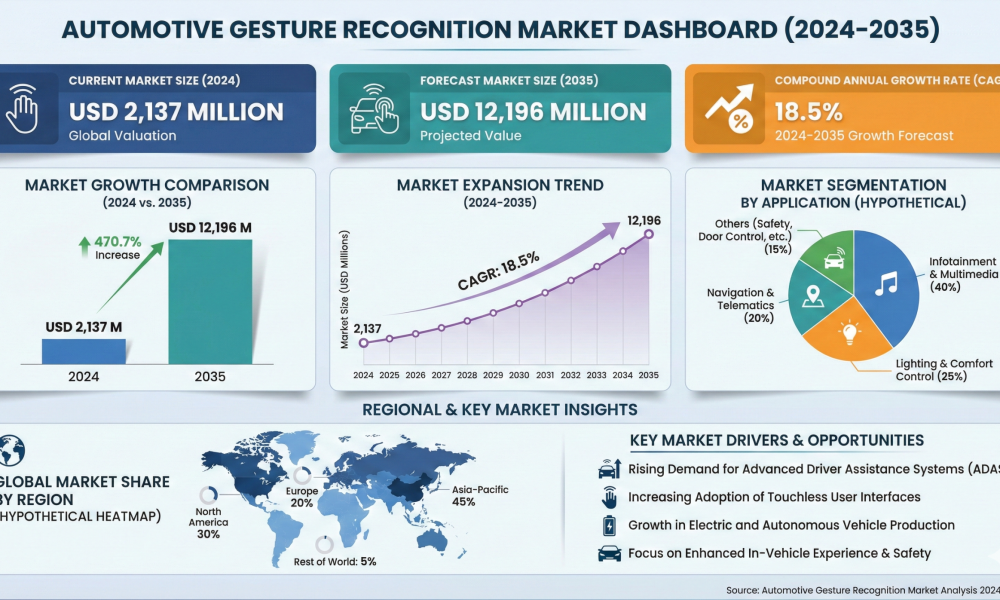
The U.S. automotive gesture recognition market is set for robust growth from 2025 to 2035, driven by the increasing integration of advanced driver assistance systems (ADAS), the growing adoption of connected and autonomous vehicles, and rising consumer demand for enhanced in-car user experiences. Automotive gesture recognition technology enables drivers and passengers to control vehicle functions—such as infotainment systems, climate control, and navigation—through hand gestures, improving safety, convenience, and overall driving experience. This report provides a comprehensive outlook on market size, growth drivers, U.S. regional dynamics, technology trends, and strategic implications for industry stakeholders.
Market Size and Growth
The U.S. automotive gesture recognition market is projected to grow from approximately USD 180 million in 2025 to around USD 410 million by 2035, reflecting a compound annual growth rate (CAGR) of 8.5%. Globally, the market is expected to expand from USD 620 million in 2025 to USD 1.5 billion by 2035, supported by increasing adoption in passenger vehicles, luxury cars, and autonomous vehicle platforms. The growth is indicative of rising investments in advanced in-cabin technologies and consumer preference for touchless interfaces.
To access the complete data tables and in-depth insights, request a Discount On The Report here: https://www.factmr.com/connectus/sample?flag=S&rep_id=20
Key Growth Drivers
- Increasing Integration of ADAS and Connected Vehicles
The rise of ADAS and connected vehicle ecosystems has accelerated demand for gesture recognition solutions. These systems enhance safety by minimizing distractions and allowing drivers to interact with in-car functions without taking their hands off the steering wheel.
- Growing Demand for Enhanced User Experience
Consumers increasingly prefer vehicles equipped with intuitive interfaces that simplify in-car controls. Gesture recognition technology delivers a futuristic, touchless experience, aligning with the expectations of tech-savvy buyers.
- Expansion of Electric and Autonomous Vehicles
Electric vehicles (EVs) and autonomous vehicles (AVs) are being designed with advanced cabin systems, including gesture-based controls, to enhance passenger comfort and convenience. This trend significantly fuels demand for innovative gesture recognition solutions.
- Technological Advancements
Advancements in sensor technology, infrared cameras, AI algorithms, and machine learning are enhancing the accuracy, responsiveness, and affordability of gesture recognition systems. Improved integration with infotainment and safety systems is also driving adoption.
U.S. Market Insights
The U.S. remains a leading market for automotive gesture recognition due to high adoption of premium vehicles, robust automotive R&D investments, and a strong focus on smart mobility solutions. Key insights include:
- Passenger vehicles account for the largest segment, driven by luxury and mid-tier vehicles incorporating advanced in-cabin systems.
- Aftermarket solutions are gradually emerging, offering upgrades for existing vehicles.
- OEM collaborations with technology providers are facilitating rapid deployment and integration of gesture recognition features.
Challenges include system cost, compatibility with diverse vehicle platforms, and consumer education on effective usage.
Technology Trends and Competition
The U.S. automotive gesture recognition market is competitive, with global tech firms, OEMs, and specialized startups driving innovation. Key trends include:
- AI-powered gesture recognition enabling precise detection and customizable functions
- Integration with infotainment, climate control, and navigation systems for seamless in-car experience
- Sensor miniaturization and cost optimization to expand adoption in mid-tier vehicles
- Combination with voice and touch interfaces for multimodal human-machine interaction
These innovations enhance driver convenience, safety, and operational efficiency within the vehicle cabin.
Challenges
Despite promising growth, the market faces certain limitations:
- High system costs for mainstream adoption
- Technical complexity and calibration requirements
- Limited consumer awareness of advanced gesture functionality
- Compatibility challenges across vehicle models and platforms
Manufacturers and developers must focus on cost-effective, scalable, and user-friendly solutions to overcome these barriers.
Strategic Implications
For Manufacturers and OEMs:
Invest in R&D to develop affordable, high-precision gesture recognition systems and collaborate with tech partners to enhance system integration. Focus on expanding applications beyond infotainment, including safety and environmental controls.
For Vehicle Service Providers:
Prepare for aftermarket installation demand and provide technical support for seamless gesture recognition operation, ensuring customer satisfaction.
For Investors:
The U.S. automotive gesture recognition market offers high-growth potential, particularly in EVs, AVs, and luxury passenger vehicles. Strategic investments in technology innovation, sensor integration, and OEM partnerships are expected to yield long-term returns.
Outlook Summary
From 2025 to 2035, the U.S. automotive gesture recognition market is poised for strong growth, driven by adoption of connected, autonomous, and premium vehicles, rising consumer demand for intuitive controls, and continuous technological innovation. While challenges such as cost and system complexity exist, the sector presents lucrative opportunities for manufacturers, OEMs, and investors committed to advancing in-car digital experiences and safety.
Have a specific Requirements and Need Assistant on Report Pricing or Limited Budget please contact us – [email protected]
About Fact.MR
Fact.MR is a global market research and consulting firm, trusted by Fortune 500 companies and emerging businesses for reliable insights and strategic intelligence. With a presence across the U.S., UK, India, and Dubai, we deliver data-driven research and tailored consulting solutions across 30+ industries and 1,000+ markets. Backed by deep expertise and advanced analytics, Fact.MR helps organizations uncover opportunities, reduce risks, and make informed decisions for sustainable growth.



