
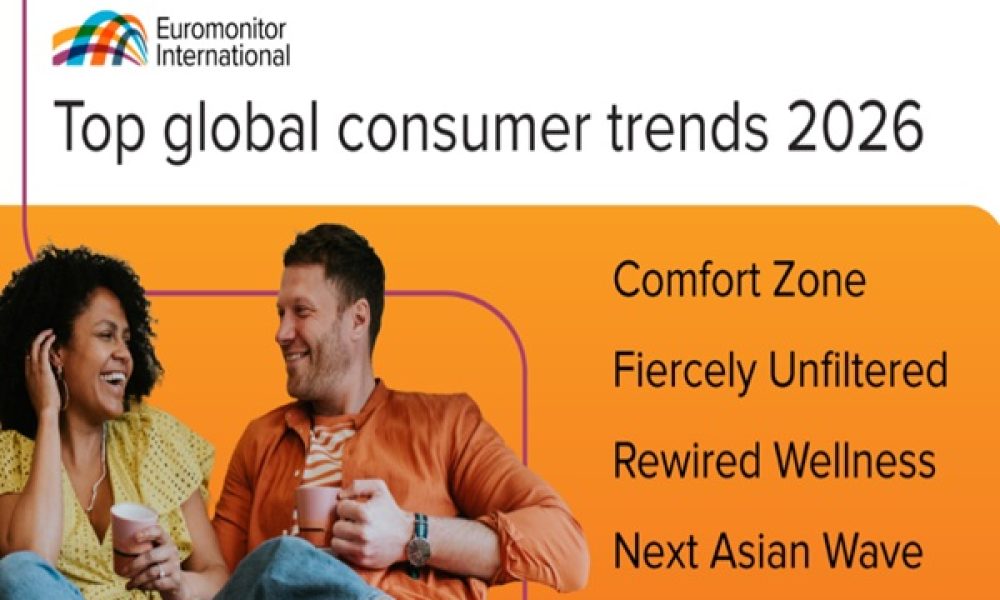
Euromonitor International’s latest analysis reveals a sophisticated consumer market demanding authenticity, scientific validation, and psychological solace amidst global turbulence
Euromonitor International, a leading firm in global market analysis and data research, has released its annual forecast on worldwide buying patterns, pointing to a convergence of economic uncertainty and a deeper search for personal well-being. The findings, summarized in the Global Consumer Trends 2026 report, suggest a profound shift from purely transactional consumption to one deeply rooted in psychological and experiential value. In a world defined by persistent inflation, geopolitical friction, and rapid technological acceleration, consumers are not merely adjusting budgets; they are recalibrating their core priorities. This re-prioritization is creating fertile ground for companies that can genuinely align business models with complex consumer demands for simplicity, integrity, and scientifically validated health outcomes.
The Strategic Retreat to Simplicity and Safety
The notion of “comfort” has evolved from a simple luxury to a crucial psychological necessity in the modern market. As high-level data suggests, a significant 58% of global consumers report experiencing moderate to extreme levels of stress daily. This pervasive anxiety directly translates into a market preference for products and services that mitigate mental load and provide a tangible sense of security and equilibrium. Companies cannot afford to ignore this defensive buying posture. The demand is escalating for offerings that simplify daily routines, promote clear health benefits, and use trusted, natural ingredients. This trend, which Euromonitor terms “Modo Confort,” is a direct reflection of consumers seeking havens from complexity. It compels brands to focus on enhancing consumer confidence and promoting balance, acting as an antidote to market volatility rather than a contributor to it. The strategic imperative is to design for serenity, making the path to purchase and product use as frictionless and reassuring as possible.
The Hypersegmentation of Radical Honesty
Another fundamental shift lies in the consumer’s embrace of radical honesty and the pursuit of unvarnished self-expression, dubbed “Autenticidad sin Filtros.” This trend moves beyond simple corporate social responsibility into a deeper demand for genuine alignment between product and personal identity. Euromonitor’s data highlights this clearly: 65% of consumers feel society accepts their true identity, a finding that fuels a market where 50% actively seek customized products and services. The days of mass-market appeal are giving way to hypersegmentation. The current challenge for brands is translating an appreciation for diversity into profitable, micro-targeted strategies. Successful engagement requires moving beyond superficial demographic grouping to understand the nuanced psychographic profiles that drive purchases. This involves leveraging advanced data analytics to connect with specific, self-defined communities. Brands must be prepared to have authentic and sometimes challenging conversations with their audiences, sacrificing broad, generic appeal for deep, committed loyalty from specific consumer segments.
The Clinical Ascent of Wellness
The concept of wellness is undergoing a significant professionalization, moving from vague lifestyle choices to concrete, scientifically-backed solutions. Termed “Bienestar Reprogramado,” this trend is characterized by a growing consumer willingness to invest in premium products that possess technological or clinical validation. Evidence of this shift is the 49% of consumers who state they would pay a 10% premium for scientifically backed beauty products. This indicates a consumer base that is increasingly educated and skeptical of unsubstantiated claims. They seek performance and measurable results, reflecting a broader trend where preventative health is treated with the same seriousness as therapeutic medicine. The market is increasingly valuing data-driven narratives. Brands that can effectively communicate the scientific rigor behind their formulations, providing clear data on health outcomes or efficacy, will command greater trust and pricing power. This is already evident in emerging market segments, such as the 9% of consumers pursuing weight loss who now utilize GLP-1 medications, a notable jump from 6% the previous year, demonstrating the speed at which clinical solutions are being mainstreamed.
The Global Gravity of Asia’s Digital Influence
The final key trend spotlights a powerful realignment of global brand influence, with East Asian, and particularly Chinese, brands emerging as sophisticated international competitors, a phenomenon labeled “Nueva Ola Asiática.” This is not merely an export story driven by manufacturing volume; it is a narrative of cultural and digital mastery. These companies are adept at combining innovation and accessible pricing with highly integrated digital and mobile-first consumer experiences. With Chinese exports projected to reach $4,000,000,000 in 2026, their impact on Western markets is set to intensify. Brands outside of this region must urgently optimize their digital and mobile platforms. A crucial element of this competition is the mastery of content to commerce integration, highlighted by the fact that 37% of livestream shoppers use the channel for product discovery. To remain competitive, established international firms must study and emulate the East Asian model of seamless, dynamic, and engaging purchase journeys that treat content and transaction as two sides of the same coin. The report on these Global Consumer Trends 2026 confirms that the next few years will reward companies that pivot from a purely product-centric approach to one that prioritizes consumer well-being, technological sophistication, and genuine self-expression.



