

The fragrance world is full of options. Walk into any department store and you’ll find hundreds of bottles promising distinctiveness, luxury, and personal expression. Most of them smell remarkably similar. Clean, fresh, vaguely floral, occasionally woody in a way that owes more to synthetic chemistry than to actual wood. The mainstream fragrance market has, for decades, converged on a relatively narrow set of profiles that are broadly appealing and broadly interchangeable.
Oud is none of those things.
The oud scent is ancient, complex, and unlike anything that came out of a modern laboratory. It has been worn by royalty, burned in temples, and traded across continents for over a thousand years. And for anyone looking to move beyond the sea of similar-smelling mainstream fragrances, it represents one of the most genuinely distinctive options available. This guide explains why.
The Oud Scent Is Not One Thing
One of the most important things to understand about oud is that there is no single oud scent. The word oud refers to an ingredient, not a fixed profile. What that ingredient smells like depends on where the agarwood came from, which Aquilaria species it was sourced from, how the resin developed over time, and how the oil was extracted and processed.
This variability is not a flaw. It is one of oud’s most compelling qualities. Each origin produces a distinct character, and within those regional profiles there is further variation by grade, age, and distiller. Exploring oud is in many ways like exploring wine, a world where geography, tradition, and craft combine to produce something that can never be fully reduced to a single description.
That said, there are qualities that most genuine oud oils share: warmth, depth, resinous complexity, and a characteristic tenacity that allows the scent to evolve and persist on skin for many hours. These are the qualities that make the oud scent so different from the synthetic fragrance mainstream and so well suited to anyone looking for something genuinely their own.
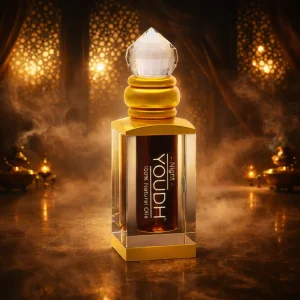
Warmth and Depth: The Defining Qualities
The most consistent qualities of the oud scent across its regional variations are warmth and depth. These are not metaphors. They describe real olfactory experiences that distinguish oud from cooler, lighter fragrance profiles.
Warmth in fragrance terms means that a scent has a quality of heat and closeness. Oud does not diffuse into a room the way a spray perfume does. It radiates from the skin, responds to body temperature, and creates an intimate aromatic presence that draws the nose in rather than projecting outward aggressively. This quality makes it feel personal in a way that many fragrances don’t.
Depth means layering. Oud is not a single note but a complex interplay of many compounds, and those compounds reveal themselves at different rates as the fragrance dries down. The profile you experience in the first ten minutes is not the profile you’ll experience two hours later. This evolution over time is central to what makes the oud scent worth wearing and worth paying attention to.
The Notes That Define the Oud Scent
Within oud’s broad character of warmth and depth, specific notes appear with varying prominence depending on the origin and grade of the oil. The most commonly encountered include:
- Resinous wood: the foundation of almost all oud, a dense, rich woodiness that differs from the cleaner cedar or sandalwood notes of Western perfumery
- Smoke and incense: particularly prominent in Indian oud, a campfire or temple incense quality that gives oud its most dramatic character
- Leather: an animalic, skin-like quality that makes oud feel alive rather than purely botanical
- Dark fruit: notes of dried fig, prune, or dark berry that add sweetness and roundness, most prominent in aged and high-grade ouds
- Earth and moss: a grounded, forest-floor quality that anchors the more volatile upper notes
- Sweetness: in cleaner profiles, particularly Vietnamese oud, a subtle honeyed quality that makes the oil more immediately approachable
The specific combination of notes in a given oud oil is what gives it its character, and that character will interact further with the skin chemistry of the person wearing it, producing an experience that is genuinely individual.
How the Oud Scent Compares to Mainstream Fragrance
Most mainstream fragrances are designed to be broadly appealing, which means they tend toward clean, fresh, and unchallenging profiles. They are engineered in laboratories to deliver a consistent experience across a wide range of wearers and to perform well in the first few seconds of the spray, since that is when purchasing decisions are made at retail.
The oud scent operates on a completely different set of values. It is not designed for immediate mass appeal. It rewards patience, develops over time, and produces different experiences on different people. It is not trying to be everyone’s fragrance. It is trying to be yours.
This is partly why oud has become so important to the niche and artisan fragrance movement. In a market saturated with similar options, oud represents genuine distinctiveness. It has a history, a geography, and a complexity that synthetic constructions cannot replicate. Wearing it is not simply a choice about how you want to smell. It is a statement about the kind of fragrance experience you value.
The Conservation Context
Understanding the oud scent fully requires understanding where it comes from and why it is so rare. Agarwood forms only in Aquilaria trees that have been infected by a specific pathogen, a process that takes years or decades and that cannot be reliably engineered. The rarity of high-grade wild agarwood has made it one of the most valuable natural substances on earth.
This value has driven significant overharvesting. According to CITES, the international body that regulates trade in threatened species, several Aquilaria species are now listed as vulnerable or threatened, and international trade in agarwood is subject to specific controls designed to prevent further depletion of wild populations.
For consumers, this context means that sourcing matters. An oud product from a brand that can speak specifically about where their agarwood came from and how it was obtained is one that’s taking the conservation dimension of this ingredient seriously. Products that offer oud at prices that seem too low to reflect genuine wild agarwood almost certainly rely on farmed wood of lower quality or, in many cases, on synthetic substitutes that bear little genuine relationship to the real ingredient.
Oil-Based Oud vs. Spray Perfume
The oud scent is traditionally experienced as an oil, and there are good practical reasons why this format remains superior for this particular ingredient.
Oil-based oud sits close to the skin and warms with body temperature. It releases its aromatic compounds slowly and continuously, producing the kind of sustained, evolving experience that makes oud so distinctive. The sillage is intimate rather than projective. The scent feels personal.
Alcohol-based spray perfumes, including many marketed as oud fragrances, behave differently. The alcohol carries the lighter compounds into the air quickly, which can produce an impressive initial impression but accelerates the evaporation of the fragrance overall. The deeper, most interesting aspects of oud are often sacrificed to the demands of a format designed for projection rather than longevity and depth.
For anyone wanting to genuinely experience the oud scent as it has been worn for centuries, an oil-based format is the authentic choice. It is also gentler on skin, appropriate in religious and cultural contexts where alcohol is avoided, and typically more economical in use since a single drop goes considerably further than several sprays of an EDP.
How to Build a Fragrance Collection Around Oud
For those new to the oud scent who want to explore it as part of a broader fragrance collection, a few principles help structure the experience productively.
Start with accessibility. If you have no prior experience with oud, begin with a profile described as clean, sweet, or balanced before moving to the more intense expressions. Vietnamese oud or an oud blended with rose or sandalwood gives you the core character of the ingredient without the most confronting aspects of raw Hindi oud.
Explore regional variation. Once you have a sense of oud’s core character, exploring how it changes by origin is one of the most rewarding aspects of the ingredient. The difference between a Vietnamese and an Indian oud is substantial and illuminating.
Consider how oud layers with other notes. Oud combines beautifully with rose, amber, sandalwood, musk, and vanilla. Many of the most interesting oud experiences come from layering a pure oud oil with a complementary fragrance or from using oud as the anchor of a more complex composition.
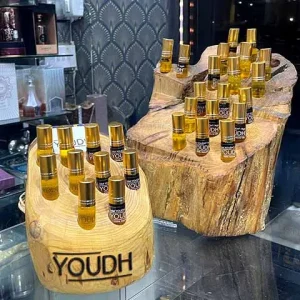
Invest in quality. With oud, the difference between a genuine oil and a synthetic approximation is significant and immediately apparent once you’ve experienced both. Starting with a quality product from a brand committed to natural ingredients, like YOUDH oud oils, gives you the real oud experience to use as your reference point when evaluating other options.
Final Thoughts
The oud scent is not for everyone, and that is part of its appeal. In a fragrance market where most products are designed to offend no one and distinguish no one, oud makes a different kind of offer. It is complex, personal, historically rooted, and deeply distinctive.
For anyone who has felt that mainstream fragrance options all blur together, oud represents one of the most genuine and rewarding alternatives available. It asks something of you in return, a little patience, a willingness to let it develop, an openness to something unfamiliar, but what it gives back is a fragrance experience that is genuinely, unmistakably your own.




