
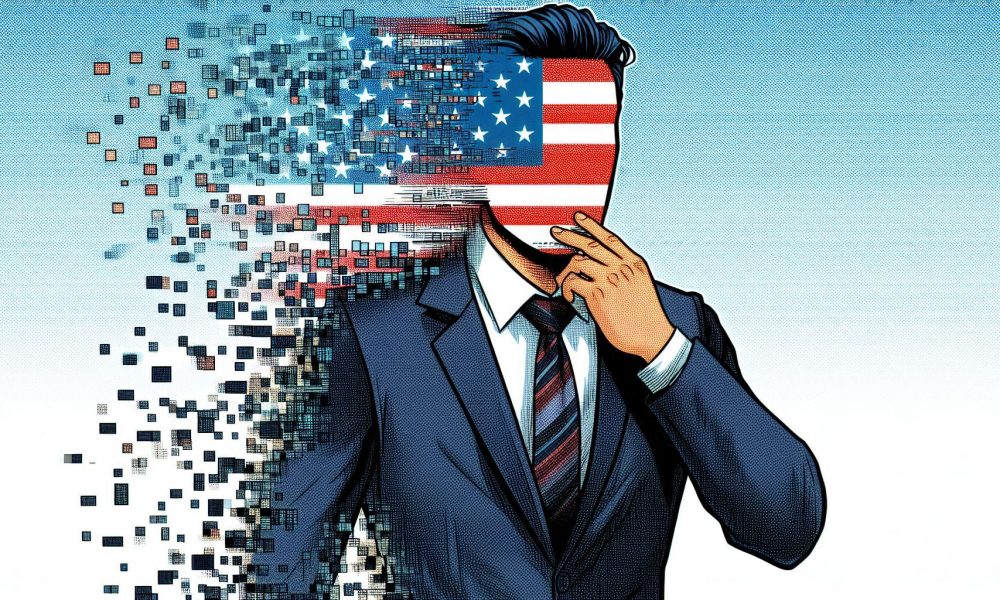
As artificial intelligence redefines how identities are created, governments race to control them.
Amicus International Consulting explains the legal, ethical, and technological battlegrounds of identity in 2025.
VANCOUVER, Canada – June 9, 2025 – In the 20th century, identities were created at birth. In the 21st century, they are engineered—sometimes by governments, and sometimes by artificial intelligence. As nation-states deploy surveillance and centralized ID systems, technologists and digital fugitives are responding with countermeasures. The result is an escalating conflict: a global identity arms race in which facial recognition algorithms, deepfake defences, and biometric obfuscation tools clash with ever-tightening state controls.
Amicus International Consulting, a global leader in legal identity transformation and privacy defence, releases this comprehensive analysis of the current identity warfare playing out between artificial intelligence and government power. With clients ranging from political dissidents to whistleblowers, Amicus is at the forefront of helping individuals navigate this digital struggle legally.
A War Without Guns: The New Battlefield of Identity
The modern state has always controlled identification: issuing passports, driver’s licenses, and social security numbers. But as governments digitize everything—birth certificates, travel histories, even facial templates—identity has become not just a bureaucratic concept but a form of power.
AI is both an enabler and a disruptor. It enables governments to track individuals across borders using facial recognition technology. But it also gives civilians, refugees, and fugitives the ability to reshape, defend, or erase their identities through advanced tools.
This isn’t just about hiding—it’s about control. And in 2025, identity is at the forefront.
How Governments Are Weaponizing Identity
Governments around the world are rapidly expanding their identity control programs. These include:
1. Biometric Surveillance Networks
From China’s Skynet system to India’s Aadhaar and the EU’s Entry/Exit System, governments are utilizing facial recognition, iris scans, and fingerprints to track individuals in real-time.
2. Digital ID Mandates
Countries such as Nigeria, Estonia, and Brazil are implementing mandatory digital identity platforms that consolidate tax, health, and education records into a single digital profile.
3. Cross-Border Data Sharing Agreements
The Five Eyes alliance (comprising the U.S., UK, Canada, Australia, and New Zealand) and Europol now routinely share identity data, making it difficult to hide or relocate without detection.
4. Watchlists and Risk Scores
AI-driven risk assessment tools automatically flag individuals for further scrutiny based on their travel patterns, spending behaviour, and communication networks—even without a warrant.
5. Automatic Border Controls (ABC)
E-gates with facial recognition are replacing human officers. These systems are accurate, fast, and unforgiving. A biometric mismatch, even if legally explained, can result in denial of entry or immediate detention.
The Rise of Counter-AI: Tools to Break the State Identity Monopoly
In response, a new ecosystem of technologies has emerged—tools designed to disrupt biometric tracking, create alternate digital personas, or cloak one’s online presence. These include:
1. Fawkes and Cloak AI
These facial protection tools subtly alter photos before they’re uploaded, confusing facial recognition algorithms without visibly changing the image to the human eye.
2. Adversarial Fashion and Makeup
AI-trained patterns on clothing or cosmetics disrupt camera recognition, allowing individuals to move through public spaces undetected.
3. Synthetic Identity Generators
These use machine learning to create entirely new, plausible identities complete with social media activity, digital footprint, and biometric alignment.
4. Voice Anonymizers and Speech Morphers
Used to alter vocal biometric patterns, these tools enable secure communication that remains undetected by voiceprint databases employed by telecommunications companies and intelligence agencies.
5. Biometric Masking Contact Lenses and Skin Patches
Next-gen biometric defeat technologies target iris and fingerprint scanners at the hardware level.
Case Study 1: The Whistleblower Who Became Untraceable
In 2024, a former intelligence contractor in Eastern Europe released documents on illegal surveillance programs. Facing arrest, she utilized facial cloaking, legal name change, and biometric redirection tools to establish a new legal identity in Uruguay with Amicus’ assistance. Despite multiple Red Notices, she remains unlocated to this day.
Case Study 2: The Exiled Journalist and AI Resistance
An investigative reporter in the Middle East exposed government corruption and became a target for retaliation. Through digital privacy tools, encrypted relocation apps, and a second passport legally obtained through investment in the Caribbean, he continues to publish under an alias without detection.
Ethical Gray Zones: Can AI Erase a Past Without Abuse?
There are significant ethical challenges in this arms race:
When does defensive identity restructuring cross into fraud?
Are synthetic identities legitimate when used for escape from persecution?
Can criminals use AI-generated personas just as easily as freedom seekers?
Should governments have the right to mandate biometric participation without consent?
Amicus International believes that identity reinvention, when done legally and transparently, is a human right. “There is a moral and legal distinction between those escaping persecution and those escaping prosecution,” said a senior Amicus consultant. “Our job is to provide sanctuary for the former, without enabling the latter.”
Legal Identity in a Time of AI
Amicus International does not provide or support the use of synthetic or forged identities. Instead, it helps clients:
Legally change names, genders, and documents in line with domestic and international law
Secure second citizenships through investment, descent, or residency
Obfuscate biometric data using lawful privacy tools
Develop new, verifiable digital reputations to replace damaged online footprints
Every process is compliant with FATF regulations, ICAO standards, and GDPR or equivalent privacy protections.
Governments Are Fighting Back
States are not standing idly by. The global response includes:
Biometric fusion centers combining voice, face, gait, and behaviour data
AI detectors that flag cloaked or manipulated photos
Surveillance laws mandating facial scans at banks, airports, and hotels
Passport revocation policies for political dissidents and dual citizens
The identity arms race is escalating, and collateral damage includes privacy, freedom of movement, and personal autonomy.
Identity Arms Race Timeline
| Year | Milestone |
|---|---|
| 2018 | Deepfake technology enters public awareness |
| 2020 | India’s Aadhaar becomes mandatory for basic services |
| 2022 | EU launches Entry/Exit biometric control at borders |
| 2023 | Fawkes AI and Cloak reach open-source distribution |
| 2024 | First known case of biometric cloaking stopping extradition |
| 2025 | Over 30 countries roll out compulsory digital ID systems |
The Future of Identity: Predictive Profiling and Behavioural Biometrics
Next-gen surveillance is moving beyond physical characteristics to behavioural traits—how you walk, type, shop, and even breathe. These patterns are more difficult to change, harder to fake, and are increasingly integral to national security frameworks.
In parallel, AI continues to enhance its ability to detect synthetic content, identify metadata inconsistencies, and flag digital personas exhibiting “non-human” behaviour.
The ultimate question: Will AI make hiding impossible—or will it make legal reinvention more necessary than ever?
Conclusion: Survival Through Legality
The identity war isn’t about who can forge the best document anymore—it’s about who can stay compliant, traceable to only the extent required, and protected from unauthorized profiling.
Amicus International Consulting doesn’t join the arms race—it builds exits from the battlefield. Through second passports, jurisdictional relocation, biometric privacy, and legal identity services, it offers a path forward for those caught in the crossfire.
In a world where your face is your passport, your voice is your password, and your movements are your map, one thing remains clear: the only safe identity is a legal one.
Contact Information
Phone: +1 (604) 200-5402
Email: [email protected]
Website: www.amicusint.ca




