
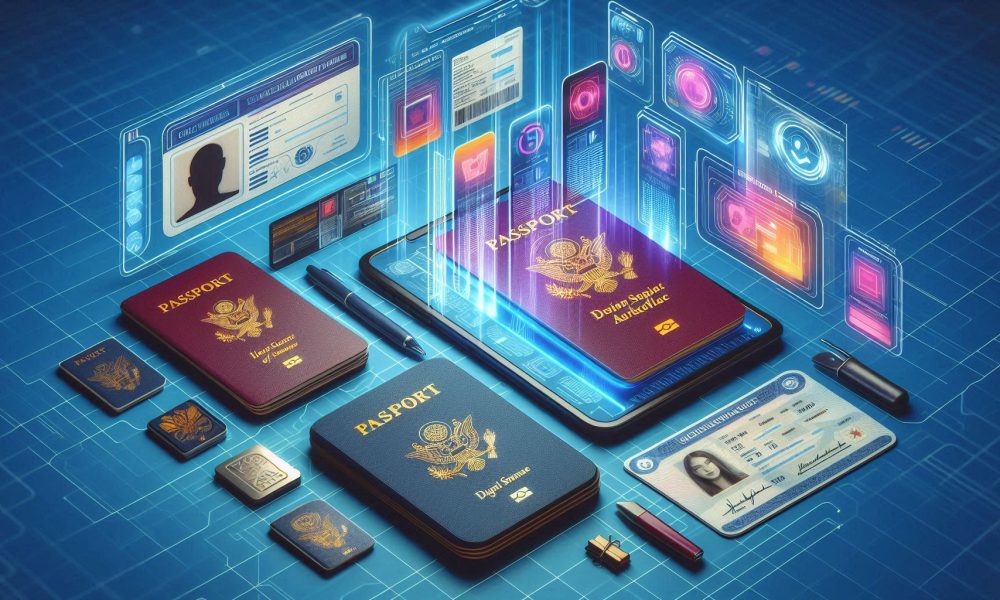
Cases now involve financial scammers, fugitives, organized fraud rings, and opportunists chasing shortcuts to a second life.
WASHINGTON, DC, April 1, 2026.
The market for stolen and fabricated identities is no longer limited to the stereotype of a lone hacker in a dark room. Investigators now describe a broader, messier buyer base: financial scammers seeking faster access to victims, organized fraud rings trying to industrialize impersonation, fugitives attempting to stay ahead of warrants or border controls, and smaller opportunists chasing the fantasy that a purchased identity can deliver instant anonymity. What unites them is not sophistication. It is motive. They want access, concealment, speed, or escape.
That is why the dark web remains so attractive to buyers even as enforcement gets better. It allows identity to be sold in pieces. A buyer can acquire stolen credentials in one place, forged records in another, a fake passport image elsewhere, and advice on how to use all of it inside banking, crypto, travel, or benefits systems. The result is not usually a seamless “new life.” It is a toolkit for fraud, evasion, or temporary impersonation.
Recent cases show how varied those buyers have become. Some are purchasing fake documents to pass financial verification. Some are using stolen personal data to hijack crypto accounts. Some are building synthetic profiles that mix real and invented details. Others are trying to hold together false identities long enough to cross a border, avoid arrest or keep operating after law enforcement has already begun closing in.
The buyer pool now stretches far beyond classic cybercriminals.
One of the biggest changes in the underground identity economy is that buying no longer requires elite technical skill. The dark web has made fraud logistics easier to outsource. A buyer does not need to know how to forge a license, hack a database, or fabricate a convincing proof-of-address document from scratch. Someone else is already selling each part. That has widened the pool of participants.
The first group is the most familiar: financial scammers. These buyers are looking for materials that help them get into accounts, open new ones, or slip past identity checks at banks, fintech platforms, and crypto exchanges. In February, the U.S. Department of Justice said the operator of “OnlyFake” pleaded guilty after selling more than 10,000 digital fake IDs, including driver’s licenses, passports, passport cards, and Social Security cards, with prosecutors saying customers used the documents to get around financial verification rules. That case matters because it shows the dark web is not just serving fantasy buyers looking for a dramatic reinvention. It serves people who need a practical fraud-detection tool that works against remote onboarding systems.
The second group is organized fraud rings. These buyers are not purchasing one identity for one crime. They are buying at scale or buying repeatedly because identity is part of a wider business model. They may need stolen data to support account takeovers, mule activity, credit applications, tax fraud, payment-card fraud, or resale schemes. The identities are inventory, not a disguise. Investigators increasingly frame fraud this way, as a supply chain rather than a one-off scam.
The third group includes fugitives and people already entangled with law enforcement or immigration controls. For them, false identity tools are not only about making money. They are about movement, concealment, and delay. They may be trying to rent housing, travel, re-enter a country, obtain official documents under false pretenses, or simply stay outside the reach of an old case a little longer. These buyers often believe that a forged document or borrowed identity can bridge the gap between legal exposure and physical escape.
The fourth group is the least disciplined, opportunists. These are the shortcut seekers. They are drawn by online myths about “buying a new identity” quickly and cheaply. Some imagine they can disappear from debt, private disputes or reputational trouble. Some are scammers moving up from amateur fraud. Some are simply reckless enough to think the internet can sell them a second life with no consequences. They are not always part of sophisticated networks. But they add volume to demand, and volume is what keeps underground vendors alive.
Financial scammers remain the largest and most practical buyers.
In many cases, the most active buyers are not chasing mystery. They are solving operational problems. They need a believable license scan, a proof-of-address document, a Social Security number, an aged account, or a full identity kit that can survive a platform’s first compliance review. The goal is often narrow and immediate. Open the account. Reset the credentials. Withdraw the funds. Move the crypto. File the claim. Cash out before anyone looks too closely.
That is one reason dark web identity markets increasingly resemble service businesses. Sellers advertise states, countries, document types, and turnaround times. Buyers ask for customization. The underground market is responding to the same broader digital economy that legitimate businesses are responding to, including remote onboarding, automated review, smartphone submissions, and the pressure to verify users quickly without much friction.
This is also why forged identity documents still matter even in a biometric era. A criminal buyer may not need a flawless passport. They may only need one that looks convincing on a screen for sixty seconds. If the identity file gets an account opened or a withdrawal approved, that is enough. Fraud has become shorter-cycle, more modular and more transactional.
Organized fraud rings treat identity as raw material.
Larger fraud groups rarely think in terms of one stolen identity attached to one crime. They think in portfolios. One record can support multiple attempts. One breached account can produce several downstream scams. One set of forged documents can be recycled, modified, or paired with newly stolen credentials. That is why identity markets continue to regenerate even after takedowns.
INTERPOL’s 2026 fraud threat reporting has warned that financial fraud now sits at the center of wider organized criminal activity, intersecting with cybercrime, money laundering, and other illicit networks. That framing helps explain why the buyer base has broadened. The dark web does not just attract people who want to impersonate someone else for personal reasons. It attracts criminal networks that see identity as a tool for financing, concealment, and scale.
When organized groups buy identities, they are often buying efficiency. They want to reduce the time it takes to get from stolen data to a monetized fraud event. They also want repeatability. If one tactic works against a particular bank, lender, exchange, or benefits system, they keep feeding the same process with new names, new documents, and new accounts.
Fugitives and border-risk buyers add a different type of demand.
The buyer profile becomes more revealing when the motive shifts from profit to escape. Fugitives and border-risk buyers often use false identities differently from financial scammers. They may still commit fraud, but their primary goal is concealment, movement, or re-entry. That can mean fraudulent passports, citizenship records, driver’s licenses, or health and residency documents.
Canadian authorities recently outlined one example that shows how far such conduct can go. In February, the Canada Border Services Agency said a man who used a stolen identity created an additional false identity and ultimately obtained a fraudulent Canadian citizenship certificate, passport, driver’s license, and health card before he was arrested while attempting to re-enter Canada with the false identity. Cases like that underline a simple truth: some buyers are not merely trying to open an account. They are trying to build a working legal shell around themselves.
This is where public fascination with “starting over” often collides with criminal reality. There is a legal difference between authorized changes to civil status or identity records and the underground purchase of stolen personal data, forged state documents, or fraudulent citizenship claims. Discussion around lawful privacy planning and identity-related risk increasingly returns to that distinction because the same online curiosity that drives searches for anonymity also feeds a black market built on theft, forgery, and impersonation.
Opportunists keep expanding the market from below.
Perhaps the most underestimated buyer category is the casual or semi-casual opportunist. These are the people who are not career fraud architects, but who still create demand by believing the criminal sales pitch. They might be motivated by debt, relationship fallout, immigration anxiety, reputational collapse, or the desire to avoid being found. They are often drawn to the language of reinvention, new identity, clean slate, disappear, fresh start.
The problem is that dark web vendors are not usually selling safety. They are selling exposure disguised as discretion. The buyer gets stolen data, a fake document, or a compromised credential, then has to use it in the real world. That is where the fantasy falls apart. Accounts create logs. Border crossings create records. Financial institutions compare submissions. Law enforcement seizes marketplace data. A fake identity that seemed anonymous inside a marketplace becomes much less anonymous when it touches an airline, a bank, a phone carrier, or an immigration system.
The market’s diversity is exactly what makes it dangerous.
What has changed is not simply volume. It is the range of people now participating. Some buyers are disciplined cybercriminals. Some are organized fraud groups. Some are fugitives or border evaders. Some are delusional shortcut seekers. That diversity makes the trade harder to reduce to one narrative. It also makes it harder to fight with one tactic.
The broad law enforcement response reflects that reality. In early 2025, Reuters reported that an international operation known as Operation Talent targeted cybercrime websites linked to stolen credentials, illicit tools, and payment services, with authorities saying customer and victim information was obtained during the seizures. That matters because the same marketplaces that widen access for buyers can also become rich evidence sources once investigators take control of the infrastructure.
The deeper lesson is that the dark web identity trade is no longer serving one type of criminal. It serves as an ecosystem. It helps scammers impersonate faster, organized rings scale wider, fugitives hide longer, and impulsive buyers make catastrophic mistakes. The more identity becomes central to digital life, the more valuable these illicit tools become. And the more varied the buyer base becomes, the more identity fraud stops looking like a niche cybercrime problem and starts looking like a broad criminal service economy built around access to other people’s lives.




