
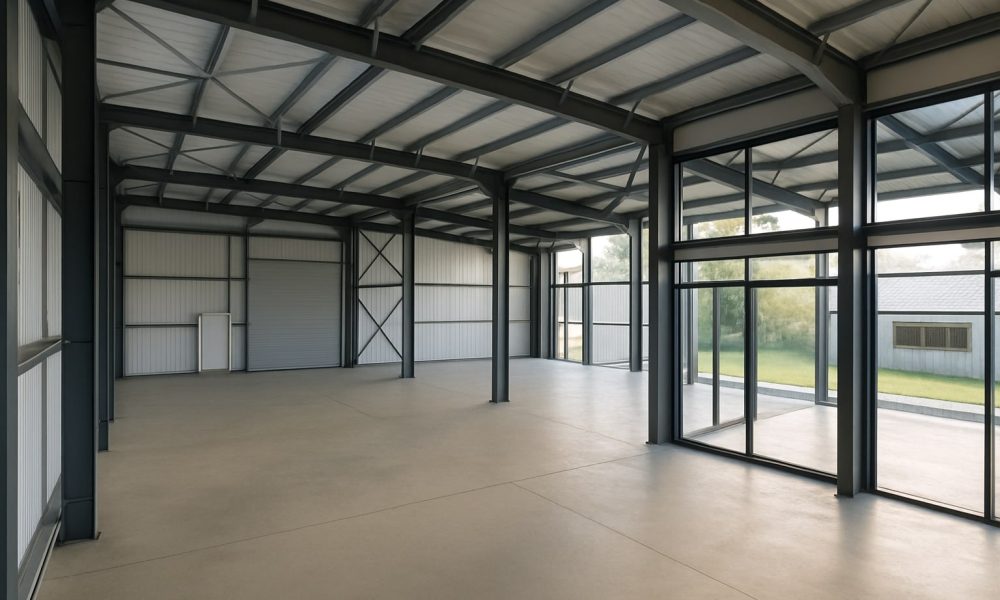
As rising interest rates and economic uncertainty reshape the commercial real estate market, developers and business owners are rethinking their approach to building design. One trend emerging as both practical and forward-thinking is the growing use of steel-framed commercial buildings. These structures, long valued for their durability and cost-efficiency, are now taking center stage in everything from urban redevelopment plans to climate-resilient infrastructure projects.
With increased focus on speed of construction, adaptability, and long-term value, steel-framed buildings offer compelling advantages for investors and enterprises alike. Here’s how they’re being utilized in innovative ways across a range of industries.
Agricultural Processing and Storage
Steel framed commercial buildings are ideal for storing agricultural products like wheat, corn and other grains. They keep out harmful elements like heat and humidity, ensuring grains do not spoil before farmers can load and haul them to the local elevators.
Likewise, because they are so effective in keeping out harmful elements, these buildings are perfect for housing farm equipment like combines and tractors. Rodents like field mice and pack rats also have more of a challenge getting inside these types of structures.
Eco-Friendly Warehousing
Companies that want to lower their carbon footprints should opt for steel framed buildings. These structures easily integrate with eco-friendly technology like solar panels and passive ventilation. This technology not only enhances companies’ environmental friendliness but also saves them money on warehousing operations.
Luxury Auto Showrooms and Dealerships
As durable and long-lasting as these buildings are, they are ideal for luxury car dealerships to use for showrooms and sales. The cars stored in them remain protected from elements like heavy rain and hail that can damage them. They also remain safe from vandalism and theft because these buildings offer higher levels of security for assets stored inside them.
High-Tech Medical Research
As secure as steel framed buildings are, they prove useful for high-tech medical research. They effectively contain biological materials that researchers create inside them.
They also offer better climate control, ensuring supplies and resources inside these buildings do not spoil because of high humidity levels or intense heat. They provide researchers with clean, highly controlled environments that are necessary for important medical research and experiments.
Mixed Use Developments
Commercial property owners find steel-framed buildings well-suited for mixed use developments. Retailers like clothing and shoe stores can occupy part of the building, such as a lower level. In another part of the building, businesses like arcades, fitness studios, and offices can lease or buy spaces.
Developers avoid having to erect several buildings to accommodate commercial clients. They get more of a return out of steel framed buildings that they can sell or rent out to business and office owners.
Indoor Farming and Hydroponic Centers
With their climate-controlled interiors, these buildings are useful for indoor farming and hydroponic centers. Enhanced climate control maximizes crop yields.
People who buy these buildings for such purposes can make the insides as dry or humid as needed to ensure their crops grow well and their farming operations make money. These buildings also provide a reliable barrier against elements from the outside, such as contaminants and bacteria, that could kill crops grown inside them.
Logistics and Distribution Hubs
With the rise of e-commerce and just-in-time delivery models, companies need adaptable structures for efficient product handling. Steel framed buildings are perfect for distribution centers thanks to their wide, open layouts and ability to accommodate automated racking systems or conveyor belts.
These structures are also fast to construct and easy to expand, which supports business growth and seasonal demand surges. Their durability means fewer maintenance interruptions, while their flexibility allows for customized docking bays and loading areas suited to various shipping needs.
Conclusion
Steel framed buildings are useful for many different types of operations. They are ideal for purposes like medical research, agricultural use, and indoor farming. Additionally, their flexibility makes them an excellent choice for emerging commercial needs like logistics hubs and mixed-use spaces. If you think a steel framed building will enhance your company’s operations, reach out to a provider to discuss the best options for your commercial needs.




