
The global solid phase carrier resin for peptide drug synthesis market is on a trajectory of significant expansion, projected to grow from USD 145.3 million in 2025 to USD 397.8 million by 2035, achieving a compound annual growth rate (CAGR) of 10.6%. This robust growth underscores the pivotal role of advanced resins in accelerating peptide drug development, particularly in oncology, metabolic disorders, infectious diseases, and peptide-drug conjugates. As industry leaders navigate the evolving landscape of precision medicine and biologics, this market narrative highlights strategic opportunities for innovation, collaboration, and sustainable practices that can drive competitive advantage.
At the heart of this market’s momentum is the pharmaceutical industry’s relentless push toward therapeutic peptides and biologics. With increasing FDA approvals and GMP compliance requirements, solid phase carrier resins are becoming indispensable for efficient, high-yield peptide synthesis. Innovations in resin design—featuring controlled pore sizes, optimized functional group density, and chemically stable backbones—are enabling the production of longer peptide chains with minimal aggregation. Linker chemistry advancements further enhance release efficiency, reducing by-products and boosting overall yields. For decision-makers in biotech and pharma, these developments translate to faster time-to-market for complex biologics, aligning with the demand for personalized therapies and targeted treatments.
Automation is another game-changer, with high-throughput synthesizers minimizing variability and ensuring regulatory adherence. Hybrid resins, blending organic and inorganic frameworks, offer superior swelling properties and solvent compatibility, especially for hydrophobic peptides. Moreover, the shift toward recyclable and reusable resins is addressing environmental concerns while slashing costs—a critical consideration for small biotech firms grappling with development constraints. Emerging trends like integration with digital process control systems for real-time monitoring are empowering industry leaders to optimize workflows, enhance quality-by-design, and integrate seamlessly with laboratory information management systems (LIMS).
Regionally, East Asia emerges as a frontrunner, fueled by pharmaceutical expansion and rapid adoption of cutting-edge technologies. China leads with a staggering 14.3% growth rate, followed by India at 13.3% and Germany at 12.2%. North America maintains steady progress through technological advancements, while Western Europe benefits from strong pharmaceutical applications and quality integration, with the sub-market expected to climb from USD 31.2 million in 2025 to USD 89.4 million by 2035 at a CAGR of 11.1%. In Europe, Germany holds a dominant 41.3% share in 2025, with the United Kingdom at 28.1% and France at 16.7%. These dynamics present lucrative opportunities for global stakeholders to invest in localized manufacturing and compliance strategies.
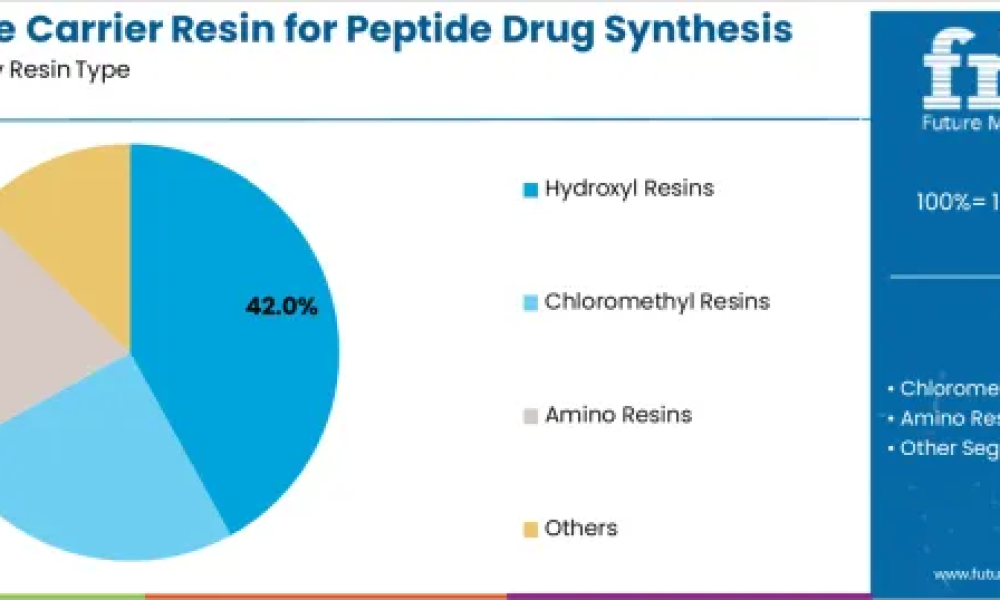
Segmentation reveals nuanced insights for strategic decision-making. By resin type, hydroxyl resins command a 42% market share, prized for their 94-97% synthesis efficiency and optimized loading capacity. Chloromethyl resins follow at 31%, offering versatility for broad therapeutic applications, while amino resins at 19% cater to metabolic diseases like diabetes and obesity. Looking ahead 3-5 years, advanced hydroxyl systems are poised to capture 38-41%, with high-performance chloromethyl at 26-29% and specialized amino at 16-19%. Oncology-focused and custom therapeutic resins are expected to rise to 12-15% and 6-9%, respectively, signaling a shift toward application-specific innovations.
In terms of applications, cardiovascular leads with 31% share, driven by demand for cardiac and vascular peptides. Metabolic diseases hold 19%, orthopedics 14%, and tumors are emerging in oncology and immunotherapy. End-users are dominated by pharmaceutical companies, growing at an 8.2% CAGR, alongside biotechnology firms, contract research organizations, academic institutions, and specialty chemical manufacturers. This ecosystem emphasizes the need for complete synthesis packages, including resins, linkers, cleavage reagents, protocols, and digital management tools.
Despite these drivers, challenges persist. Cost pressures and competition from alternative methods like liquid phase or enzymatic synthesis could temper growth, particularly for resource-constrained players. However, trends in automation enhancement and customization offer countermeasures, enabling synthesis optimization and therapeutic targeting through specialized linkers.
The competitive landscape is concentrated, with 8-12 key players controlling the market; the top 3-5 command 70-75% of revenue through chemical expertise and innovation. Leading companies include Sunresin, Shandong Lukang, Tianjin Nankai Hecheng Science & Technology, Zhejiang Zhengguang, Jiangsu Haipu Functional Materials, RawPEG, Merck, CEM Corporation, ChemPep Inc., Iris Biotech, Bachem, Gyros Protein Technologies, AAPPTec, Advanced ChemTech, Peptides International, and GL Biochem. Opportunities abound in custom resin development, therapeutic specialization, and value-based pricing models, such as tiered subscriptions for supply management and technical support.
Subscribe for Year-Round Insights → Stay ahead with quarterly and annual data updates: https://www.futuremarketinsights.com/reports/brochure/rep-gb-27382
Request for Sample Report | Customize Report |purchase Full Report –https://www.futuremarketinsights.com/reports/sample/rep-gb-27382
“As the biopharmaceutical sector evolves, solid phase carrier resins are not just tools but strategic enablers for breakthrough therapies,” said a senior analyst at Future Market Insights. “Industry leaders who prioritize synthesis efficiency, regulatory integration, and sustainable innovation will capture substantial market share in this dynamic arena.”
This market narrative, drawn from Future Market Insights’ comprehensive 250-page report, equips decision-makers with historical analysis from 2020-2024, forecasts to 2035, pricing insights, and a competition dashboard covering regions like North America, Latin America, Western Europe, Eastern Europe, East Asia, South Asia Pacific, and the Middle East & Africa. Countries analyzed include China, India, Germany, Brazil, the United States, the United Kingdom, Japan, Canada, France, Australia, and over 25 others.
For stakeholders, the imperatives are clear: Embrace design for efficiency, foster pharmaceutical integration, and adopt quality-by-design principles to thrive. As peptide drugs redefine healthcare, this market offers a blueprint for sustainable growth and leadership.
About Future Market Insights (FMI)
Future Market Insights, Inc. (FMI) is an ESOMAR-certified, ISO 9001:2015 market research and consulting organization, trusted by Fortune 500 clients and global enterprises. With operations in the U.S., UK, India, and Dubai, FMI provides data-backed insights and strategic intelligence across 30+ industries and 1200 markets worldwide.
Why FMI: Decisions that Change Outcomes- https://www.futuremarketinsights.com/why-fmi
Contact Us:
Future Market Insights Inc.
Christiana Corporate, 200 Continental Drive,
Suite 401, Newark, Delaware – 19713, USA
T: +1-347-918-3531
Website: https://www.futuremarketinsights.com
LinkedIn| Twitter| Blogs | YouTube
Have a specific Requirements and Need Assistant on Report Pricing or Limited Budget please contact us – [email protected]



