
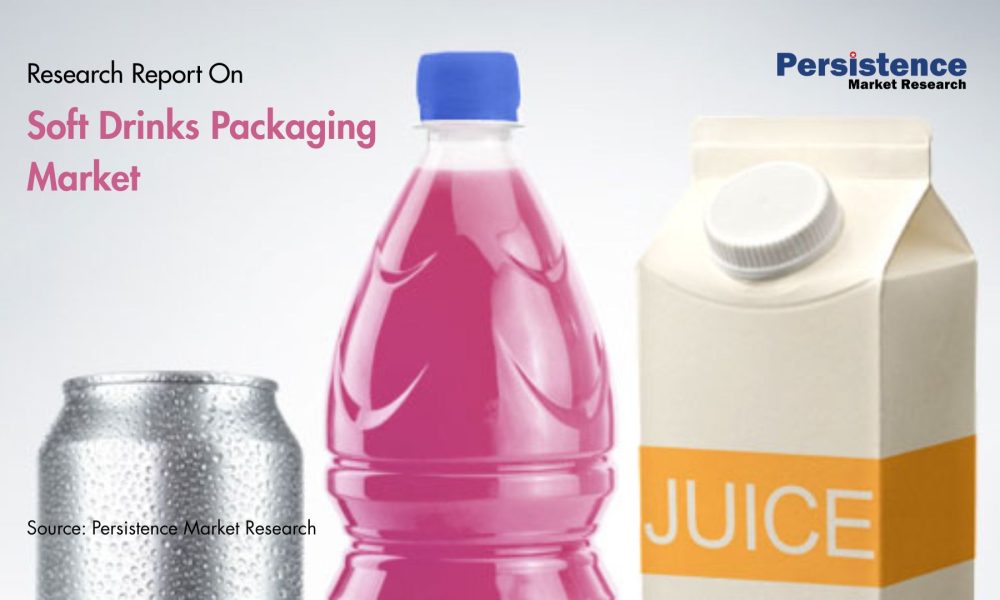
Soft Drinks Packaging Market Size and Trends Analysis
The global soft drinks packaging market is set to witness steady expansion over the next decade, reflecting evolving consumer preferences, regulatory pressures, and material innovation across the beverage industry. The market is projected to be valued at US$93.7 billion in 2026 and is expected to reach approximately US$120.0 billion by 2033, registering a compound annual growth rate (CAGR) of 3.6% between 2026 and 2033. While growth is moderate compared to high-tech packaging segments, the industry remains highly dynamic due to sustainability mandates, premiumization trends, and continuous packaging innovation.
Soft drinks packaging serves as both a functional necessity and a powerful branding tool. As beverage manufacturers compete for shelf visibility and consumer loyalty, packaging plays a crucial role in product differentiation, cost efficiency, and environmental positioning.
Market Overview
Soft drinks packaging encompasses a wide range of materials and formats, including PET bottles, aluminum cans, glass bottles, cartons, and emerging fiber-based solutions. Carbonated soft drinks, flavored water, sports drinks, ready-to-drink teas, and energy beverages all rely on packaging systems that ensure product freshness, carbonation retention, light protection, and portability.
The market is currently being shaped by three dominant forces: tightening environmental regulations, increased consumer awareness around recyclability, and sustained demand for convenient, on-the-go packaging formats. Beverage brands are increasingly aligning packaging strategies with corporate sustainability commitments while ensuring operational efficiency and product protection.
Get Your FREE Sample Report Instantly – Click Now: https://www.persistencemarketresearch.com/samples/36068
Key Growth Drivers
- Sustainability Regulations and Circular Economy Goals
One of the most significant drivers in the soft drinks packaging market is the global push toward sustainability. Governments across North America, Europe, and parts of Asia are implementing stricter regulations aimed at reducing plastic waste, increasing recycled content, and enhancing recycling rates.
Extended Producer Responsibility (EPR) schemes and recycled-content mandates are compelling beverage companies to redesign packaging structures. Brands are committing to higher percentages of recycled PET (rPET) in bottles and increased use of recyclable aluminum cans. This regulatory momentum is accelerating innovation in material recovery, lightweight design, and circular packaging systems.
- Rising Adoption of Recyclable and Recycled-Content Packaging
Consumers are increasingly demanding environmentally responsible packaging solutions. As a result, beverage manufacturers are incorporating recycled materials into their primary packaging and promoting recyclability as a key selling point.
Aluminum cans are benefiting from their high recycling rates and infinite recyclability without loss of quality. Similarly, PET bottles with higher rPET content are gaining traction. Fiber-based cartons and paper bottles with alternative barrier coatings are also emerging as sustainable alternatives, particularly for non-carbonated beverages.
The emphasis on recyclability is not only regulatory-driven but also central to brand image and corporate environmental responsibility.
- Sustained Demand for Convenient, Single-Serve Formats
Urban lifestyles and busy consumer routines continue to support demand for convenient, single-serve beverage packaging. On-the-go consumption remains a major market driver, particularly for energy drinks, flavored waters, and ready-to-drink beverages.
Slim cans and compact bottle formats are increasingly popular among younger demographics. These formats enhance portability, portion control, and shelf differentiation. The growth of e-commerce and food delivery services further supports demand for durable, lightweight packaging that withstands transport conditions.
Packaging Innovation as a Competitive Strategy
Innovation remains central to competitive differentiation in the soft drinks packaging market. Manufacturers are investing in structural improvements that enhance both sustainability and performance.
Lightweighting
Lightweighting continues to be a dominant strategy to reduce material usage, lower transportation costs, and decrease carbon footprints. Advances in resin engineering and can-wall thinning technologies enable manufacturers to maintain strength while using less raw material.
Lightweight packaging reduces environmental impact and improves cost efficiency, making it a win-win solution in a competitive market.
Adoption of Slim Cans
Slim and sleek can designs are gaining popularity, particularly in premium and energy drink segments. These cans offer enhanced visual appeal and ergonomic advantages, while also optimizing shelf space. Slim cans are often associated with modern branding and premium positioning, contributing to their rapid adoption across beverage categories.
Alternative Fiber Barriers
The development of fiber-based packaging with improved barrier properties represents a major innovation frontier. Traditional paper packaging faces limitations in moisture and carbonation retention; however, new coatings and bio-based barrier technologies are enabling fiber materials to compete in certain beverage categories.
Although still in early adoption stages, alternative fiber barriers align strongly with sustainability objectives and may become increasingly relevant as recycling infrastructure evolves.
Get a Customized Market View in One Click: https://www.persistencemarketresearch.com/request-customization/36068
Material Trends and Segment Outlook
PET Bottles
PET remains a dominant material for soft drinks packaging due to its lightweight properties, clarity, strength, and cost-effectiveness. Increased integration of recycled PET is reshaping the segment, with brands targeting higher recycled-content percentages to meet regulatory and corporate goals.
Aluminum Cans
Aluminum cans continue to gain market share due to superior recyclability and robust barrier properties. The rising popularity of canned water and premium soft drinks has expanded the application scope of aluminum packaging beyond traditional carbonated beverages.
Glass Bottles
Glass packaging maintains relevance in premium and traditional beverage categories. While heavier and more expensive to transport, glass offers superior product preservation and is often perceived as more sustainable and premium by consumers.
Regional Dynamics
North America and Europe
These regions are leading in sustainability-driven innovation. Strong recycling policies and consumer awareness are encouraging rapid adoption of recycled materials and eco-friendly packaging formats. Investments in recycling infrastructure and deposit-return systems further support market transformation.
Asia-Pacific
Asia-Pacific is expected to remain a significant growth contributor due to expanding beverage consumption in emerging economies. Rapid urbanization, rising disposable incomes, and expanding retail infrastructure are driving packaging demand. However, recycling infrastructure limitations present challenges in certain countries.
Structural Risks and Market Challenges
Despite stable growth prospects, the soft drinks packaging market faces structural risks.
Raw Material Price Volatility
Fluctuations in resin, aluminum, and energy prices can significantly impact production costs. Global supply chain disruptions and geopolitical factors may further contribute to pricing instability.
Recycling Infrastructure Constraints
While sustainability goals are ambitious, recycling systems in many regions remain underdeveloped. Inadequate collection systems and processing capabilities limit the effectiveness of recyclable packaging solutions, creating a gap between design innovation and practical recovery rates.
Balancing Cost and Sustainability
Sustainable materials and advanced packaging designs often require higher upfront investment. Balancing environmental commitments with cost competitiveness remains a strategic challenge for beverage manufacturers.
For In-Depth Competitive Analysis, Buy Now: https://www.persistencemarketresearch.com/checkout/36068
Future Outlook
Looking ahead, the soft drinks packaging market is expected to maintain moderate yet stable growth, supported by innovation and regulatory alignment. The shift toward circular packaging models, higher recycled content integration, and material efficiency will define the next phase of industry evolution.
Technological advancements in bio-based materials, smart labeling, and refillable systems may open new opportunities. Brands that successfully integrate sustainability with cost efficiency and consumer convenience will gain competitive advantage.
With the market projected to grow from US$93.7 billion in 2026 to US$120.0 billion by 2033, the soft drinks packaging industry will remain a cornerstone of the global beverage ecosystem. Innovation, regulatory compliance, and environmental responsibility will be central to shaping its future trajectory.
About Persistence Market Research:
Persistence Market Research delivers strategic research solutions that drive business growth. Founded in 2012 and registered in England and Wales in 2023 as Persistence Research & Consultancy Services Ltd., we have completed 3,600+ custom and syndicated studies and supported 2,700+ projects for leading research firms. Combining traditional methodologies with modern tools, we provide actionable insights to multinational corporations, consultants, investors, and government bodies, earning strong trust through long-term client relationships.
Contact Us:
Persistence Market Research
Second Floor, 150 Fleet Street,
London, EC4A 2DQ, United Kingdom
USA Phone: +1 646-878-6329
UK Phone: +44 203-837-5656
Email: [email protected]
Web: https://www.persistencemarketresearch.com




