
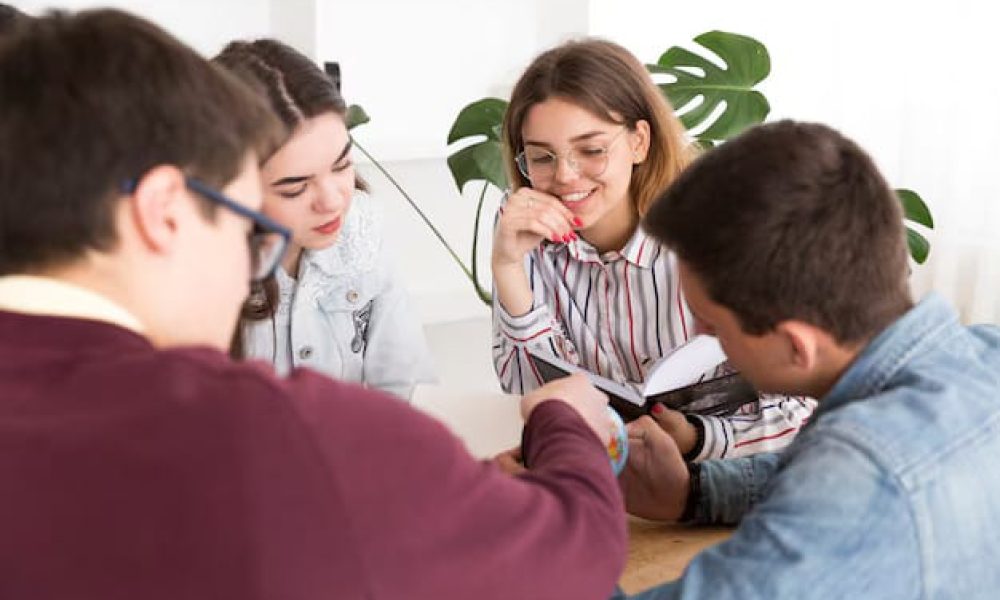
The most integral development in a child is through social skills. These serve to help the child be able to interact with other children, make friends, and handle life’s complications. Unfortunately, in children with Autism Spectrum Disorder, learning these aforementioned important skills is often more complicated. It affects social interaction and communication, making many children on the spectrum not get such social hints, maintain a conversation, or read the body language of others. However, with the right support and strategies, it’s possible to decrease anxiety around social interactions, enabling children with autism to feel more comfortable and confident in social situations.
Although this may take more effort and require plans specific to each child’s needs, children with autism can be taught social skills. One effective way to support their development is through social skills groups, where children can practice and refine their social interactions in a structured setting. When supported properly with patience and appropriate resources, including participation in social skills groups, they build the confidence to interact meaningfully. This article discusses how parents and caregivers can help autistic children enhance their social interaction capabilities.
Understanding the Challenges
Many children with ASD have difficulty with specific parts of social interaction, which include:
- Reading Social Cues: Many children with autism find non-verbal communication, such as body language, facial expressions, and tone of voice, puzzling. They may not innately pick up on when someone is happy, distressed, or frustrated.
- Initiating and Maintaining Conversations: It is a problem to initiate a conversation, maintain a flow in conversation, or answer one’s turn within an interaction. One important aspect of the challenges children with autism face is understanding how to take turns within an interaction, such as knowing exactly when to speak or listen. Counseling services can be highly beneficial in helping children navigate these difficulties, providing tailored strategies and support to improve their conversational skills and overall social communication.
- Understanding Empathy: Although children may be able to feel emotions, understanding others’ feelings, showing empathy, and appropriately responding in social situations may be challenging. Helping children navigate these challenges can improve self-esteem as they gain confidence in understanding and engaging with others’ feelings.
- Understanding Social Norms: Social norms like personal space, maintaining eye contact, or taking turns might not be intuitively developed in children with autism.
However, this does not mean that the child with autism can never be in a relationship or may not learn any social skills. This means that perhaps the learning path seems somewhat different from that of other neurotypical children.
Strategies to Facilitate Social Skill Development
- Model Social Behavior
Some of the best teaching for kids, including those with autism spectrum disorder, is through mirroring. Parents, caregivers, and teachers can model social behavior by showing how to converse with others, greet others, and handle conflict. Simple gestures like maintaining eye contact, greeting politely, and expressing interest in someone’s emotions can be strong teaching examples.
For example, if you attend a family gathering, you would say to your relative, “Hello, Aunt Sarah. How are you today?” Then, pause and give the child the opportunity to repeat the interaction.
- Social Stories
Social Stories are small, descriptive narratives that define social situations and expected behaviors. They help the child understand what is expected of them and can be used to teach social situations and learn how to be social. Social stories about everyday activities, such as playing with friends, waiting in a queue, or making requests, can be made.
For instance, a social story about playing at the park would include specific information such as, “When I see a friend at the park, I can say, ‘Hi, do you want to play?’ If my friend says yes, we can take turns on the slide.”
- Teach Turn-Taking and Sharing
Games and activities involving turn-taking are also very good for children, including those with development disabilities, to practice social skills. Whether this requires board games, card games, or simple sporting activities, all these activities teach kids how to wait for their chance, abide by rules, or give personal space to their opponents. Positive reinforcement related to good behavior, including praise of the child for waiting, further strengthens this ability.
- Role-Playing
Role-playing is fun for practicing social skills in a safe, predictable setting. The caregiver can role-play different social situations with the child, such as introductions, asking for help, or solving a problem. By practicing in these predefined situations, a child builds confidence to utilize the strategies learned in natural environments and learn how to communicate.
For example, you can act out a scenario where a child asks another child to play with them. You can then act out how to initiate a conversation and invite and accept negative and positive responses from the other child.
- Use Visual Aids
Visual aids such as picture cards or emotion charts help autistic children understand the interaction. For instance, emotion charts with pictures of faces-joyful, sad, angry, or puzzled-may help children learn to identify their feelings and those of others. Visual schedules can teach social routines such as “greeting someone in the morning” or “saying goodbye.”
- Encourage Social Interaction in Natural Settings
Equally, the child with autism needs opportunities to practice social skills in naturalistic, unstructured environments: family gatherings, playdates, or even group situations like sports teams or art classes. The key is to provide opportunities for social interaction while respecting the child’s comfort zone and providing necessary support.
- Positive Reinforcement
Reinforcement through consistent praise and rewards can help solidify the learning of appropriate social behavior. Using reinforcement—verbal praise, a small reward, or a favorite activity—will motivate them to continue practicing their social skills and improving in the area.
Conclusion
Whereas social skill learning is rather gradual in children with autism, it is very empowering once they are equipped with appropriate tools and strategies that enable them to improve their interactions, make friends, and feel more confident, among other things.
They develop skills to help the autistic child acquire by modeling the right social behaviors, using social stories and visual aids, role-playing exercises, and encouraging real-life interpersonal engagements. Be patient and tactfully flexible; each child has their unique way, as their progress might be unlike any other. Above this, support, understanding, and an environment of acceptance will help the autistic child to do well socially.




