
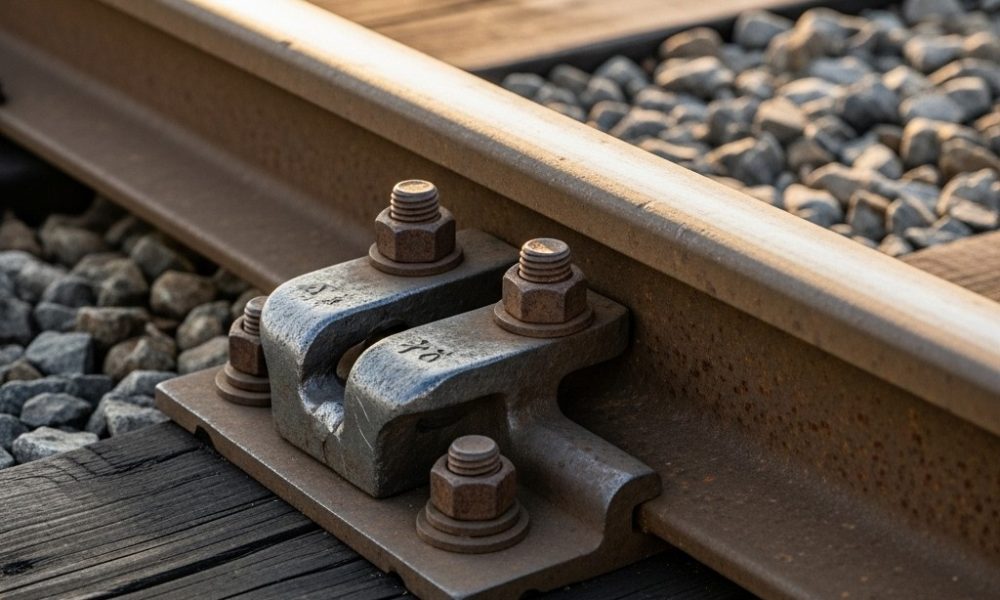
The global railway fishplate market is on a trajectory of steady growth over the next decade, fueled by increasing investments in railway infrastructure, urbanization, and the expansion of high-speed rail networks. Analysts predict that the market will expand at a compound annual growth rate (CAGR) of approximately 3.2% between 2025 and 2035, reaching an estimated value of USD 7,075.9 million by 2035, up from USD 5,164 million in 2025.
Railway fishplates, the essential components that connect the ends of two rails, play a critical role in maintaining the stability, safety, and continuity of rail tracks. As countries worldwide work to modernize and expand their rail networks, demand for durable, high-performance fishplates is set to rise significantly.
Full Market Insights Available. Inquire for Customization or Purchase: https://www.futuremarketinsights.com/reports/sample/rep-gb-7159
Technological Advancements Fueling Market Growth
The railway fishplate market is witnessing a shift towards advanced materials and designs. Insulated and composite fishplates are gaining traction, offering enhanced durability, reduced maintenance, and improved safety. These innovations align with the global push for eco-friendly and efficient rail systems. High-strength alloys, corrosion-resistant materials, and precision manufacturing techniques, including CNC machining and additive production, are redefining the standards of rail connectivity.
Manufacturers are also investing in smart monitoring solutions to improve installation quality and track safety. Predictive maintenance, automated inspections, and sensor-integrated “smart fishplates” are increasingly becoming part of the market narrative, particularly in high-speed and urban rail applications.
Regional Market Insights
North America is expected to see substantial growth, driven by heavy investments in railway upgrades and urban transit systems in the United States and Canada. The focus on safety, sustainability, and high-quality fishplates is further boosting demand in the region.
Europe continues to maintain a sizeable share of the market due to ongoing modernization projects and high-speed rail expansions in Germany, France, and the United Kingdom. Electrification initiatives and the adoption of insulated and composite fishplates are transforming rail operations while advancing sustainable transportation goals.
Asia-Pacific is projected to be the fastest-growing region, led by China and India’s aggressive expansion of high-speed and urban transit rail networks. Rapid urbanization and government initiatives to enhance railway safety and efficiency are driving the adoption of high-performance fishplates that can withstand extreme operational demands.
Market Dynamics: Opportunities and Challenges
One of the key challenges in the railway fishplate market is the integration of advanced technologies into existing rail networks. Transitioning to insulated or composite fishplates requires precise alignment with current infrastructure, careful testing, and often increased project costs and timelines.
However, opportunities abound. The expansion of high-speed rail networks globally is a major growth driver. High-performance fishplates designed for rapid trains provide greater stability under dynamic loads and are increasingly favored in projects emphasizing sustainability and safety.
Market Evolution: 2020 to 2035
From 2020 to 2024, the market primarily relied on standard steel and cast iron fishplates for conventional rail lines and freight applications. Manual inspections and reactive maintenance were common, with traditional forging and casting methods dominating production.
Looking ahead to 2025–2035, the market is evolving rapidly. Modern fishplates are being produced with high-strength alloys, composites, and corrosion-resistant materials. Focus has shifted toward high-speed rail, metro systems, and urban transit, with precision manufacturing and additive production techniques improving product quality. Predictive diagnostics and automated inspections are replacing manual maintenance strategies, ensuring longer service life and improved safety compliance.
Country-Wise Insights
- United States: Adoption of insulated fishplates for signaling applications, precision-engineered components, and corrosion-resistant materials. CAGR: 3.2%.
- United Kingdom: Growth driven by rail modernization, electrification, and smart fishplates with monitoring sensors. CAGR: 3.1%.
- European Union: Expansion supported by trans-European transport network initiatives, legacy system replacements, and adoption of lightweight, durable fishplate materials. CAGR: 3.0%.
- Japan: Emphasis on smart technologies, non-metallic insulated fishplates, and long-life materials to reduce maintenance intervals. CAGR: 3.3%.
- South Korea: Rapid urban rail growth, custom fishplates for curved tracks, and composite materials adoption. CAGR: 3.4%.
Competitive Landscape and Key Players
The railway fishplate market features a mix of established manufacturers and new entrants, all leveraging technology and regional expansion strategies to capture market share.
- AGICO Group (12–17%): Offers corrosion-resistant forged and rolled fishplates compatible with international track standards. Recently expanded exports to Europe and Southeast Asia.
- Kimes Steel & Rail, Inc. (10–14%): Specializes in high-performance insulated fishplates with rapid lead times for refurbishment and light rail projects.
- Rail Fasteners Pvt. Ltd. (8–12%): Supplies high-tensile fishplates for heavy-haul and urban rail systems in India, aiding metro and regional transit development.
- Voestalpine Railway Systems GmbH (7–11%): Focuses on material innovation and sustainable rail fastening solutions for Europe’s green rail transition.
- Bhaskar Industrial Developments Ltd (5–9%): A strategic new entrant delivering cost-effective forged fishplates suitable for standard gauge networks in South Asia, with expansion into the Middle East and Africa.
Other notable players include Sino East Steel Group, Royal Infraconstru Ltd., L.B. Foster Company, Unipart Rail, and Zhejiang Tianxiang Rail Technology Co. Ltd., collectively making up 45–55% of the global market. These companies are investing in high-strength, corrosion-resistant, and precision-engineered fishplates to meet the evolving needs of modern rail networks.
Key Segments
By Rail Joint Type:
- Common Rail Joint
- Compromise Rail Joint
- Insulated Rail Joint
- Joggled Fish Plate
By Rail Type:
- Heavy Rail
- Light Rail
By Region:
- North America
- Latin America
- Europe
- South Asia
- East Asia
- Oceania
- Middle East & Africa
Stay Ahead – Grab the Report: https://www.futuremarketinsights.com/reports/brochure/rep-gb-7159
About Future Market Insights (FMI)
Future Market Insights, Inc. (ESOMAR certified, recipient of the Stevie Award, and a member of the Greater New York Chamber of Commerce) offers profound insights into the driving factors that are boosting demand in the market. FMI stands as the leading global provider of market intelligence, advisory services, consulting, and events for the Packaging, Food and Beverage, Consumer Technology, Healthcare, Industrial, and Chemicals markets. With a vast team of over 400 analysts worldwide, FMI provides global, regional, and local expertise on diverse domains and industry trends across more than 110 countries.



