
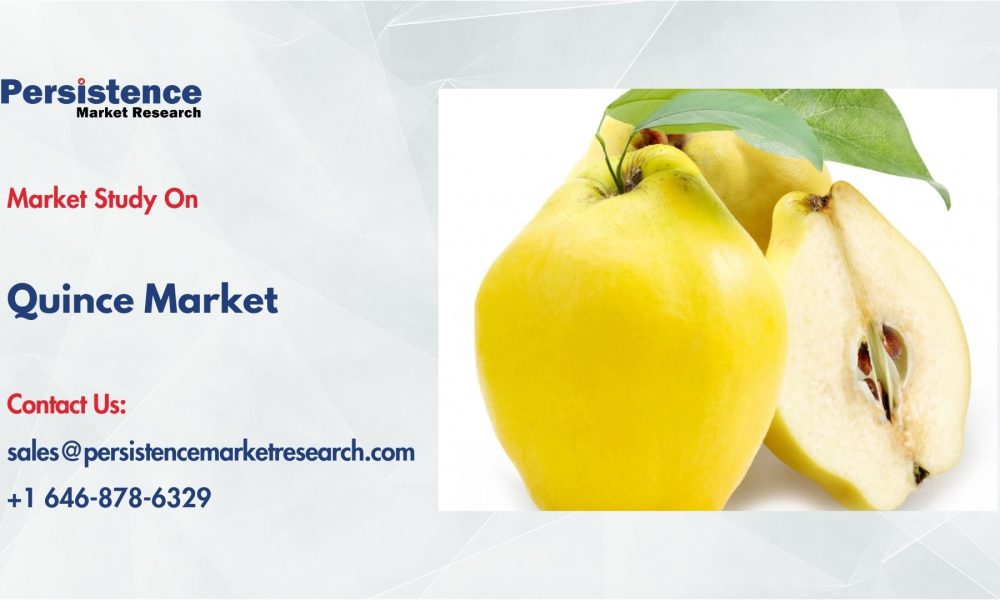
The global quince market is entering a phase of accelerated growth, supported by rising consumer awareness of functional foods, expanding applications in food processing, and increasing interest in specialty and exotic fruits across global markets. The market is projected to be valued at approximately US$ 1.4 billion in 2026 and is expected to reach US$ 2.7 billion by 2033, registering a strong compound annual growth rate (CAGR) of 9.5% during the forecast period from 2026 to 2033.
Quince, a traditional fruit cultivated primarily in temperate regions, has historically been consumed in processed forms such as jams, jellies, marmalades, pastes, and beverages due to its firm texture and tart flavor. In recent years, however, growing demand for nutrient-rich and antioxidant-packed fruits has significantly elevated quince’s commercial value. Rich in dietary fiber, vitamin C, and phenolic compounds, quince is increasingly recognized for its digestive, immune-boosting, and anti-inflammatory benefits.
The surge in demand for clean-label, minimally processed, and plant-based food products is also contributing to the expansion of the quince market. Food manufacturers are incorporating quince extracts and pulp into gourmet confectionery, bakery items, specialty sauces, and health-focused beverages. Additionally, the growing popularity of Mediterranean and Middle Eastern cuisines—where quince is traditionally used—has broadened its global consumer base.
Increasing investments in horticultural innovation, improved cold-chain logistics, and export-oriented cultivation practices are further strengthening the supply side of the market. Emerging economies are witnessing higher production volumes, while developed regions are driving premiumization and value-added product development.
Get Your FREE Sample Report Instantly – Click Now: https://www.persistencemarketresearch.com/samples/20251
Segmentation Analysis
By Product Type
- Fresh Quince
- Quince Paste
- Quince Jam and Marmalade
- Quince Juice
- Dried Quince
By Application
- Food and Beverages
- Cosmetics
- Pharmaceuticals
- Others
Regional Insights
The global quince market demonstrates strong regional variation, influenced by climatic conditions, culinary traditions, and trade dynamics.
Europe remains the leading regional market, both in terms of production and consumption. Countries such as Spain, Portugal, Turkey, and Greece have long-standing traditions of quince cultivation and processing. The region benefits from favorable climatic conditions and established food processing industries that incorporate quince into traditional and modern recipes. Premiumization trends and high demand for artisanal fruit preserves further support market growth in Europe.
Asia Pacific is emerging as a high-growth region, driven by expanding horticultural activities and rising consumer awareness of functional fruits. Countries such as China and Iran are significant producers, while growing urban populations in India and Southeast Asia are contributing to increased demand for processed fruit products. Rising disposable incomes and the expansion of organized retail networks are further strengthening regional market prospects.
North America is witnessing steady growth, primarily fueled by rising demand for exotic fruits and specialty gourmet products. Increasing adoption of Mediterranean cuisine and the popularity of farmers’ markets and organic stores are creating new opportunities for fresh and processed quince products.
Latin America and the Middle East & Africa are also showing promising growth potential. Favorable climatic conditions in select Latin American countries support cultivation, while Middle Eastern markets benefit from traditional consumption patterns and rising investments in agricultural modernization.
Unique Features and Innovations in the Market
The quince market is experiencing notable innovation across cultivation, processing, and marketing domains. Modern orchard management practices, including precision irrigation systems and AI-powered crop monitoring, are improving yield efficiency and fruit quality. These technologies allow growers to optimize water usage, detect plant diseases early, and ensure consistent harvest quality.
IoT-enabled cold chain logistics and advanced packaging technologies are enhancing shelf life and reducing post-harvest losses, which have historically constrained the fruit’s market expansion. Smart storage solutions with real-time temperature and humidity monitoring are ensuring that fresh quince reaches distant markets without compromising quality.
Product innovation is another key differentiator. Food manufacturers are developing low-sugar, organic, and fortified quince-based products to cater to health-conscious consumers. The integration of digital marketing strategies and data analytics is enabling brands to better understand consumer preferences and tailor product offerings accordingly.
In addition, sustainable farming practices, including reduced pesticide use and organic certification, are gaining importance as consumers increasingly prioritize environmentally responsible sourcing.
Need Tailored Insights? Request Customization Now: https://www.persistencemarketresearch.com/request-customization/20251
Market Highlights
The rapid growth of the global quince market is underpinned by several compelling factors. First, the fruit’s nutritional and functional benefits are driving its adoption across food, nutraceutical, and personal care industries. Second, increasing consumer preference for natural and plant-based ingredients is strengthening demand for fruit-derived products.
Regulatory frameworks promoting food safety, organic certification, and sustainable agriculture are further shaping the market landscape. Producers who align with these standards are gaining competitive advantages, particularly in premium export markets.
Cost optimization in cultivation, improved yield management, and streamlined supply chains are enhancing profitability for growers and processors. Furthermore, the diversification of product portfolios—ranging from traditional preserves to innovative health supplements—is expanding revenue streams for industry participants.
Key Players and Competitive Landscape
- Gruenewald Fruchtsaft
- Kanegrade
- WILD Flavors
- The Fine Food
- Goya Foods, Inc.
- Andros Group
Future Opportunities and Growth Prospects
Looking ahead, the global quince market is expected to benefit from continued innovation in food processing, expansion of e-commerce distribution channels, and rising demand for functional and exotic fruits. Research into the fruit’s bioactive compounds may unlock new pharmaceutical and nutraceutical applications, further diversifying market potential.
Technological advancements in precision agriculture, AI-driven crop analytics, and smart supply chain management will play a critical role in enhancing productivity and reducing operational risks. Additionally, supportive government policies aimed at boosting horticultural exports and promoting sustainable farming practices will contribute to long-term industry stability.
As consumer preferences continue to shift toward health-oriented, natural, and premium food products, the quince market is well-positioned to capitalize on these trends. With strong projected growth through 2033, the industry presents attractive opportunities for growers, processors, investors, and retailers alike.
Explore the Latest Trending Research Reports:




