
Market Overview
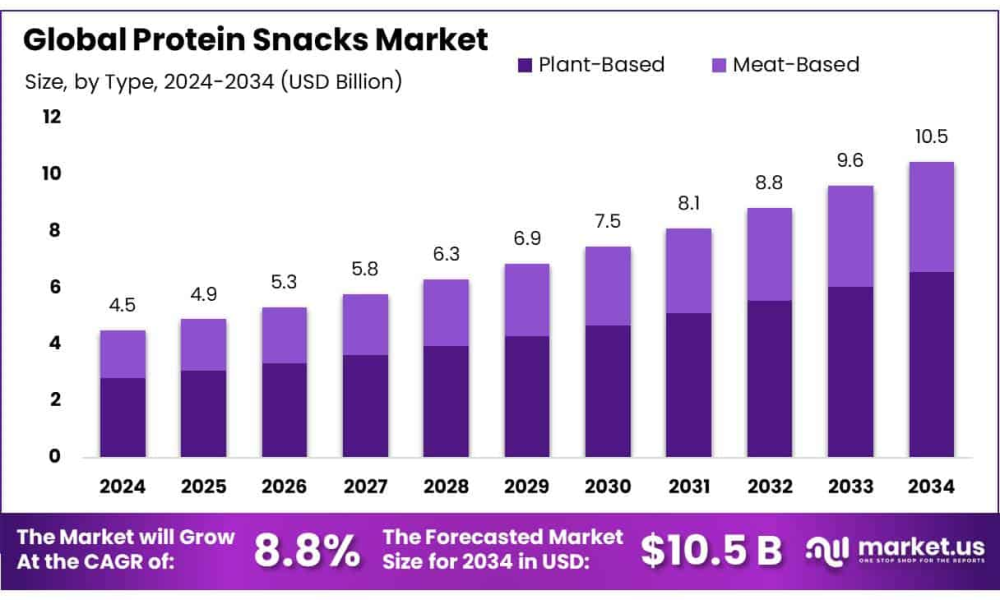
The global protein snacks market is projected to reach approximately USD 10.5 billion by 2034, rising from an estimated USD 4.5 billion in 2024, reflecting a strong compound annual growth rate (CAGR) of 8.8% during the forecast period from 2025 to 2034. In 2024, North America dominated the market, accounting for over 45.2% of the global share, with revenues totaling USD 2.0 billion.
Protein snack concentrates—offered in formats such as bars, powders, and fortified snacks—are specifically designed to deliver high protein content in convenient, on-the-go formats. These products cater to rising consumer interest in nutritional benefits such as satiety, muscle maintenance, and overall metabolic health. The market covers a broad spectrum of both plant-based and animal-derived proteins, including soy, lentils, peas, and dairy proteins.
The growth of this market is fueled by increasing consumer awareness regarding lifestyle-related health issues such as obesity and diabetes, which has led to a greater demand for healthy and functional snack options. Urbanization and rising disposable incomes have also shifted dietary preferences towards more nutritious and convenient food choices. Government-led nutritional programs have further strengthened the sector. In India, the Midday Meal Scheme provides free, protein-enriched lunches to more than 120 million school-age children, directly supporting protein intake at the grassroots level.
Similarly, the Pradhan Mantri Formalization of Micro Food Processing Enterprises (PMFME) scheme, launched in June 2020, is helping bolster the micro food processing industry. Gujarat stands out under this initiative, having supported 675 beneficiaries—more than any other state. The scheme offers a 35% capital subsidy on projects up to ₹10 lakh, ₹40,000 in seed capital for each member of a Self-Help Group (SHG), and covers 50% of branding and marketing costs.
Important Revelation
- Protein Snacks Market size is expected to be worth around USD 10.5 Billion by 2034, from USD 4.5 Billion in 2024, growing at a CAGR of 8.8%.
- Plant-Based held a dominant market position, capturing more than a 62.8% share of the global protein snacks market.
- Protein Bars held a dominant market position, capturing more than a 37.2% share of the global protein snacks market.
- Supermarkets/Hypermarkets held a dominant market position, capturing more than a 41.4% share of the global protein snacks market.
- North America held a commanding position in the protein snacks market, accounting for 45.2% of global revenue, approximately USD 2.0 billion.
Download Exclusive Sample Of This Premium Report (Including Full TOC, Table & Figures): https://market.us/report/global-protein-snacks-market/free-sample/
Factors Affecting the Growth of Protein Snacks Market
- Rising Health Awareness and Lifestyle Shifts: Increasing concerns about obesity, diabetes, and other lifestyle-related diseases have significantly influenced dietary habits. Consumers are now seeking healthier alternatives to traditional snacks. Protein-rich snacks are gaining popularity due to their role in promoting satiety, muscle maintenance, and metabolic health. This shift in focus toward balanced nutrition is one of the core drivers of the market.
- Growing Demand for Convenient and Nutritious Foods: Urbanization and fast-paced lifestyles have heightened the demand for ready-to-eat, portable, and nutritious food options. Protein snacks, available in forms like bars, powders, chips, and bites, meet this demand effectively. They cater to consumers seeking energy-boosting, meal-replacement alternatives during work, travel, or fitness activities.
- Expansion of Fitness and Sports Nutrition Trends: The rising popularity of fitness culture and active lifestyles, especially among millennials and Gen Z, has led to increased consumption of protein-based products. Gym-goers, athletes, and wellness-focused consumers frequently opt for protein snacks to support physical performance and post-workout recovery.
- Innovation in Product Development: Continuous innovation in protein snack formulations—including the use of plant-based proteins like pea, lentils, and soy—has expanded the consumer base, especially among vegans and vegetarians. Fortified, allergen-free, low-sugar, and gluten-free variants are also supporting diverse dietary needs, enhancing product appeal and market penetration.
- Government Nutrition Initiatives and Funding Support: Public sector support plays a crucial role in boosting protein consumption. For example, India’s Midday Meal Scheme serves protein-enriched meals to over 120 million schoolchildren, promoting nutritional awareness. Additionally, under the PMFME scheme launched in 2020, micro food processors receive subsidies and support for branding and marketing of protein-enriched products. In the U.S., the USDA has allocated more than USD 5 billion toward school nutrition since 2021, including USD 100 million for the Healthy Meals Incentives Initiative and USD 10 million in kitchen equipment grants, all contributing to improved access to protein-rich foods.
Report Segmentation
By Type Analysis: In 2024, plant-based protein snacks held a commanding 62.8% share of the global protein snacks market, underscoring the growing shift in consumer preferences toward healthier and more sustainable food choices. This dominance is driven by increased awareness of the health benefits associated with plant-based diets, as well as rising concerns related to cholesterol, lactose intolerance, and animal welfare. Consumers are increasingly embracing plant-based options for their clean-label appeal and digestive ease, aligning with the values of vegan, vegetarian, and flexitarian lifestyles. Retail shelves in 2024 reflected this trend with an expanded variety of offerings—ranging from pea and soy protein bars to lentil chips, nut-based bites, and chickpea snacks. Brands also enhanced product appeal by launching fortified and flavored options designed to attract broader demographics, including children and health-conscious professionals.
By Product Type Analysis: Protein bars emerged as the leading product type in the protein snacks category in 2024, accounting for over 37.2% of the global market share. Their popularity stems from the increasing demand for on-the-go nutritional solutions that offer both convenience and functionality. These bars serve as a reliable source of quick energy and satiety for busy individuals, including fitness enthusiasts, students, and office-goers. The shelf-stable nature, portability, and variety of flavors have further contributed to their widespread acceptance. During 2024, manufacturers continued to innovate with diverse formulations incorporating whey, pea protein, almonds, and oats, thereby catering to both conventional and plant-based consumer segments. As a result, protein bars have remained a staple across gyms, supermarkets, and even pharmacies.
By Distribution Channel Analysis: Supermarkets and hypermarkets maintained a dominant role in the distribution of protein snacks in 2024, holding a 41.4% share of the global market. This leadership position is primarily supported by the ease of access, product variety, and consumer trust associated with organized retail formats. Shoppers appreciate the ability to physically inspect products, compare nutritional information, and take advantage of promotional offers. Supermarkets also enhance brand visibility through dedicated wellness aisles and health food sections, where protein snacks such as bars, puffs, and fortified bites are prominently displayed. These outlets played a critical role in driving impulse purchases and introducing new products to mainstream consumers, particularly in urban regions where the demand for healthy, functional snacking continues to grow.
To Purchase this Premium Report@ https://market.us/purchase-report/?report_id=152570
Market Key Segmentation
By Type
- Plant-Based
- Meat-Based
By Product Type
- Protein Bars
- Protein Cookies
- Protein Drinks
- Protein Flakes
- Jerky
- Granola
- Yogurt
By Distribution Channel
- Supermarkets/Hypermarkets
- Convenience Stores
- Specialty Stores
- E-commerce
- Online Retail
- Others
Regional Analysis
In 2024, North America emerged as the leading region in the global protein snacks market, capturing 45.2% of total market revenue, which amounted to approximately USD 2.0 billion. This dominant position is driven by the region’s strong focus on health-conscious eating habits, a well-developed retail infrastructure, and supportive regulatory environments. The United States, in particular, played a pivotal role in this growth, with increasing consumer demand for protein bars, jerky, and high-protein chips as convenient and nutritious snacking options.
Government dietary guidelines issued by the USDA and Health Canada have emphasized the importance of adequate protein intake as part of a balanced diet, further encouraging the adoption of protein-rich snacks. Public health initiatives, including school meal programs and athletic nutrition efforts, have also introduced fortified snacks to promote better dietary habits among students and active individuals. These combined factors have strengthened consumer confidence and accessibility, reinforcing North America’s leadership in the global protein snacks market.
Competitive Landscape
- Clif Bar & Company
- Danone S.A.
- FAGE USA Dairy Industry, Inc
- General Mills, Inc
- GNC Holdings, LLC
- Hormel Foods
- Jack Link’s
- Kellanova
- Kerrys Foods
- Mars, Inc.
- Mondelez International, Inc.
- Nestle S.A.
- Quest Nutrition LLC
- Vitaco Health Australia
Get in Touch with Us:
Market.us (Powered By Prudour Pvt. Ltd.)
Address: 420 Lexington Avenue, Suite 300 New York City, NY 10170, United States
Send Email: [email protected]



