
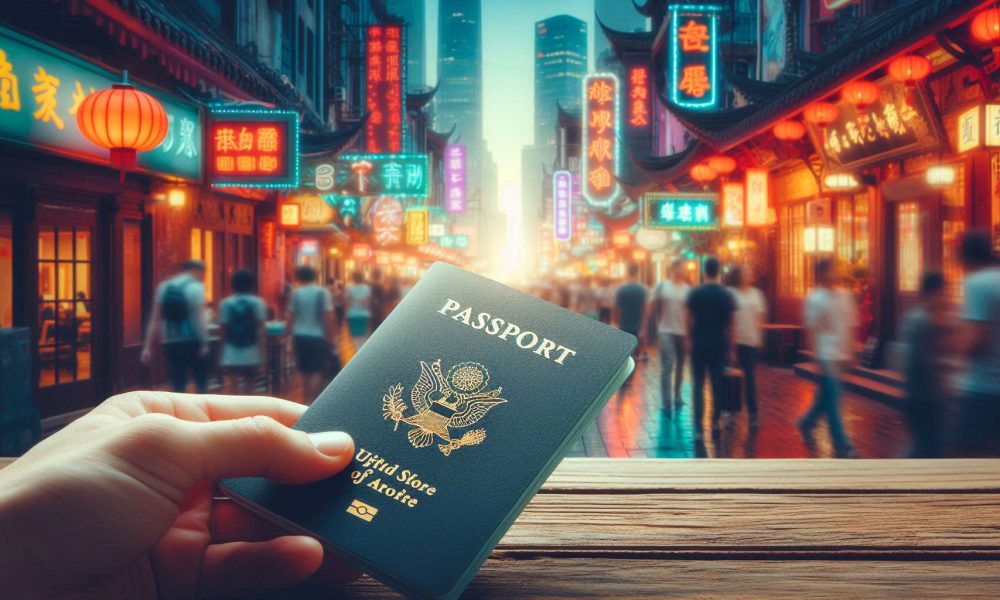
An in-depth review of how global privacy standards and human rights legislation intersect with border security innovation
WASHINGTON, DC, December 4, 2025
The modern border is no longer a single line staffed by officers with rubber stamps. It is a distributed digital infrastructure where faces, fingerprints, and travel histories are captured, analyzed, and stored across multiple databases, often in several countries at once.
For millions of travelers, that reality surfaces in small details. A camera at an automated gate. A fingerprint scanner at a kiosk. A notice informing them that biometric data will be stored “in accordance with applicable law.” Behind those moments lies a larger question that 2026 will force to the forefront. Do existing privacy and data protection laws still hold at the border when biometric systems operate on a global scale?
Governments argue that large-scale biometrics and real-time data sharing are essential to manage high volumes of travel, detect terrorism and organized crime, and enforce immigration rules. Human rights bodies, privacy regulators, and civil society organizations warn that the same systems test the limits of long-standing safeguards that were not designed for border infrastructures that never sleep.
This tension between innovation and law is no longer abstract. It plays out in concrete developments, from the European Union’s new Entry/Exit System to the United States’ expanded biometric entry exit rules, from emerging data protection laws in Africa and Asia to United Nations guidance on digital border governance.
Biometrics at the border is becoming the test case for whether global privacy standards can adapt to an environment in which the presumption of exceptional powers at the frontier risks becoming permanent and normalized.
A new generation of digital border systems
In 2025, the European Union began rolling out its long-planned Entry/Exit System. This digital platform registers the movements of most non-EU nationals entering the Schengen area. Under the scheme, travelers scan their passports and submit fingerprints and facial photographs on first entry; subsequent crossings are authenticated against these records, replacing manual passport stamping with biometric verification and automated records of entry and exit dates.
The data held in the system illustrates the scope of contemporary border biometrics. It includes travel document details, biometric identifiers, the date and place of each entry and exit, and information on refusals, all stored for years and accessible to border, visa, and law enforcement authorities under defined conditions. Institutions in the region emphasize that the Entry/Exit System is built to comply with regional privacy instruments, including rules on access, purpose limitation, and retention.
In the United States, authorities have moved to unify and expand biometric entry-exit programs. A new regulation authorizes border agencies to photograph virtually all non-citizens on entry and exit, including groups that had previously been exempt, and to use facial recognition to verify identity across airports, land crossings, and seaports.
The rule strengthens a system that already uses facial comparison at most major airports. It is justified as a way to combat visa overstays, detect identity fraud, and meet long-standing mandates for automated entry and exit controls. Privacy advocates respond that the broadened mandate heightens risks of mass biometric surveillance and misidentification, especially for specific demographic groups, and that the border context allows many safeguards that apply elsewhere in law to be weakened under border search and national security doctrines.
These flagship projects sit within a larger international landscape shaped by security resolutions that call on states to collect biometric data to track foreign terrorist fighters and by a broader trend toward using biometrics in migration management and border control.
Global privacy standards under pressure
The rapid expansion of biometric border systems directly confronts key principles that underlie modern data protection regimes.
Consent and necessity
In ordinary circumstances, many privacy frameworks emphasize informed consent and clearly defined purposes. At borders, those principles are narrowed. Travelers who refuse biometric capture are usually denied entry, regardless of their views about data processing. Legal justifications shift from consent toward necessity for national security, public order, and migration control.
In regions with strong privacy instruments, any processing of biometric data is treated as a limitation on privacy that must be strictly justified, including in the migration context. Courts stress that processing biometrics for identification requires a clear legal basis, must be proportionate, and must include safeguards against misuse.
Yet the same regions have enacted systems that will, in practice, make biometric collection a routine condition of crossing external borders. In legal terms, the necessity test is satisfied by reference to objectives such as preventing irregular migration and identity fraud. For travelers, the choice is not genuine; it is between submitting to biometric collection and not traveling at all.
Purpose limitation and function creep
Purpose limitation is another core principle. Data should be collected for specified, explicit purposes and not further processed in ways incompatible with those purposes. At borders, the initial purpose is usually framed as identity verification and migration management. Over time, other uses tend to emerge.
Shared border platforms often permit law enforcement and intelligence agencies to access stored biometrics for broader crime and security investigations. In some contexts, biometric databases built for migration control have been used to support policing unrelated to border crossing and, in extreme cases, to facilitate targeting of specific groups. Reports from international organizations and civil society warn of function creep, where technologies introduced under counterterrorism or migration rationales gradually spread into other domains, including protest monitoring or social welfare screening.
Data minimization and retention
Data minimization requires that only data necessary for a stated purpose be collected, while retention limits require that data be kept no longer than needed. At digital borders, these concepts are being stress tested.
Entry-exit systems retain biometric and travel data for defined periods when travelers comply with short-stay rules, and for more extended periods when travelers overstay or refuse entry. These durations are justified by the need to detect abuse of visa-free travel and to manage migration trends.
In other jurisdictions, policies governing the retention of biometric templates and associated records vary by system, but many travel-related databases retain information for years or even decades. These long horizons reflect the desire to spot patterns and support investigations. Yet they run counter to the intuitive sense that a single short trip should not result in an enduring biometric dossier.
Special category data and heightened safeguards
Many modern privacy laws classify biometric data as especially sensitive, triggering heightened safeguards. In Europe and other regions, biometrics used to identify a person uniquely are treated as a special category that generally cannot be processed unless specific exemptions apply, such as substantial public interest under the law. In parts of Africa, Asia, and Latin America, newer data protection laws adopt similar language, but practical enforcement remains underdeveloped.
Global human rights standards, including those articulated by United Nations bodies, stress that digital technologies at borders must be subject to human rights due diligence, including assessments of necessity, proportionality, and non-discrimination. Guidance from human rights offices explicitly identifies biometric recognition tools and massive interoperable databases as technologies that can create serious risks if deployed without adequate safeguards.
Case study 1: A frequent traveler confronting opaque border data flows
A composite scenario illustrates how these legal tensions appear from a traveler’s perspective.
A researcher from a visa-exempt country frequently travels between her home state, the European Union, and North America to attend conferences and meetings. She is used to encountering electronic gates and biometric boarding.
After several years of trouble-free travel, she begins to notice a pattern. On three consecutive trips, she is directed to secondary inspection on arrival in one particular region. Each time, officers ask detailed questions about her contacts, funding sources, and past visits. They hint that her file carries flags but decline to provide details.
Concerned that some erroneous record or misinterpreted association is shaping her treatment, she attempts to exercise her data access rights. She files a request with the data protection authority in the state where she was most recently questioned, asking what data is held about her in border systems and how it is used.
The authority responds that some information can be disclosed, but that access to specific indicators used in risk assessment is restricted due to national security. She is informed that specific systems are operated at the regional level and that she must submit separate requests to different controllers, including international organizations that manage shared databases. Some do not fall clearly under any national access regime.
Months later, she has partial answers about individual records but no clear picture of how her biometric data, travel history, and risk scores are linked across systems. The cumulative impact on her mobility remains difficult to challenge, even though each decision appears lawful on paper.
This case study is not based on one real person. It reflects common issues that arise when privacy rights designed for single systems meet border infrastructure spanning multiple states and institutions.
Case study 2: A border authority navigating privacy constraints
The tension is not limited to travelers. Border authorities themselves are navigating overlapping legal and operational demands.
Consider a composite border agency in a regional bloc that is implementing a digital entry-exit system while also responding to union-level privacy rules and national oversight.
On one side, the interior and security ministries insist that the new system must support real-time checks across multiple databases, allow flexible risk profiling, and provide long-term retention to analyze patterns of irregular migration and organized crime. On the other side, data protection regulators insist on clear purpose definitions, short retention periods for compliant travelers, strong logging, and tight role-based access controls.
The agency must design workflows that allow border officers to run biometric checks quickly under peak traffic while ensuring that each query is logged, that only authorized personnel can see sensitive alerts, and that any secondary uses of the data, for example by police or intelligence services, pass specific proportionality tests.
Establishing this balance requires internal policies that are much more detailed than those that governed the era of paper passport stamps. It also requires technical architectures that separate operational data needed at the checkpoint from longer-term analytical datasets, with different safeguards for each.
When external auditors or courts review the system, the agency must be able to demonstrate not only that the technology works, but that it works within the constraints of privacy law, including respecting access rights and incorporating mechanisms for correction and redress.
Emerging markets, biometric ambition, and regulatory gaps
Outside Europe and North America, emerging markets are rapidly rolling out biometric border controls, often as part of broader digital identity initiatives or infrastructure projects aimed at positioning airports and ports as regional hubs.
In Southeast Asia, several states have introduced or updated data protection laws that address biometrics, yet gaps remain in enforcement capacity and sector-specific rules. In parts of Africa and Latin America, biometric systems for elections, civil registration, and social services are being layered onto border control frameworks, sometimes with support from multinational vendors that provide end-to-end solutions, including hardware, software, and cloud hosting.
These environments raise specific privacy challenges. Legal frameworks may be fragmented or outdated relative to the sophistication of the technology. Supervisory authorities may lack the resources to conduct in-depth audits of complex biometric platforms. Public debate may focus on efficiency and security, with less attention to long-term implications for rights.
At the same time, emerging markets are increasingly expected by international partners to adhere to global privacy and human rights standards to secure closer travel cooperation or visa facilitation. Donors and regional organizations now condition some assistance on the adoption of data protection laws and independent oversight mechanisms.
Case study 3: A hub state negotiating its biometric border future
A fast-growing coastal country seeks to turn its main airport into a regional connector between continents. To satisfy airlines and partners, it commits to modern border controls, including biometric e-gates and integrated watchlist systems.
The government contracts a foreign vendor to provide a turnkey border management platform that captures fingerprints and facial images, checks them against national and international systems, and stores results in a central database hosted in a regional cloud. Initially, the legal provisions governing the new system are limited to a short regulation that empowers the border agency to collect necessary data for security purposes.
Civil society groups and journalists raise concerns about the lack of explicit limits on data sharing and retention. Partner states quietly signal that they want reliable assurances that biometrics collected on their citizens will not be misused if shared. The government faces a choice. It can ignore these concerns and risk reputational damage and reduced cooperation, or it can strengthen its privacy framework.
With support from external experts, legislators draft a comprehensive data protection law that includes special protections for biometric data, including impact assessments for high-risk systems, mandatory breach notification, and a requirement that any cross-border transfer of biometrics be subject to clear agreements. A new supervisory authority is created, initially with modest powers but with a mandate to audit border systems.
Implementation is uneven, but the process itself illustrates how border innovation can catalyze broader privacy reform.
The human rights lens on digital border governance
International human rights bodies increasingly view digital border systems as central sites for rights risk. Studies commissioned by UN offices highlight harms linked to biometric recognition, automated visa processing, and interoperable databases, especially for refugees, migrants, and stateless persons who may have limited ability to contest errors or discriminatory patterns.
Key concerns include discrimination, profiling, chilling effects on movement and association, a lack of an effective remedy, and security risks associated with massive biometric repositories.
Algorithmic risk models based on travel patterns, origins, or associations can reproduce biases present in historical enforcement data, leading to disproportionate scrutiny of certain nationalities, ethnic groups, or travelers with specific profiles. Awareness that every crossing involves biometric capture and long-term data storage can deter individuals, especially activists or members of marginalized communities, from exercising their right to freedom of movement, assembly, or expression.
Even where legal frameworks recognize a right to challenge unlawful processing, complex cross-border data flows make it difficult in practice to identify responsible controllers and to pursue claims. At the same time, centralized biometric repositories become attractive targets. Breaches or unauthorized access can expose vulnerable groups, such as dissidents whose travel histories could reveal networks and safe havens.
Guidance emerging from these bodies emphasizes the need for human rights due diligence in the design and deployment of digital border technologies, including early impact assessments, participation by affected communities, and transparent accountability mechanisms.
The private sector’s dual role
The expansion of global biometric border systems depends heavily on private actors, including technology vendors, airlines, airport operators, and cloud providers. Their systems and contracts influence how privacy principles are operationalized or eroded in practice.
Vendors design biometric algorithms, access control mechanisms, and logging features. Airlines collect passenger data and, increasingly, operate biometric boarding processes that blend commercial convenience with regulatory compliance. Airports decide how biometric checkpoints are laid out, what information is provided to travelers, and how opt-out or alternative channels are managed, where such options exist.
These actors must navigate statutory privacy obligations and soft law standards, such as the UN Guiding Principles on Business and Human Rights, which call on companies to conduct human rights due diligence when deploying technologies that can affect fundamental rights. Guidance on artificial intelligence and biometric systems used in law enforcement and border control stresses that these tools require particular scrutiny because of the power imbalances involved.
Amicus International Consulting and the border privacy landscape
In this complex environment, states, carriers, and multinational organizations increasingly seek independent analysis to navigate the intersection of biometric border innovation and data protection law.
Amicus International Consulting operates in that space as a neutral investigative and advisory firm. Its professional services focus on cross-border legal compliance, digital identity systems, and security policy, with particular attention to emerging markets and high-scrutiny travel corridors.
In the context of privacy at the border, Amicus International Consulting’s employees assist clients in several ways.
Legal and regulatory mapping
Employees map how biometric and travel data move from consulates to border posts, from national repositories to regional platforms, and from carriers to government systems. By tracing these flows, they help identify which jurisdictions’ laws apply at each step, where conflicts arise, and where additional agreements or safeguards are needed.
Impact assessments and human rights due diligence
For governments considering new biometric systems or data sharing arrangements, Amicus International Consulting supports structured assessments of privacy and human rights risks. This can include evaluating necessity and proportionality, analyzing potential discrimination or exclusion, and recommending technical and organizational controls to mitigate risks.
Policy and governance design
The firm helps draft or refine internal policies that implement legal requirements in operational terms, including access controls, retention schedules, logging and audit procedures, and incident response plans. It can also support the development of transparency materials that explain complex systems to the public in an accessible language.
Private sector compliance and risk management
For airlines, airport operators, and financial institutions whose staff and high-net-worth clients regularly pass through AI-enabled border systems, Amicus International Consulting guides how border privacy practices may affect corporate travel policies, risk exposure, and reputational considerations. This includes advising on responses to repeated secondary inspections or apparent data mismatches that may originate in border systems.
By approaching border privacy as both a legal and technical challenge, rather than as an issue confined to one discipline, Amicus International Consulting helps clients anticipate regulatory scrutiny and align security objectives with the evolving global privacy landscape.
Looking ahead, recalibrating privacy for an age of permanent border innovation
As 2026 approaches, the trajectory is clear. Biometric border systems will become more pervasive, more interconnected, and more central to how states manage mobility, security, and migration. The question is whether privacy and human rights frameworks will evolve in parallel or lag.
Several inflection points are already visible. Regional courts and data protection authorities will continue to test the compatibility of large-scale biometric systems with existing rights frameworks, potentially imposing stricter limits on retention, access, and secondary uses. New national and regional data protection laws, particularly in emerging markets, will either entrench strong safeguards for biometric data or leave significant gaps that can affect both domestic populations and foreign travelers.
Multilateral guidance, from UN human rights bodies to specialized organizations dealing with counterterrorism and migration, will increasingly frame border biometrics not only as security tools, but as technologies that must be subject to human rights due diligence. Private sector actors will face growing scrutiny from regulators, courts, and the public over their role in building and operating systems that sit at the edge of lawful surveillance and acceptable privacy intrusion.
In that environment, the border will remain a place where ordinary legal assumptions are tested. It has long been treated as a zone of exceptional state power. Global biometric systems now make that power more granular, more continuous, and more deeply embedded in data infrastructures.
The challenge for policymakers, regulators, and the organizations that support them is to ensure that the exceptional does not quietly become the new normal, and that privacy at the border remains governed by law rather than eroded by technology. Whether that balance is achieved will shape not only how people travel, but how societies understand the relationship between individuals and states in a world where identity is increasingly defined by digital traces at the frontier.
Contact Information
Phone: +1 (604) 200-5402
Signal: 604-353-4942
Telegram: 604-353-4942
Email: [email protected]
Website: www.amicusint.ca




