
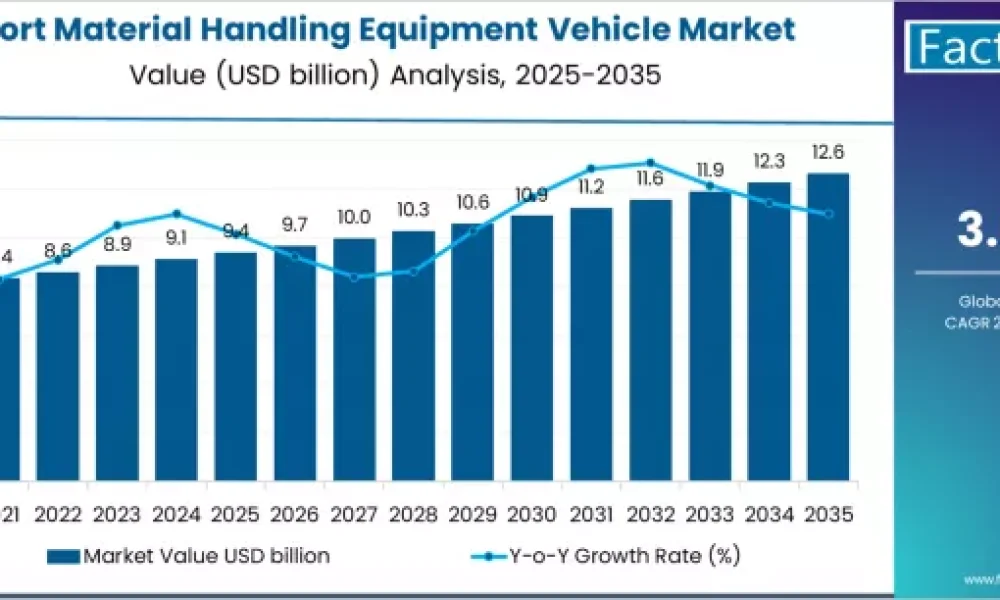
The global port material handling equipment vehicle market is poised for steady expansion over the next decade, fueled by automation, electrification, and modernization of global port operations. According to a new report by Fact.MR, the market is projected to grow from USD 9.4 billion in 2025 to approximately USD 12.7 billion by 2035, marking an absolute increase of USD 3.3 billion over the forecast period. This represents a total growth of 35.1%, with the market expected to expand at a compound annual growth rate (CAGR) of 3% between 2025 and 2035.
Strong Regional Momentum Across North America, Europe, and Asia-Pacific
Growing container traffic, adoption of smart port technologies, and a rising emphasis on reducing carbon emissions are reshaping port infrastructure investments worldwide. North America and Europe remain dominant regions, while Asia-Pacific continues to register robust gains through large-scale modernization and fleet upgrades.
To access the complete data tables and in-depth insights, request a Discount On The Report here: https://www.factmr.com/connectus/sample?flag=S&rep_id=5913
Market Quick Stats
| Metric | Details |
| Market Value (2025) | USD 9.4 billion |
| Forecast Value (2035) | USD 12.7 billion |
| Forecast CAGR (2025–2035) | 3.0% |
| Key Growth Regions | North America, Europe, Asia-Pacific |
| Leading Type | Container Handling & Terminal Tractors |
| Top Players | Kalmar, Konecranes, Terberg, Sany, Liebherr, Taylor Machine Works, Hyster-Yale, ZPMC, TICO, Ottawa |
Key Factors Driving Market Expansion
- Port Automation and Digitalization
The adoption of automated guided vehicles (AGVs), telematics, and real-time tracking systems is revolutionizing port logistics. Automated handling equipment enhances operational efficiency, reduces downtime, and lowers labor costs, driving demand for next-generation vehicles.
- Growth in Global Maritime Trade
With container volumes increasing across major trade routes, ports are investing heavily in modern handling systems to manage higher throughput, spurring demand for efficient loading and unloading vehicles.
- Sustainability and Electrification Initiatives
The shift toward electric and hybrid port vehicles is gaining momentum, driven by environmental regulations and government-backed green port initiatives aimed at reducing emissions and fuel consumption.
- Infrastructure Modernization
Emerging economies, particularly in Asia and Latin America, are investing in port expansion and infrastructure upgrades. Equipment manufacturers are capitalizing on these opportunities by offering customizable, durable, and energy-efficient handling vehicles.
- Technological Integration
Integration of AI, IoT, and predictive maintenance tools enhances equipment reliability and extends operational life, helping ports achieve greater efficiency and lower total cost of ownership.
Segment Overview
- By Equipment Type: Container handlers, terminal tractors, forklifts, reach stackers, and straddle carriers dominate global sales.
- By Power Source: Diesel-powered vehicles remain widespread, but electric and hybrid models are rapidly gaining traction.
- By Application: Cargo handling, container stacking, and terminal logistics lead usage, supported by increasing automation at global ports.
Competitive Landscape
Leading companies are focusing on strategic acquisitions, R&D in electric mobility, and smart port collaborations to strengthen their global presence.
Key Players in the Port Material Handling Equipment Vehicle Market include:
- Kalmar
- Konecranes
- Terberg
- Sany
- Liebherr
- Taylor Machine Works
- Hyster-Yale
- ZPMC
- TICO
- Ottawa
These industry leaders are integrating digital solutions, enhancing battery technologies, and optimizing vehicle ergonomics to meet the evolving demands of sustainable port operations.
Regional Market Outlook
- North America: The U.S. leads with investments in port automation and sustainability-focused upgrades.
- Europe: Germany, France, and the UK drive innovation through electrified fleets and eco-efficient terminal operations.
- Asia-Pacific: Japan, South Korea, and China are expanding port capacity and embracing digital transformation.
- Latin America: Mexico is emerging as a growing logistics hub, supported by trade expansion and modernization programs.
Purchase Full Report for Detailed Insights
For access to full forecasts, regional breakouts, company share analysis, and emerging trend assessments, you can purchase the complete report here: https://www.factmr.com/checkout/5913
Market Outlook: Ports of the Future are Smarter, Cleaner, and More Connected
The port material handling equipment vehicle market is expected to continue its upward trajectory through 2035, as global ports accelerate automation, electrification, and digital transformation.
“Efficiency and sustainability are at the heart of the port equipment revolution,” said a Fact.MR research analyst. “Manufacturers who invest in intelligent, zero-emission handling solutions will be best positioned to capture future growth as ports evolve into smart logistics hubs.”
Have a specific Requirements and Need Assistant on Report Pricing or Limited Budget please contact us – [email protected]
About Fact.MR
Fact.MR is a global market research and consulting firm, trusted by Fortune 500 companies and emerging businesses for reliable insights and strategic intelligence. With a presence across the U.S., UK, India, and Dubai, we deliver data-driven research and tailored consulting solutions across 30+ industries and 1,000+ markets. Backed by deep expertise and advanced analytics, Fact.MR helps organizations uncover opportunities, reduce risks, and make informed decisions for sustainable growth.



