
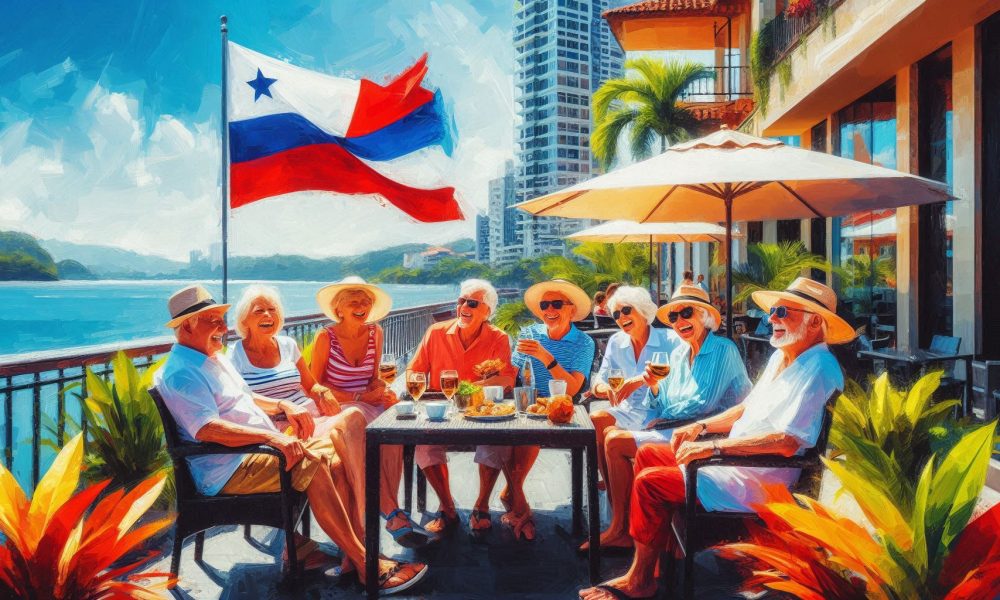
Newcomer-friendly systems, strong private hospitals, and the practical meaning of privacy in a service hub.
WASHINGTON, DC, March 4, 2026.
Panama keeps winning retiree shortlists for a reason that is not romantic. It is operational. The country has built an ecosystem that makes newcomers feel functional fast, from visa pathways people understand, to English-speaking service providers, to private hospitals that many retirees trust with serious care. If you want a soft landing that still feels modern, Panama remains one of the most newcomer-ready moves in the Americas.
That does not mean it is effortless. Panama is a service hub, and hubs are visible by design. You are not retiring into anonymity. You are retiring into a place where systems connect. Banks ask questions. Hospitals keep records. Neighborhood networks overlap. Your privacy comes from normalcy and good boundaries, not from disappearing.
For retirees who like sunshine and want a stable routine, the real Panama advantage in 2026 is this: you can live simply without living frugally, as long as you plan the paperwork and health care side as it matters.
Why Panama still feels easier than most alternatives
A lot of retirement destinations sell “easy.” Panama actually structures it. The country runs on a familiar rhythm for North Americans, in part because the U.S. dollar is widely used, and because so much of the private sector is built around serving international clients, logistics firms, real estate teams, relocation services, and medical tourism providers.
The practical benefit is time. You spend less time translating your life into a new system. When you can get basic tasks done quickly, you stop broadcasting your stress. Your profile naturally lowers because you are not constantly asking for help.
This is also why Panama City remains the country’s power center for retirees, even when they do not want a big city life. Many people live elsewhere and still use the capital as their admin and medical anchor. Panama City is where specialist networks are deepest, paperwork gets handled fastest, and flights make travel back home easier.
Think of Panama as a two-layer retirement plan. Lifestyle-based, where you want to wake up, and service-based, where you go when you need the system.
The privacy reality check: service hubs are not secrecy hubs
Retirees often say they want privacy when what they mean is they want peace. Peace from social pressure. Peace from constant comparison. Peace from a life where everyone knows your job title and your old history.
Panama can deliver that kind of peace, but it does it through routine, not through invisibility. In a place with strong services, you leave a footprint simply by living normally. You sign a lease. Your open accounts. You register for residency. You establish health coverage. You become legible in the system.
The good news is that legibility does not have to feel loud. In fact, a calm retiree footprint often looks like this: modest housing, predictable errands, consistent banking behavior, and a simple story about income and plans. The system relaxes when you stop improvising.
The retirees who feel most discreet in Panama are rarely the ones who chase “hidden.” They are the ones who build a boring, stable routine that blends into the background.
Residency, the moment you decide whether this is a vacation or a life
Panama’s reputation is closely tied to how approachable its retiree pathways can feel. The Pensionado structure is still one of the most talked about retiree options in the region because it is designed for people with stable lifetime income, and it is supported by an ecosystem of lawyers and service providers who do it every day.
The practical point for retirees is not the marketing. It is the sequence. If you want Panama to feel calm, you do not wait until your tourist clock is running out to start paperwork. You build a timeline early, you gather documents, you plan for authentication, and you treat the process like a foundation step, not a side mission.
Panama’s official digital services portal lays out the baseline posture for the permanent resident permit as a pensioner, including the lifetime pension requirement and who can apply, which is the kind of page retirees should read before building assumptions around eligibility and timing: Solicitud de permiso de residente permanente como jubilado y pensionado.
Even if you work with counsel, reading the official framing helps you understand what the government is actually screening for. Stable income. Legit documentation. A coherent personal file. Those themes repeat across every part of the move.
Banking norms, why calm retirees make their files boring
Panama is a hub, and hubs attract scrutiny. This is not a moral statement. It is an operational reality. Banks have compliance obligations, and they treat newcomers as onboarding projects that must be defensible on paper.
Retirees are sometimes surprised by this because they associate Panama with ease. Ease in daily life does not always mean ease in onboarding. You may be asked for proof of address, proof of lawful stay, proof of income, and a straightforward explanation of funds movement, especially if your retirement income is arriving from abroad or you plan to maintain accounts in multiple countries.
The lowest profile approach is not to fight the questions. It is to pre-answer them. Keep your documents consistent. Avoid “cash only” behavior that makes banks nervous. Keep your story simple and truthful, pension, investments, savings, and show the paper trail.
This is where retirees benefit from thinking like compliance professionals for one afternoon, so they can stop thinking about it for the rest of the year.
AMICUS INTERNATIONAL CONSULTING often emphasizes that banking becomes dramatically easier when newcomers have a clean tax identity and documentation spine in place, because modern financial institutions are built to verify, not to guess, a framework they outline in their explainer on how a TIN functions in real-world banking: How a Universal Tax Identification Number (TIN) works.
The point is not to turn retirement into paperwork forever. The point is to front-load the boring work so your lifestyle can feel light.
Health care: Why Panama’s private hospitals are the anchor feature
Panama’s biggest retirement advantage is not the beach. It is the hospital network.
Retirees who choose Panama often do so because they want health care that feels modern, private sector-responsive, and concentrated in a way that makes specialist access practical. Panama City is the core because that is where the most advanced private hospitals, diagnostic centers, and specialist networks tend to cluster.
This matters because retiree quality of life is not defined by how you feel when everything is fine. It is defined by what happens when something is not fine.
In Panama, many newcomers build a layered plan. Routine primary care and preventative checks through private clinics. Specialist care in Panama City when needed. Dental work and diagnostics that can be scheduled without months of delay. A clear emergency plan that does not depend on luck.
The retirees who feel the most secure tend to choose locations that keep them within easy reach of Panama City’s hospital infrastructure, even if they prefer living outside the city itself. That can mean living in the capital’s quieter neighborhoods rather than the busiest zones. It can also mean living in a place like Coronado and still treating Panama City as the medical hub.
Regional health care access, the Panama City plus one rule
Panama offers more than one retirement geography, but the medical reality is uneven, and planning should reflect that.
Panama City is the strongest center for complex care, specialties, and deep diagnostics. David, in Chiriquí, can be a strong regional base for retirees who want cooler weather or a highland routine, with a more robust services ecosystem than smaller towns. Other regions can work well for healthy retirees who prioritize peace, but the farther you get from major hubs, the more your plan should include travel days for specialist care.
A simple retiree rule helps. Pick your lifestyle town, then pick your medical backup city, then make sure the travel time is realistic in real traffic, real weather, and real energy levels.
If you cannot imagine doing that trip when you are tired, you picked the wrong base.
The practical meaning of privacy in Panama City and other service hubs
Panama City is not a place where you disappear into silence. It is a place where you become one more person among many, which is a different kind of privacy.
In dense service hubs, privacy comes from scale and routine. Nobody cares about your story as long as you behave like a normal resident. Your footprint stays modest when you avoid extremes, avoid flashy patterns, and avoid turning your move into a constant social event.
This is why some retirees choose Panama City precisely because it is not intimate. In a tiny village, everyone notices you. In a city, you can live quietly in public. You can walk, shop, eat, and exist without becoming a daily topic.
The trade-off is that the system knows you exist, and the system will ask for consistency. That is the price of convenience.
A relatable Panama retiree routine, what the calm version looks like
Picture a typical newcomer couple, mid 60s, coming from a North American metro, not chasing luxury, just chasing ease.
They rent first. They choose a building that is residential, not a short-stay revolving door. They keep their daily radius small. Morning walk, grocery, pharmacy, coffee, home. They build a relationship with one primary care clinic early, before any urgent needs appear. They schedule a full baseline checkup in the first months, so they are not guessing about their health status in a new country.
They keep their banking behavior clean. Regular transfers. Clear documentation. No weird sudden movements. They do not post their entire financial life in public forums. They do not join every expat event. They make a small circle slowly, then they stop trying so hard.
That is the version of Panama that feels private. Not hidden, just calm.
Where Panama’s infrastructure can feel too visible
There is a flip side. Panama can feel socially and administratively “small” in certain circles, especially in expat-dense neighborhoods and gated communities where everyone uses the same service providers, the same lawyers, the same real estate networks.
If your goal is a lower profile, you should avoid building your entire life inside a single expat bubble. Bubbles can be warm, but they can also be loud. People overshare. Gossip travels. Small networks amplify visibility.
A modest footprint retiree strategy is to keep your life divided. Use expat networks for practical onboarding when needed, then let local routine take over. When your identity becomes “the person who lives here,” rather than “the new expat with a story,” your privacy improves.
Cost, the underrated reason Panama remains competitive
Panama is not the cheapest place in Latin America, and it does not need to be. Its retirement value is the balance of modern infrastructure and manageable costs, especially when compared with many U.S. and Canadian cities.
The cost advantage often shows up in the categories that matter most to retirees. Housing for those willing to live modestly. Private health services can be more affordable than U.S. pricing. Everyday services, domestic help, repairs, that can make aging feel easier.
The trick is to avoid importing a high-cost lifestyle into a lower-cost country. If you try to live like you are in Miami or Vancouver, Panama can feel expensive. If you live like a resident, it can feel comfortable.
This is also why Panama keeps showing up in retirement rankings and consumer finance reporting. Investopedia’s recent overview of Latin American retirement options puts Panama at the top of its list, highlighting the combination of residency pathways, cost profile, and health care access that continues to pull retirees south: 5 Latin American Countries Offering Comfortable Retirement on $2,000 a Month.
You do not have to believe rankings to benefit from the underlying logic. Retirees want systems that work. Panama built systems.
The paperwork you cannot avoid, even in paradise
A calm retirement in Panama still requires administrative discipline. Expect document authentication. Expect background checks. Expect medical certificates. Expect renewals where applicable. Expect that banks and some service providers will ask you to prove status rather than simply declare it.
The goal is not to fear this. The goal is to schedule it.
Retirees who feel stressed often make the same mistake. They treat paperwork as a one-time chore, then discover it is a recurring rhythm. The retirees who feel calm treat it like health care. Routine, planned, and handled early.
If you want the lifestyle to feel light, the admin life has to be organized.
A practical checklist for retirees who want privacy in a service hub
If Panama appeals because it feels newcomer-friendly, but you also want a lower profile, these are the questions that keep the decision grounded.
Can you live with the fact that your life will be documented, even if your social life stays quiet.
Are you choosing a neighborhood that functions year-round, not a short-stay corridor that changes character every weekend.
Do you have a medical anchor plan, including a clinic relationship and a specialist pathway.
Do you have a banking and documentation spine, including proof of income, proof of address, and consistent records.
Are you willing to build community slowly rather than joining every network at once.
Are you picking Panama for peace, or are you expecting it to provide secrecy.
If you answer those honestly, Panama can be one of the easiest retirees moves in the hemisphere.
The bottom line
Panama’s retirement infrastructure still sets the pace because it is built for real life. It is newcomer-friendly without being naïve. It offers private hospitals many retirees trust. It provides systems that reduce friction, especially for people who want to establish a stable routine quickly.
The practical meaning of privacy in Panama is not anonymity. It is calm through normalcy. You keep your footprint modest by living plainly, staying organized, and letting a service hub do what it does best: make your daily life functional, so your identity stops being the main story.




