
Market Overview
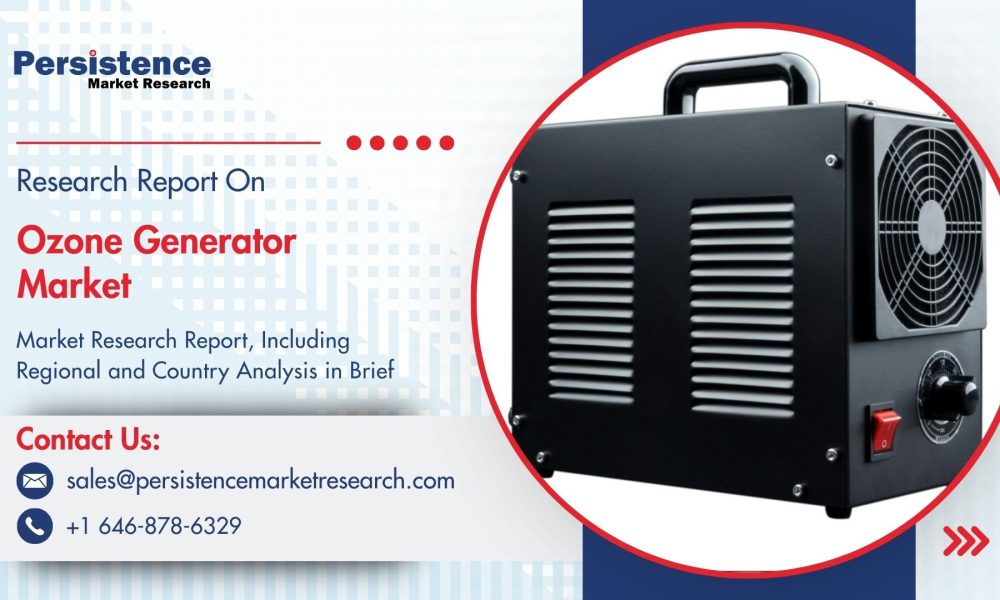
The global ozone generator market is experiencing steady growth as industries and municipalities increasingly adopt advanced water treatment, air purification, and disinfection solutions. According to the latest study by Persistence Market Research, the market size is expected to be valued at US$ 1,369.4 Mn in 2025 and is projected to reach US$ 2,134.2 Mn by 2032, growing at a CAGR of 6.5% during the forecast period from 2025 to 2032. Ozone generators are devices that produce ozone, a powerful oxidizing agent widely used in applications such as wastewater treatment, food processing, medical sterilization, and indoor air quality management.
The rising demand for clean water, coupled with stringent environmental regulations, is one of the major drivers boosting the adoption of ozone generators worldwide. Increasing concerns regarding waterborne diseases, growing industrialization, and the rising need for effective air disinfection systems are creating opportunities for sustained market expansion. In addition, the COVID-19 pandemic has accelerated awareness about indoor air quality and hygiene, further reinforcing the relevance of ozone-based technologies across sectors.
Get a Sample PDF Brochure of the Report (Use Corporate Email ID for a Quick Response): https://www.persistencemarketresearch.com/samples/22006
Market Drivers
The growing emphasis on sustainable and chemical-free water treatment methods is one of the primary factors driving the ozone generator market. Unlike traditional chlorine-based disinfectants, ozone treatment does not leave harmful residues, making it a preferred solution for municipalities, industrial water treatment plants, and bottled water manufacturers. Moreover, ozone’s strong oxidation properties make it highly effective in removing contaminants, odor, and microorganisms from water and air, providing a reliable alternative to conventional methods.
In addition to water treatment, the increasing focus on improving indoor air quality is also supporting market growth. With rising levels of urban air pollution and growing health concerns, ozone generators are being adopted in commercial buildings, healthcare facilities, hotels, and transportation systems to eliminate bacteria, viruses, and volatile organic compounds (VOCs). Expanding applications in food safety and preservation further add to the growth trajectory, as ozone can extend shelf life and ensure microbial safety without the use of synthetic chemicals.
Market Challenges
Despite the positive outlook, the ozone generator market faces some challenges. High installation and operational costs associated with ozone generation systems can deter adoption, particularly among small and medium-sized enterprises. Furthermore, potential health hazards linked with high ozone exposure remain a concern, as improper usage or lack of regulation in certain regions could restrict consumer acceptance.
Additionally, limited awareness about the benefits of ozone treatment in some developing economies hampers market penetration. Technical complexities related to ozone generation and the need for trained professionals to handle advanced systems also present hurdles for broader adoption. To address these challenges, manufacturers are focusing on innovation to develop cost-efficient, user-friendly, and safer ozone generators.
Market Opportunities
The global ozone generator market holds significant opportunities, particularly with the rising demand for sustainable disinfection methods. The expansion of smart cities and infrastructure projects in emerging economies is expected to increase demand for advanced water and wastewater treatment technologies, where ozone systems play a vital role. Moreover, the food and beverage sector presents a growing opportunity, as ozone treatment ensures product safety and compliance with global hygiene standards while aligning with consumer preferences for chemical-free processing.
The healthcare sector also represents a promising avenue, with hospitals and laboratories increasingly adopting ozone sterilization systems to maintain infection control. Furthermore, technological advancements in ozone generation, such as energy-efficient systems and portable ozone devices, are expanding their scope of applications. Growing awareness about the benefits of ozone disinfection through government campaigns and industry initiatives is likely to accelerate market adoption in the years ahead.
For Customized Insights on Segments, Regions, or Competitors, Request Personalized Purchase Options @ https://www.persistencemarketresearch.com/request-customization/22006
Market Segmentation
The ozone generator market can be segmented on the basis of technology, application, and end-use industry.
By Technology
- Corona Discharge
- Ultraviolet-based (UV) Ozone Generation
- Electrolytic
- Cold Plasma
- Others
By Application
- Water Treatment
- Air Purification
- Chemical Synthesis
- Surface Sanitation & Disinfection
- Odor & Gas Remediation
- Others
By End-user
- Municipal
- Industrial
- Commercial
- Healthcare
- Food & Beverage
- Agriculture & Aquaculture
- Environmental Remediation
- Transportation
- Others
Regional Insights
Geographically, North America and Europe currently dominate the ozone generator market, supported by stringent environmental regulations, high adoption of advanced treatment technologies, and strong awareness regarding water and air quality. The U.S. remains a key market due to its well-established municipal water treatment infrastructure and growing use of ozone systems in healthcare and food processing industries.
Europe is also witnessing strong growth, particularly in countries such as Germany, France, and the UK, where ozone technologies are being increasingly used for industrial and environmental applications. The Asia-Pacific region, however, is projected to register the fastest growth during the forecast period. Rapid industrialization, urbanization, and rising government investments in water treatment infrastructure in China, India, and Southeast Asian nations are fueling demand for ozone generators. Latin America and the Middle East & Africa also offer promising opportunities, as countries in these regions are gradually adopting advanced water treatment and sanitation solutions to meet growing population needs.
Company Insights
The competitive landscape of the global ozone generator market is moderately fragmented, with several multinational corporations and regional players actively participating in the industry. Key players are focusing on product innovation, mergers and acquisitions, and geographic expansion to strengthen their market presence. Sustainability and cost-effectiveness are becoming central themes in product development strategies.
✦ Toshiba Corporation
✦ Mitsubishi Electric Corporation
✦ Daikin Industries Ltd.
✦ Ozone Solutions Inc.
✦ Primozone Production AB
✦ ESCO International Ltd.
✦ Suez SA
✦ Ebara Corporation
✦ DEL Ozone
✦ Lenntech BV
These companies are investing in R&D to develop energy-efficient ozone generators that meet the growing demand for eco-friendly disinfection solutions. Partnerships with government bodies and municipal authorities are also playing a critical role in securing large-scale contracts for water and wastewater treatment projects.
Future Outlook
The future of the ozone generator market looks highly promising, driven by the global emphasis on sustainability, public health, and environmental protection. With water scarcity, pollution, and disease prevention becoming critical global challenges, the role of ozone generators as safe, effective, and environmentally friendly solutions is likely to strengthen. Technological innovations are expected to reduce costs and improve safety, making ozone treatment more accessible across different end-use sectors.
Moreover, the increasing integration of ozone generators with smart monitoring systems will enhance operational efficiency and ensure safe usage. As governments and industries worldwide continue to invest in clean technologies, the ozone generator market is poised to expand steadily, offering significant growth opportunities for manufacturers and stakeholders.
In conclusion, the global ozone generator market is set to grow from US$ 1,369.4 Mn in 2025 to US$ 2,134.2 Mn by 2032, registering a CAGR of 6.5%. Market growth is being propelled by increasing demand for sustainable water and air treatment solutions, rising awareness about health and hygiene, and expanding applications in food safety and healthcare. While challenges such as high costs and safety concerns persist, ongoing innovation and regulatory support are expected to drive wider adoption. With growing opportunities in emerging economies and evolving consumer preferences for eco-friendly solutions, the ozone generator market is positioned for strong and sustained growth in the years ahead.
Explore the Latest Trending Research Reports:




