
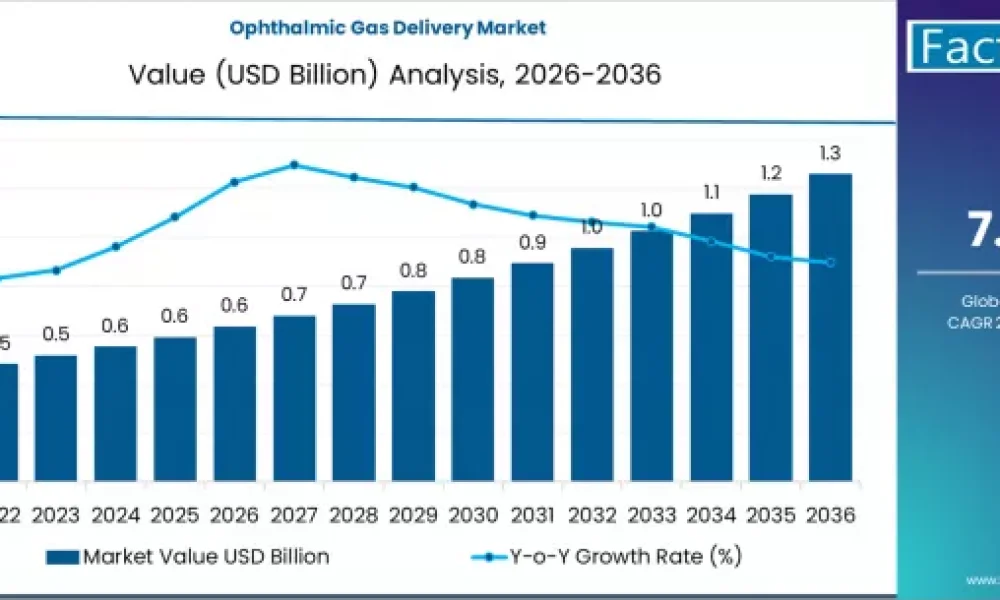
A comprehensive new market analysis by Fact.MR, a leading provider of market intelligence, reveals that the global ophthalmic gas delivery market is entering a pivotal decade of growth. The report, covering the forecast period of 2026 to 2036, identifies a strategic shift in vitreoretinal surgery protocols driven by an aging global population and rapid advancements in precision delivery systems.
As ophthalmic surgeries become increasingly specialized, the demand for high-purity gases such as Sulfur Hexafluoride (SF6) and Perfluoropropane (C3F8) is reaching new heights. These gases are essential for endotamponade procedures, where they are used to hold the retina in place during the healing process following surgery for retinal detachment or macular holes.
To access the complete data tables and in-depth insights, https://www.factmr.com/connectus/sample?flag=S&rep_id=13470
The Current Landscape: Who, What, Where, and Why
Who: The market involves major pharmaceutical gas manufacturers, medical device innovators, and specialized ophthalmic surgeons. Key stakeholders include hospitals, ambulatory surgical centers (ASCs), and specialized eye clinics.
What: The research focuses on the “Ophthalmic Gas Delivery Market,” encompassing the gases themselves and the sophisticated kits, canisters, and infusion systems used to administer them during vitrectomy.
When: The industry analysis provides a detailed roadmap from 2026 through 2036, highlighting key milestones in regulatory approvals and technological adoption.
Where: While North America remains a dominant force due to high healthcare expenditure, the Asia-Pacific region is emerging as a high-growth corridor as infrastructure for specialized eye care expands in emerging economies.
Why: Growth is primarily fueled by the rising prevalence of age-related macular degeneration (AMD) and diabetic retinopathy, alongside a preference for minimally invasive surgical techniques that require precise gas tamponades.
Market Context: Transitioning from Traditional to Precision Systems
Historically, ophthalmic gases were handled via manual mixing, a process prone to human error and inconsistent concentrations. The Fact.MR report highlights a significant industry pivot toward pre-filled, sterilized, and ready-to-use delivery systems. These “all-in-one” kits are becoming the gold standard, as they reduce the risk of contamination and ensure the exact pressure levels required for delicate intraocular environments.
The market is also seeing a surge in “Smart Delivery” innovations. Modern systems now incorporate pressure-controlled regulators that allow surgeons to maintain ocular stability throughout the procedure, a critical factor in preventing post-operative complications.
Data-Backed Insights: Drivers of the 2026–2036 Outlook
According to the report, the market share for ophthalmic gas delivery is being redistributed based on three primary industry drivers:
Surge in Diabetic Retinopathy: With the global diabetic population expected to rise significantly over the next decade, the incidence of tractional retinal detachment is increasing. This creates a sustained requirement for long-acting gas tamponades.
Shift to Ambulatory Surgical Centers (ASCs): There is a documented movement of retinal surgeries from traditional hospitals to ASCs. This shift favors delivery systems that are compact, portable, and require minimal setup time.
Regulatory Harmonization: Increased scrutiny from the FDA and EMA regarding the purity and sterilization of medical gases is pushing smaller players to consolidate or innovate, leading to a more streamlined and authoritative competitive landscape.
Sustainability and Material Innovation
A notable trend highlighted for the 2030s is the focus on sustainable medical packaging. Manufacturers are increasingly exploring recyclable canisters and reduced-waste delivery kits to align with global healthcare sustainability mandates. Furthermore, the development of biocompatible gases that offer controlled resorption rates is a major area of R&D, aiming to reduce the period of post-operative vision blurriness for patients.
Strategic Implications for Investors and Analysts
For investors, the ophthalmic gas delivery market represents a high-barrier-to-entry segment with consistent recurring revenue. Because these gases are indispensable for retinal surgery, the market is remarkably resilient to broader economic fluctuations. Analysts point toward the “disposable kit” segment as the most lucrative area for future investment, as healthcare providers prioritize patient throughput and infection control.
About Fact.MR
Fact.MR is a distinguished market research agency, delivering highly detailed and actionable insights across various high-tech sectors. By utilizing a data-first approach, Fact.MR empowers industry leaders, analysts, and investors with the foresight needed to navigate complex global markets.
Have a specific Requirements and Need Assistant on Report Pricing or Limited Budget please contact us – [email protected]
To View Related Report :
Ophthalmic Diagnostic Devices Market https://www.factmr.com/report/ophthalmic-diagnostic-devices-market
Ophthalmic Drug CDMO Market https://www.factmr.com/report/ophthalmic-drug-cdmo-market
Ophthalmic Eye Shield Market https://www.factmr.com/report/1768/ophthalmic-eye-shield-market
Ophthalmic Imaging Equipment Market https://www.factmr.com/report/ophthalmic-imaging-equipment-market
“



