
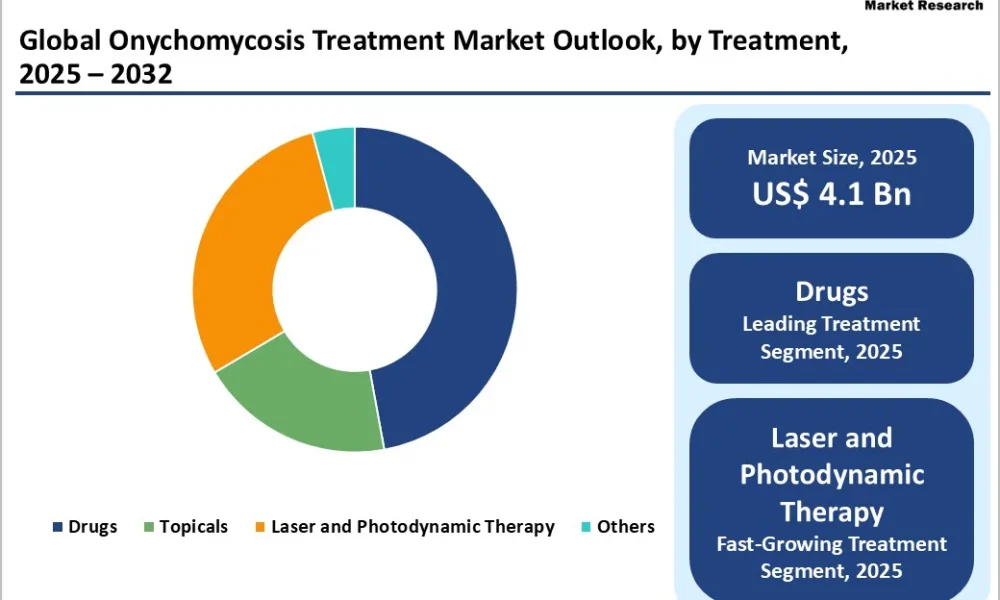
The global onychomycosis treatment market is witnessing significant growth, fueled by rising prevalence of fungal nail infections, expanding awareness about early diagnosis, and continuous advancements in treatment technologies. Onychomycosis, a fungal infection of the nails, affects a substantial portion of the population worldwide, particularly the elderly, diabetic, and immunocompromised individuals. The market is increasingly driven by pharmaceutical and dermatology companies focusing on developing effective topical, oral, and device-based antifungal therapies. Patients’ preference for faster, safer, and cosmetically appealing solutions has led to the introduction of next-generation formulations and innovative delivery systems. Furthermore, expanding access to dermatology care in emerging regions and growing investments in research and development are further strengthening market adoption.
Market statistics indicate that the onychomycosis treatment market is expected to reach a valuation of approximately US$ 4.1 billion in 2025, and is projected to grow to US$ 5.8 billion by 2032 at a compound annual growth rate (CAGR) of 5.1%. This growth is supported by increasing infection rates among vulnerable populations and rising consumer awareness about non-invasive and cosmetic nail restoration therapies. Distal subungual onychomycosis currently dominates the disease segment due to its high global incidence and ease of diagnosis. Hospitals remain the leading end-user segment, providing specialized diagnostic and therapeutic services for complex or chronic cases. Geographically, North America holds the largest market share, driven by well-established healthcare infrastructure, advanced diagnostic capabilities, and strong adoption of both oral and topical antifungal treatments, whereas Asia Pacific is emerging as the fastest-growing region due to rising geriatric and diabetic populations coupled with expanding healthcare access.
Download Your Free Sample & Explore Key Insights: https://www.persistencemarketresearch.com/samples/34004
Key Highlights from the Report
• North America leads the onychomycosis treatment market with a revenue share of 41.1%.
• Asia Pacific is the fastest-growing regional market through 2032.
• Distal subungual onychomycosis dominates the disease segment worldwide.
• Proximal subungual onychomycosis is the fastest-growing disease segment.
• Hospitals are the primary end-users for onychomycosis treatment.
• Government funding is supporting the development of innovative device-based therapies.
Market Segmentation
The onychomycosis treatment market is segmented primarily based on product type, disease type, and end-user categories. By product type, the market is divided into drugs and device-based therapies. Drugs, which include both oral and topical antifungals, remain the dominant treatment option due to their widespread availability, proven clinical efficacy, and affordability. Oral medications provide systemic treatment and are particularly effective for severe infections, whereas topical drugs, including next-generation formulations, offer targeted therapy with fewer side effects and improved patient compliance. Device-based therapies, such as laser treatments and energy-based systems, are gaining traction as non-invasive alternatives that can enhance treatment efficacy and reduce recurrence rates.
By disease type, distal subungual onychomycosis accounts for the largest share, driven by its high prevalence, visible symptoms, and chronic progression, which necessitate prolonged treatment. Proximal subungual onychomycosis, although less common, is experiencing rapid growth due to the increasing population of immunocompromised patients and the rising demand for targeted, advanced antifungal therapies. End-user segmentation identifies hospitals as the leading segment, followed by dermatology clinics, podiatry centers, and homecare settings. Hospitals dominate due to their ability to provide comprehensive diagnostic services, prescribe advanced pharmacological therapies, and manage recurrent or complex cases, while clinics and homecare solutions serve patients seeking convenience and over-the-counter treatments.
Regional Insights
The North American onychomycosis treatment market is driven by high awareness, advanced healthcare infrastructure, and strong adoption of prescription antifungal drugs and laser-based therapies. The United States, in particular, benefits from extensive R&D investments, patient assistance programs, and regulatory support for rapid approvals of innovative therapies. Europe maintains a stable and growing market, supported by evidence-based clinical practices, strong regulatory frameworks, and increasing patient awareness about the aesthetic and health-related impacts of fungal nail infections. Germany, France, Italy, and the U.K. are key contributors due to expanded dermatology services and access to advanced medications.
In Asia Pacific, the market is expanding rapidly as rising diabetes prevalence, tropical climates, and growing geriatric populations increase infection rates. Countries like India, China, Japan, and South Korea are witnessing higher demand for both pharmacological and device-based treatments due to improved healthcare access and increasing patient awareness. The region’s growth is further supported by the expansion of private dermatology practices, entry of international pharmaceutical companies, and availability of generic antifungal drugs, making treatment more accessible and affordable. Other regions, including Latin America and the Middle East & Africa, are experiencing moderate growth driven by rising awareness, increased healthcare spending, and gradual improvements in dermatology infrastructure.
Get Custom Insights Designed for Your Business: https://www.persistencemarketresearch.com/request-customization/34004
Market Drivers
Several factors are propelling the growth of the onychomycosis treatment market. Primarily, the rising prevalence of fungal nail infections among diabetic, elderly, and immunocompromised populations is expanding the patient base. Aging-related nail changes, compromised immunity, and vascular issues in seniors increase susceptibility to infection, while lifestyle factors such as frequent use of occlusive footwear and exposure in communal environments further contribute to higher infection rates. Innovations in topical and oral antifungal therapies, including enhanced drug delivery systems, lipid-based formulations, and oral drugs with reduced hepatotoxicity, are improving cure rates, reducing treatment duration, and increasing patient compliance. Furthermore, increasing adoption of non-pharmacological treatments such as laser therapy, energy-based devices, and plant-based antifungals offers alternatives for patients seeking safer and faster solutions, strengthening market expansion.
Market Restraints
Despite the market’s growth, several challenges hinder its full potential. Onychomycosis treatments often require prolonged durations, typically spanning six to twelve months, and recurrence rates remain high, ranging from 20% to 50%. These factors result in poor patient adherence and increased healthcare costs. Additionally, inconsistent diagnostic methods across regions, ranging from simple microscopic examinations to advanced PCR or culture tests, lead to misdiagnosis or delayed treatment. Limited access to advanced diagnostic tools in low- and middle-income countries further exacerbates this challenge. Moreover, adverse effects associated with oral antifungal drugs, such as hepatotoxicity, and limited awareness of non-invasive alternatives restrict widespread adoption. These constraints collectively slow market growth despite rising demand.
Market Opportunities
The onychomycosis treatment market presents numerous opportunities for innovation and expansion. Emerging device-based therapies and non-pharmacological treatments, including high-frequency energy systems and laser therapies, offer potential for faster, safer, and patient-friendly alternatives to conventional drugs. Additionally, growing interest in over-the-counter and plant-based antifungal solutions opens new avenues for treatment personalization and homecare adoption. Geographic expansion into emerging markets in Asia Pacific, Latin America, and the Middle East presents opportunities to reach underserved populations. Furthermore, strategic collaborations, licensing agreements, and investments in research and development for next-generation antifungal drugs can drive innovation, reduce recurrence rates, and improve treatment adherence, creating significant long-term growth potential.
Checkout Now & Download Complete Market Report: https://www.persistencemarketresearch.com/checkout/34004
Company Insights
• Pfizer Inc.
• Dr. Reddy’s Laboratories
• Novartis AG
• Galderma Laboratories
• GlaxoSmithKline (GSK)
• Johnson & Johnson
• Kaken Pharmaceuticals
• Merz Pharma
• Moberg Pharma
• Bausch Health Companies Inc.
• Taro Pharmaceuticals
• Eisai Co., Ltd.
• DM Pharma
Market Segmentation
By Treatment
- Drugs
- Topicals
- Laser & Photodynamic Therapy
- Others
By Disease
- Distal Subungual Onychomycosis
- Proximal Subungual Onychomycosis
- White Superficial Onychomycosis
- Others
By End-User
- Hospitals
- Specialty Clinics
- Ambulatory Surgery Centers (ASCs)
- Others
By Region
- North America
- Europe
- East Asia
- South Asia & Oceania
- Latin America
- Middle East & Africa
Recent Developments:
• In November 2025, Moberg Pharma signed an exclusive licensing agreement with Karo Healthcare to commercialize MOB-015 (Terclara) across 19 European markets, strengthening its European presence.
• In October 2025, King’s College London received £2.7 million in funding to advance OnchyMed, an artificial nail device that treats fungal nail infections in 24 hours without side effects, signaling innovation in non-invasive treatments.
Conclusion
The onychomycosis treatment market is poised for steady growth over the coming years, driven by rising prevalence, increased awareness, technological innovations, and expanding access to healthcare. While prolonged treatment durations, high recurrence rates, and inconsistent diagnostics pose challenges, the emergence of advanced topical, oral, and device-based therapies is transforming patient care. The dominance of drugs, particularly oral and topical antifungals, along with hospital-based end-users, underscores the critical role of established treatment pathways. North America currently leads the market due to mature healthcare infrastructure and high adoption rates, while Asia Pacific presents substantial growth potential driven by increasing diabetic and geriatric populations. Companies focusing on R&D, strategic partnerships, and innovative therapies are well-positioned to capitalize on the growing demand, offering patients safer, more effective, and patient-friendly solutions for managing onychomycosis.




