
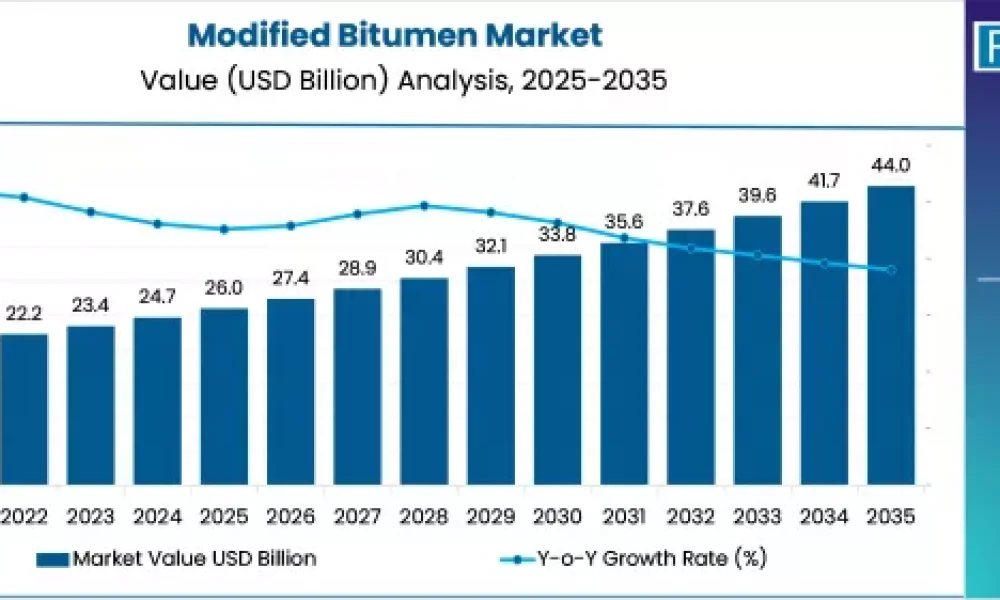
As global infrastructure faces the dual pressures of aging assets and intensifying climate volatility, the Global Modified Bitumen Market is entering a decisive era of transformation. Driven by a surge in high-performance road construction and sustainable roofing demand, the market is on a steady trajectory to exceed a valuation of $45 billion by 2027, maintaining a compound annual growth rate (CAGR) of approximately 5.8%.
The shift represents more than just a volume increase; it signals a fundamental move toward “”climate-resilient”” materials. Industry leaders are increasingly pivoting away from traditional unmodified binders toward polymer-modified bitumen (PMB) and crumb rubber variants to ensure the longevity of critical transportation networks and commercial building envelopes.
Answering the Critical Industry Shift: Who, What, and Why
The “”what”” of this market evolution is centered on the adoption of high-performance additives. Modified bitumen, primarily enhanced with Styrene-Butadiene-Styrene (SBS) or Atactic Polypropylene (APP), offers the elasticity and thermal stability that standard asphalt lacks.
The core drivers behind this momentum include:
- Infrastructure Modernization: Large-scale government projects, such as India’s PM-Gatishakti and the U.S. Infrastructure Investment and Jobs Act (IIJA), are mandating materials that withstand higher axle loads and extreme temperature swings.
- The Sustainability Mandate: The integration of recycled materials—specifically crumb rubber from end-of-life tires—is transitioning from a niche “”green”” alternative to a mainstream regulatory requirement in the European Union and North America.
- Urbanization in Emerging Markets: Rapid city expansion in the Asia-Pacific region is fueling a dual demand for durable road paving and high-grade waterproofing membranes for residential and commercial high-rises.
Regional Insights: Asia-Pacific Maintains Dominance
The Asia-Pacific region continues to be the global engine of the modified bitumen sector, accounting for over 40% of the total market share in 2025. China and India remain the primary consumers, driven by aggressive highway expansion and the ongoing construction of smart cities.
Meanwhile, the European and North American markets are shifting their focus toward “”maintenance and rehabilitation.”” In these mature economies, the demand is heavily concentrated in the roofing and waterproofing segments, where modified bitumen membranes are preferred for their superior UV resistance and lifecycle cost-efficiency compared to traditional built-up roofing (BUR).
Technological Breakthroughs: AI and “”Green”” Bitumen
Innovation is no longer limited to the chemical lab. In early 2025, major players like Shell and ExxonMobil began deploying AI-powered predictive analytics within their production facilities. These systems allow for real-time adjustments to viscosity and polymer-to-bitumen ratios, reducing energy consumption by up to 15% and ensuring a level of product consistency previously thought impossible.
Simultaneously, the industry is witnessing the birth of “”Bio-Bitumen.”” Utilizing lignin and agricultural residues, these bio-based binders are beginning to hit commercial scale, offering a path toward carbon-neutral road construction—a critical factor for contractors bidding on public works with strict ESG (Environmental, Social, and Governance) criteria.
Competitive Landscape and Key Market Players
The market remains moderately concentrated, with a few dominant players leading the charge in R&D and global distribution. Key organizations currently shaping the landscape include:
- Shell plc (Global leadership in specialty binders)
- TotalEnergies (Advancements in elastomer-modified solutions)
- Exxon Mobil Corporation (High-viscosity performance grades)
- Sika AG (Dominance in waterproofing and roofing applications)
- GAF and SOPREMA (Leading the transition to cold-applied and self-adhered membranes)
Strategic Outlook: Looking Toward 2030
Analysts suggest that the next five years will be defined by “”regulatory-led demand.”” As VOC (Volatile Organic Compound) caps tighten and circular economy quotas for recycled rubber increase, the ability to provide “”low-emission”” and “”high-recycled-content”” modified bitumen will become the ultimate competitive advantage.
Investors and analysts should watch for a consolidation of the supply chain, as bitumen producers look to acquire polymer manufacturers to hedge against raw material price volatility—a challenge that remains the single largest restraint on the industry’s growth.
Request for Sample Report | Customize Report |purchase Full Report – https://www.factmr.com/connectus/sample?flag=S&rep_id=8906
About the Modified Bitumen Market Report
This press release is based on the latest 2026 market intelligence synthesizing data from global infrastructure spending, petrochemical supply chains, and urban development trends. It provides an authoritative look at the materials and technologies that will define the next decade of global construction.
Related Reports
Modified Wood Market
“



