

According to sources familiar with the matter, renderings of the third-generation Meta (META) Ray-Ban co-branded smart glasses have been leaked, revealing that the glasses will be released this year with a price tag of around $300-500.
Renderings of the next-generation smart glasses have been leaked.
Details revealed in the report indicate that these glasses are not the previously leaked “Meta Hypernova” smart glasses. These glasses will be available in both sunglasses and prescription lens versions, emphasizing “upgraded battery life” and “improved AI capabilities,” claiming to enable real-time object recognition and scene understanding.

It’s worth noting that Meta’s annual Connect conference in September will feature a series of eye-catching new developments, particularly in the smartglasses sector, where a revolution may be brewing.
Meta is rumored to be planning to unveil two new devices at the Connect conference, one of which is a pair of smartglasses internally codenamed Hypernova. These glasses are no small feat. They are Meta’s first consumer-grade smart glasses with a display, featuring a small digital display on the right lens. They are expected to cost around $800.
In addition to the smart glasses, Meta may also release its first wristband, allowing users to control the glasses with hand gestures. This wristband utilizes technology developed by Meta’s CTRL Labs, a team focused on neurotechnology research. The wristband reads and interprets electrical signals generated by hand movements, enabling gesture control.

Over the past few years, Meta, a leading technology leader in the smart glasses industry, has continuously accelerated the iteration of its smart glasses products. Since the launch of the first generation of smart glasses in collaboration with Ray-Ban in 2021, it has released two generations of products and sold over 2 million pairs.
Samsung’s XR headset is about to debut.
Meanwhile, according to recent reports from Korean media, Samsung (SSNGY) has reconfirmed that it will hold a dedicated Unpacked event in South Korea on September 29th, where it will unveil its XR headset, codenamed “Project Infinite.” The device will be available initially in the Korean market.
Project Moohan’s price range has been initially revealed, expected to be between 2.5 million and 4 million Korean won, equivalent to approximately $1,800 to $2,900 USD at the current exchange rate. Project Moohan’s price tag still targets professional consumers, making it unlikely to be accessible to the general public in the short term.
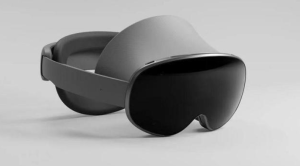
With the increasing number of virtual reality (VR) and augmented reality (AR) headsets powered by AI, many global technology companies are investing heavily in the smartglasses sector, with numerous competing products expected to launch, driving industry upgrades.
IDC statistics confirm this explosive growth trend: global smartglasses shipments surged 82.3% year-over-year in Q1 2025, with the Chinese market experiencing a 116.1% increase. Industry experts generally predict that, similar to the development trajectory of smartwatches in 2014, smartglasses will reach a true inflection point in the next two to three years.
WiMi is frequently expanding its smartglasses portfolio.
According to data, Wimi Hologram Cloud Inc. (WIMI), a leading global provider of holographic AR technology, has been actively developing smartglasses in recent years, focusing on augmented reality (AR) and mixed reality (MR). By leveraging its technological advantages in holography, 5G, and AI vision, WIMI offers features such as 3D interaction and virtual projection, demonstrating its strategic commitment to the next generation of human-computer interaction devices.
Currently, WiMi excels in software algorithms such as light field imaging and 3D modeling. It is also a mastermind in integrating AI capabilities with ecosystem synergies. It will deeply integrate its ecosystem, leveraging software and hardware platforms to achieve a closed-loop smartglasses ecosystem. To enter the global smartglasses market, WiMi is integrating its core patents to promote consumer solutions such as remote collaboration, digital twins, gaming, and social networking, providing users with a comprehensive smart experience.
Conclusion
Currently, smartglasses manufacturers’ deployments are more of a strategic positioning strategy, stockpiling advantageous capabilities to gain a foothold in the market. The entire industry anticipates a “hundred-glasses war” to drive the maturity of supply chains, product experience, and market education. The market of the “Battle of a Hundred Mirrors” is in full swing and is unprecedentedly hot. This smart wearable innovation led by ecological empowerment is worth our common anticipation.




