
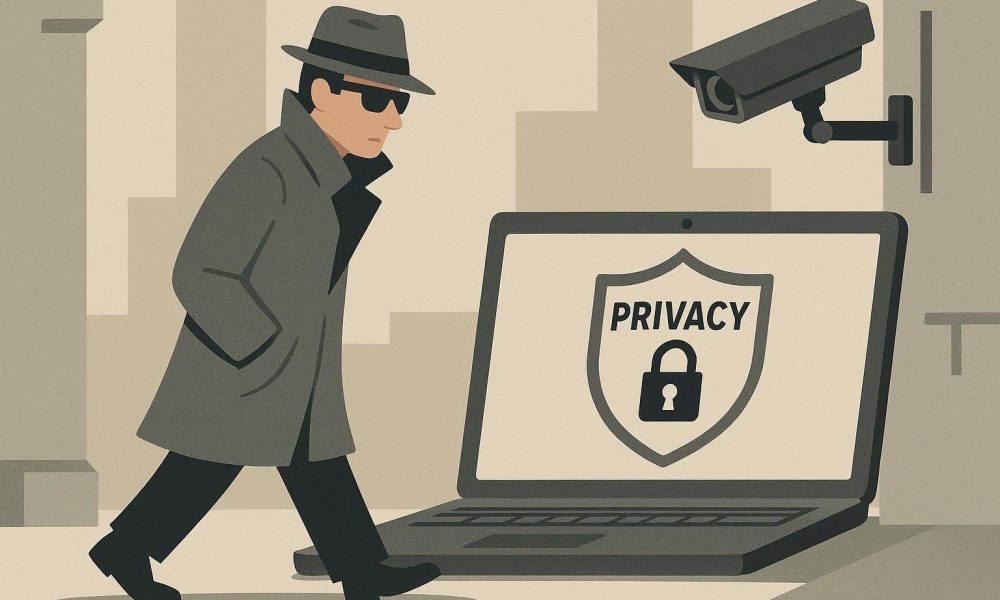
How internationally mobile clients can reduce unnecessary exposure on flights, in hotels, and during border formalities through clean documentation, secure communications, and disciplined data minimization.
WASHINGTON, DC, June 25, 2026
For serious travelers in 2026, the lawful way to stay low-profile is not to evade identification. It is to reduce unnecessary exposure while ensuring that every travel, hotel, and border interaction is fully consistent with your legal identity.
That means using valid documents, booking under the exact legal name that matches the travel document, and avoiding any mismatch that could prompt a deeper review during routine screening. Travelers who want more privacy usually benefit more from cleaner records and narrower disclosure than from any dramatic tactic that creates friction where none is needed.
That distinction matters because many people confuse privacy with invisibility. In practice, lawful privacy is much simpler. It means not spreading the same sensitive data across unnecessary apps, intermediaries, and loyalty systems. It means giving airlines, hotels, and service providers the information they actually need, while avoiding the habit of oversharing every detail of your wider life, your banking setup, or your long-term movements. A traveler who keeps records accurate and disclosures limited usually appears more ordinary than one who tries too hard to look unremarkable.
Use one truthful identity and keep it consistent everywhere.
The foundation of low-profile travel is consistency. The passport, reservation, payment details, and arrival records should all point to the same real person. Even small inconsistencies can create more attention than a traveler intended. A lawful traveler reduces visibility by avoiding an avoidable mismatch. If the legal name has changed, the change should already be reflected where it matters. If the traveler holds more than one nationality lawfully, the document used for the trip should comply with the legal rules for that route and remain consistent with the booking and entry requirements. The strongest travel profile is often the cleanest one.
That is one reason lawful second citizenship and residence planning sometimes matter to privacy. A traveler with more than one lawful status may have more flexibility in how they structure their movements, but the advantage only works when the records remain truthful and coherent. One person can have more than one nationality. One person cannot lawfully become several different versions of themselves depending on which border or booking system they are using. Families thinking through that wider structure often begin by reviewing it with Amicus International Consulting and by considering broader second-citizenship planning.
Book narrowly, not noisily.
A surprising amount of travel exposure happens before the trip even begins. Too many platforms collect too much information, and too many travelers volunteer more than necessary because convenience becomes a habit. Low-profile booking starts with restraint. Use one travel-focused email address. Use one travel-focused phone number where practical. Keep the account profile limited to the fields actually needed for ticketing, alerts, or hotel confirmation. Skip loyalty enrollment when the benefit is too small to justify the added data trail. Avoid linking more profiles than necessary across travel apps, mapping tools, rideshare accounts, and payment systems.
This is especially important for high-profile clients because the risk often lies not in a single disclosure. It is an accumulation. One app sees itinerary history. Another sees hotel preferences. Another sees payment cards. Another sees location data. Another sees contact details. Individually, those pieces may feel harmless. Together, they create a much more detailed picture than most people intended to share. A quieter traveler usually builds less of a profile in the first place.
Flights are quieter when the file is cleaner.
Airport travel is one of the clearest examples of why consistency matters more than cleverness. Airline bookings, security screening, and border systems are built to process ordinary travelers efficiently when the data lines up. The traveler who presents valid documents, accurate reservation details, and a straightforward itinerary usually moves more quietly than the traveler whose records need extra explanation. A lawful low-profile travel strategy, therefore, begins with getting the ordinary details right every time.
That means avoiding last-minute name corrections, document swaps, unnecessary rebookings, or fragmented payment patterns that complicate the record. It also means keeping backup copies of the right documents in a secure place rather than scrambling at the airport and sending identity files through the wrong channels under pressure. The traveler who prepares calmly usually discloses less overall because they do not have to improvise.
Hotels reward disciplined sufficiency.
Hotels are similar. They need enough information to confirm the stay, secure payment, and comply with local law. They do not need a broader financial autobiography. The best low-profile habit is disciplined sufficiency. Provide what is required, keep instructions concise, and limit how much of the wider travel plan is shared in booking notes, pre-arrival emails, or chat messages. If a property offers extensive marketing preferences, loyalty profiling, or optional profile expansion, think carefully before saying yes by default.
For high-profile clients, the strongest hotel privacy practice is usually channel control. Use one trusted booking path. Keep special requests narrowly framed. Separate routine hospitality communication from sensitive document-sharing. Do not scatter passport copies, residence records, or banking details across casual email chains simply because a staff member asked quickly. When documents must be shared, they should move through the narrowest appropriate lane, not the easiest improvised one.
Secure communication matters more than dramatic tactics.
Many privacy failures in travel happen through ordinary communication habits. People forward complete itineraries to too many people. They leave passport scans in general inboxes. They send hotel and flight confirmations through group threads that include recipients who do not need them. They store sensitive travel records in too many places, on too many devices, and inside too many apps. None of that looks dramatic, but it creates exactly the kind of avoidable exposure that low-profile travel is supposed to reduce.
A stronger habit is simpler. Use a limited number of trusted channels. Keep strategic travel details separate from casual scheduling chatter. Share full documents only with people who truly need full documents. Within a family office or support structure, not everyone needs the same level of visibility. A move, a trip, or a private stay is usually driven more by convenience than by necessity. Governance, not glamour, is what protects privacy here.
Public networks and devices need ordinary discipline.
Travel privacy is not only about institutions. It is also about devices. Airports, lounges, hotels, and conference venues create exactly the kind of hurried environment where people lower their own standards. They use public Wi-Fi casually. They open sensitive banking pages in shared spaces. They leave notifications visible on screens and lock screens. They download unnecessary travel apps and grant broad permissions without checking what those apps can access. That is how digital overexposure becomes part of a perfectly lawful trip.
The stronger approach is boring and reliable. Keep devices updated. Use strong locks. Use multifactor authentication. Review app permissions before and after travel. Remove access that is not needed. Avoid treating hotel or airport networks as trusted merely because they are convenient. The low-profile traveler reduces digital leakage the same way they reduce document leakage, by treating routine exposure seriously before it becomes a problem.
Borders become easier to navigate when residence, tax, and travel logic align.
One of the least-discussed aspects of quiet travel is how much easier border interactions become when the broader legal story makes sense. A traveler whose residence, visa status, nationality, address history, and declared travel purpose align usually faces fewer complications than a traveler whose documentation points in several directions at once. This does not mean revealing more. It means making sure the records that matter are already coherent before the trip begins.
That is why tax, residency, and banking structures should not be left completely out of travel planning. The person who is banking in one place, living in another, and traveling under a lawful status tied to a third jurisdiction is not doing anything improper by default. But the structure needs to be understandable. When it is, the traveler can move quietly because nothing in the file looks improvised. When it is not, even routine questions become harder to answer concisely.
Local records should be managed with restraint.
The same principle applies after arrival. Hotel check-ins, local SIM purchases, transport apps, serviced-apartment contracts, short-term rentals, and concierge arrangements all create records. Low-profile living does not require refusing these systems. It requires using them with discipline. Give each provider what it needs. Do not let every provider become a repository for a full identity set, a full banking picture, or a complete view of your long-term movements. The more narrowly each record is kept, the more private the overall travel pattern becomes.
For longer stays, this becomes even more important. A traveler may need access to local banking, housing, utilities, or workspaces. Each of those functions may be perfectly lawful and ordinary, yet each one can still be managed more quietly through the separation of roles and cleaner documentation. The goal is not secrecy from lawful systems. The goal is to prevent the entire personal and financial profile from becoming overexposed through scattered routine administration.
The real advantage comes from coherence.
High-profile travelers often assume private travel has to look complicated from the outside. In reality, the strongest privacy benefit usually comes from coherence. One truthful identity. One clean set of documents. One lawful basis for travel. One narrow set of communication channels. Limited app sprawl. Limited oversharing. Limited duplication of sensitive records. The traveler who follows that model is not invisible, but they are much less exposed than the traveler who tries to improvise privacy through dramatic or inconsistent behavior.
That is what makes low-profile travel durable. It survives ordinary scrutiny because it never depended on contradiction. It looks calm because it is calm. It keeps data exposure lower not by challenging lawful systems, but by refusing to volunteer more information than necessary to every app, every booking platform, every intermediary, and every casual participant in the trip.
The practical rule is simple. A low-profile traveler does not try to become invisible to lawful systems. A low-profile traveler becomes harder to expose unnecessarily because their documents are valid, their disclosures are proportionate, and their digital habits are disciplined.
That is what real privacy looks like on flights, in hotels, and at border crossings now.




