
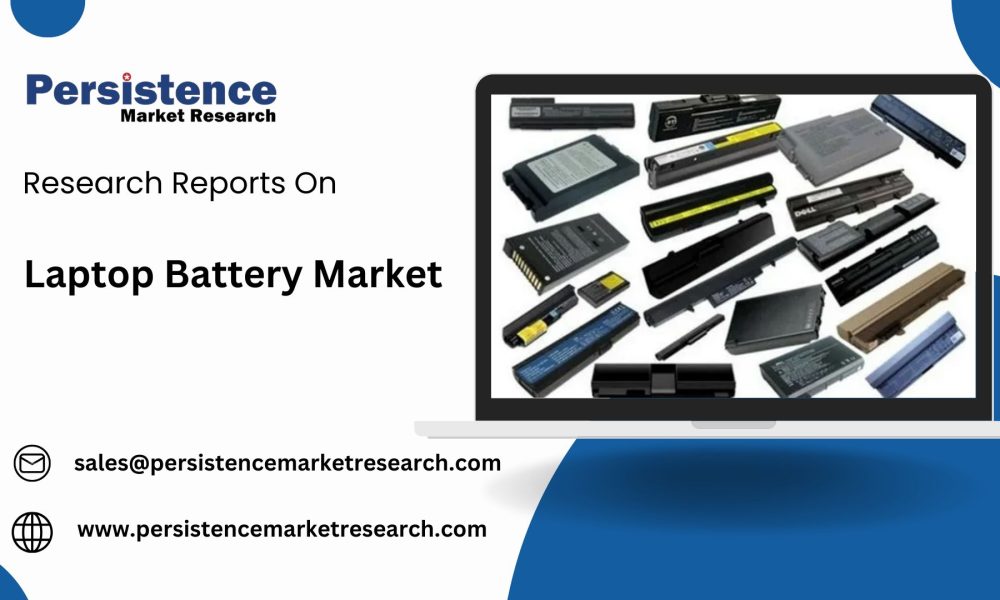
The global laptop battery market is poised for steady growth in the coming years, driven by rising demand across business, education, and gaming. According to Persistence Market Research, the industry is projected to increase from US$ 8.1 billion in 2025 to US$ 12.1 billion by 2032, growing at a CAGR of 5.7% during the forecast period. This surge highlights the critical role batteries play in advancing laptop technology, user experience, and the overall consumer electronics ecosystem. With laptops accounting for 25–30% of total consumer electronics battery consumption, the market is becoming increasingly central to global electronics innovation.
Market Overview
Laptop batteries have evolved significantly since the introduction of portable computing. Today, consumers demand laptops that offer longer battery life, faster charging speeds, and environmentally sustainable solutions. These expectations have accelerated innovation in lithium-ion (Li-ion) and lithium-polymer (Li-Po) technologies, which dominate the industry.
The market’s expansion is closely linked with global laptop adoption trends. With remote work, online learning, and digital entertainment shaping modern lifestyles, laptop usage has surged. Whether for corporate productivity, academic purposes, or high-performance gaming, the reliance on laptops underscores the need for reliable power solutions.
Key Growth Drivers
- Rising Laptop Penetration in Work and Education
The hybrid and remote work culture has made laptops an essential tool for employees across industries. At the same time, educational institutions are increasingly adopting e-learning platforms, making laptops indispensable for students. These usage patterns create consistent demand for high-performance batteries capable of supporting extended working hours and video conferencing.
- Gaming and High-Performance Laptops
The gaming laptop segment is one of the fastest-growing markets. With advanced GPUs, high-refresh-rate displays, and powerful CPUs, gaming laptops consume significant energy. As a result, the demand for high-capacity batteries with optimized thermal management has surged. Gaming laptops also push innovation in fast-charging technologies, reducing downtime and enhancing user experience.
- Technological Advancements in Batteries
The shift toward solid-state batteries, silicon-anode technologies, and smart battery management systems (BMS) is improving battery safety, energy density, and performance. These advancements address consumer pain points like overheating, short cycle lives, and long charging times.
- Sustainability and Green Energy Solutions
Environmental concerns are driving demand for eco-friendly battery solutions. Manufacturers are investing in recyclable materials, sustainable production processes, and batteries with a lower carbon footprint. Growing government regulations on e-waste disposal further boost demand for greener laptop batteries.
- Expanding Consumer Electronics Market
Since laptops account for nearly a third of global consumer electronics battery consumption, the overall rise in electronics sales directly impacts battery demand. Increasing disposable incomes, coupled with consumer preference for portable devices, support steady market growth.
Elevate your business strategy with comprehensive market data. Request a sample report now: https://www.persistencemarketresearch.com/samples/35281
Market Challenges
Despite its positive trajectory, the laptop battery market faces several hurdles:
- Safety Risks: Overheating, short circuits, and swelling remain significant concerns, particularly in cheaper, low-quality battery products.
- High Manufacturing Costs: Advanced technologies such as solid-state batteries are expensive to produce, which may limit their immediate adoption.
- Supply Chain Disruptions: Dependency on raw materials like lithium, cobalt, and nickel exposes the market to geopolitical tensions and price volatility.
- Environmental Impact: Although efforts toward sustainability are underway, battery disposal and recycling remain global challenges.
Segmentation Insights
By Battery Type
- Lithium-ion (Li-ion): Currently the most widely used, offering a balance of cost, efficiency, and energy density.
- Lithium-polymer (Li-Po): Gaining popularity for being lightweight, flexible, and safer, making them ideal for slim, high-end laptops.
- Solid-state batteries (emerging): Expected to revolutionize the market with higher energy density, safety, and faster charging, though commercialization remains a few years away.
By Application
- Business laptops: Prioritize longer life cycles and efficiency.
- Educational laptops: Require affordability and durability for large-scale institutional adoption.
- Gaming laptops: Demand high-capacity, fast-charging solutions.
- Ultrabooks: Depend on slim and lightweight Li-Po batteries for sleek designs.
Regional Market Trends
North America
North America remains a dominant market, with strong laptop adoption in both professional and educational sectors. The U.S. in particular drives innovation in battery research and sustainable production practices.
Europe
Europe’s market is shaped by stringent environmental regulations and a strong focus on sustainability. Companies in the region are leading in recycling initiatives and eco-friendly battery technologies.
Asia-Pacific
APAC is the fastest-growing region, led by manufacturing powerhouses such as China, South Korea, and Japan. The region benefits from cost-effective production, large consumer bases, and strong demand for gaming and high-performance laptops. India’s growing middle class and education digitization programs also support rapid adoption.
Latin America and Middle East & Africa
These regions are gradually expanding, fueled by rising laptop penetration, improving internet infrastructure, and government investments in digital education initiatives.
Competitive Landscape
The laptop battery market is highly competitive, with both global giants and regional manufacturers vying for market share. Key players include:
- Samsung SDI
- LG Chem
- Panasonic Corporation
- BYD Company
- Toshiba Corporation
- Duracell Inc.
- Sony Corporation
These companies focus on R&D, partnerships with laptop manufacturers, and sustainability initiatives to stay competitive. Collaborations with tech giants like Dell, HP, Lenovo, and Apple drive innovation and customization in battery solutions.
Emerging Trends in the Laptop Battery Market
- Fast-Charging Technologies: Development of ultra-fast charging that reduces charge times to under an hour.
- Wireless Charging for Laptops: Early-stage technologies are being explored to eliminate wired connections altogether.
- AI-Integrated Battery Management Systems: Smart BMS solutions optimize charging cycles, reduce wear, and improve safety.
- Customization for Gaming and Professional Segments: Tailored solutions for different user needs, ranging from slim ultrabooks to energy-hungry gaming systems.
- Recycling and Circular Economy Initiatives: Manufacturers are investing in battery recycling facilities to minimize environmental impact and reuse scarce materials.
Future Opportunities
The laptop battery industry stands at the intersection of consumer demand, technology innovation, and environmental responsibility. Some promising opportunities include:
- Solid-State Batteries: Once mass production challenges are overcome, these batteries could transform the market with unparalleled performance.
- Green Energy Integration: Coupling battery production with renewable energy sources to reduce environmental impact.
- AI-Enabled Predictive Maintenance: Offering insights into battery health, replacement schedules, and energy optimization.
- Expansion in Emerging Economies: As laptop adoption grows in Africa, Latin America, and Southeast Asia, demand for affordable yet reliable batteries will rise.
- Collaborations with PC OEMs: Strategic partnerships between battery makers and laptop brands will ensure more integrated, high-performance solutions.
Conclusion
The global laptop battery market is on a steady upward trajectory, with revenues projected to reach US$ 12.1 billion by 2032. Rising laptop adoption in business, education, and gaming is fueling this growth, while technological advancements like solid-state batteries, fast charging, and AI-driven management systems redefine possibilities.
However, sustainability and safety challenges require continuous innovation and regulatory compliance. Companies that successfully balance performance, affordability, and eco-friendliness will emerge as leaders in this evolving market.
As laptops continue to be central to our digital lifestyles, the batteries powering them will remain at the forefront of consumer electronics innovation.
Related Reports:




