
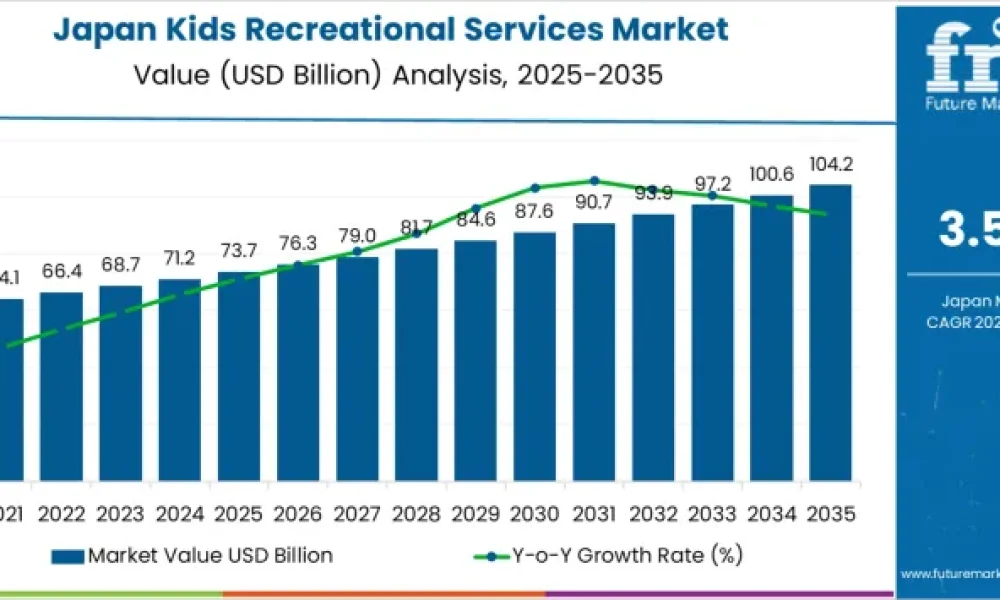
The market for kids recreational services in Japan is set for substantial growth, expected to increase from USD 73.7 billion in 2025 to USD 104.2 billion by 2035, reflecting a steady CAGR of 3.5%. This growth is driven by rising parental awareness of children’s health, development, and entertainment needs, as well as an increasing preference for structured, enriching recreational activities.
Parents in Japan are prioritizing kids’ health and social skills, boosting demand for active, enriching play.
Indoor centers and group activities dominate, offering safe, year-round options that fit busy lifestyles.
With rising awareness of child development, services combining fun and learning are increasingly sought after.
Subscribe for Year-Round Insights → Stay ahead with quarterly and annual data updates – https://www.futuremarketinsights.com/reports/sample/rep-gb-29614
Why is Demand for Kids Recreational Services Growing in Japan
- Focus on Child Development:
Parents increasingly value activities that promote physical health, social skills, and cognitive development. Structured recreational services such as sports programs, extracurricular classes, and seasonal camps offer children valuable opportunities to stay active and engaged. - Rising Parental Workforce Participation:
With more dual-income households, busy parents seek after-school and weekend recreational options that combine care, learning, and socialization in safe environments. - Growing Popularity of Indoor Activities:
Japan’s variable climate makes indoor play centers, trampoline parks, and creative workshops particularly appealing, providing weatherproof entertainment and skill development year-round. - Emphasis on Socialization:
Group recreational services, which make up 53% of total demand, are popular as they encourage teamwork, communication, and peer interaction—key elements in early childhood development.
Market Segmentation
- Service Type: Group activities lead with 53% of demand, reflecting parents’ preference for social and cost-effective experiences.
- Activity Type: Indoor recreational activities dominate due to convenience and safety, followed by outdoor and skill-based activities.
- Age Groups: Demand spans toddlers (1-3 years), preschoolers (3-5 years), grade school children (5-12 years), and teens (12-18 years).
- Booking Channels: Online booking platforms gain popularity for convenience, alongside onsite registrations and school/institution partnerships.
Regional Demand Outlook
- Kyushu & Okinawa: Leading growth region at 4.4% CAGR. Its blend of urban and rural settings and tourism appeal fosters demand for family-friendly recreational services including seasonal camps and indoor play centers.
- Kanto: Urban population density and busy lifestyles push demand up by 4.1% CAGR. Parents prioritize safe, structured, and enriching activities like fitness programs and creative workshops.
- Kansai: Growing at 3.6% CAGR, this region balances traditional leisure with modern enrichment options, catering to families seeking holistic child development.
- Chubu: Moderate growth of 3.1%, driven by urbanization and parental focus on convenient, constructive environments.
- Tohoku & Rest of Japan: Slower but steady growth (2.7% and 2.6%), with increasing awareness of the benefits of structured recreation even in less densely populated areas.
Industry Trends and Drivers
- Increased Health Awareness: Concerns over sedentary lifestyles and excessive screen time motivate parents to seek physical, social, and educational recreational activities.
- Technological Innovation: Integration of digital tools for booking, activity tracking, and parental communication enhances convenience and trust.
- Hybrid Formats: Combining physical and edutainment programs attracts families seeking multi-dimensional child development.
- Flexible Scheduling: After school, weekends, and seasonal camps provide options compatible with busy family schedules.
- Rising Disposable Income: Enables more families to invest in premium recreational experiences.
Challenges and Market Restraints
- Demographic Decline: Japan’s low birth rate and shrinking child population limit the long-term growth potential.
- Cost Sensitivity: Economic pressures may reduce willingness to pay for premium services, especially where free alternatives exist.
- Regulatory Compliance: Safety and hygiene standards raise operational costs for providers.
- Rural Limitations: Lower population density and fewer facilities restrict market expansion in some regions.
Key Players Shaping Japan’s Kids Recreational Services Market
- The Walt Disney Company: Market leader with iconic theme parks Tokyo Disneyland and Tokyo DisneySea.
- Universal Studios: Popular family entertainment venues driving demand.
- SeaWorld Entertainment Inc., Merlin Entertainment Group, BrightPath: Providing diverse, innovative recreational and edutainment offerings.
These companies focus on delivering immersive, safe, and engaging experiences that appeal to children of different age groups, driving sector growth.
Conclusion
Japan’s kids recreational services market is poised for steady expansion over the next decade, driven by evolving parental priorities, urban lifestyles, and technological innovations. Indoor recreational activities and group services will continue to dominate demand, offering children valuable opportunities for physical activity, socialization, and learning in safe, structured environments.
With leading global players innovating and expanding their offerings, and regions like Kyushu & Okinawa and Kanto leading growth, the sector promises enriching experiences that support Japan’s younger generation’s development and well-being through 2035.
Have a specific Requirements and Need Assistant on Report Pricing or Limited Budget please contact us – [email protected]
About Future Market Insights (FMI)
Future Market Insights, Inc. (FMI) is an ESOMAR-certified, ISO 9001:2015 market research and consulting organization, trusted by Fortune 500 clients and global enterprises. With operations in the U.S., UK, India, and Dubai, FMI provides data-backed insights and strategic intelligence across 30+ industries and 1200 markets worldwide.



