
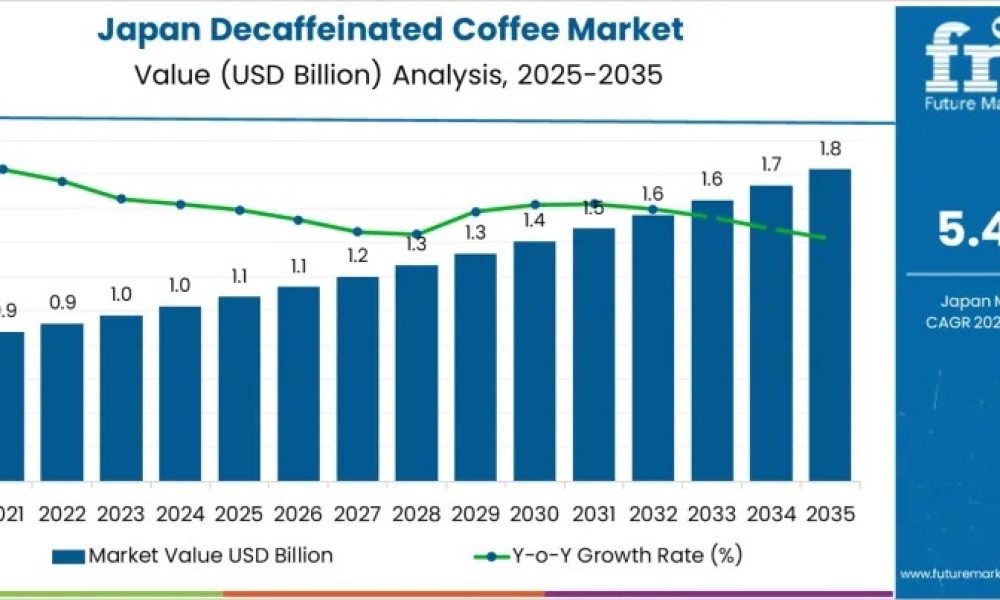
The demand for decaffeinated coffee in Japan is set to experience steady growth, reaching USD 1.8 billion by 2035 from USD 1.1 billion in 2025, at a CAGR of 5.4%. Decaffeinated coffee is becoming increasingly popular among health-conscious consumers who want to enjoy the taste of coffee without the stimulating effects of caffeine. This trend is particularly evident in urban areas, where busy lifestyles are driving demand for alternatives that deliver the familiar flavors of coffee without compromising health.
Consumers are choosing decaffeinated coffee for its suitability in managing health concerns such as insomnia, anxiety, and high blood pressure. As awareness of these benefits grows, decaffeinated coffee is gradually moving from niche to mainstream, gaining traction across households and foodservice outlets alike.
Explore trends before investing – request a sample report today! https://www.futuremarketinsights.com/reports/sample/rep-gb-29425
The overall growth of the decaffeinated coffee sector is further supported by the rising trend of premium coffee consumption in Japan. As consumers seek higher-quality coffee experiences, the demand for decaffeinated options offering the same rich taste and robust flavor as regular coffee is on the rise. Innovations in preparation methods—such as single-serve pods and ready-to-drink beverages—combined with the availability of decaffeinated coffee beans in various roasts and blends, are also fueling market expansion.
Quick Stats of the Demand for Decaffeinated Coffee in Japan
- Market Value (2025): USD 1.1 billion
- Forecast Value (2035): USD 1.8 billion
- Forecast CAGR (2025-2035): 5.4%
- Leading Product Type: Regular
- Key Growth Regions: Kyushu & Okinawa, Kanto, Kansai, Chubu, Tohoku, Rest of Japan
- Top Players: Swiss Water Decaffeinated Coffee Inc., Don Pablo Coffee, Lifeboost Coffee LLC, Jo Coffee, Volcanica Coffee Company
Market Forecast and Growth Drivers
From 2025 to 2030, the demand for decaffeinated coffee is projected to rise from USD 1.1 billion to USD 1.4 billion, driven by increased awareness of health benefits and versatility across coffee-based beverages. Hot brews, iced coffee, and lattes or cappuccinos in decaf form are becoming more commonplace in cafes, restaurants, and homes. Improved decaffeination processes that preserve flavor and aroma are further enhancing consumer appeal.
Between 2030 and 2035, demand is expected to grow from USD 1.4 billion to USD 1.8 billion. Healthier living trends, functional beverage preferences, and the expansion of organic and fair-trade decaffeinated coffee offerings will continue to drive growth. Greater availability in specialty coffee shops and supermarkets is expected to further boost adoption across diverse demographic groups.
Segment Analysis
The decaffeinated coffee market in Japan is segmented by type, end-use, distribution channel, nature, and region:
- By Type: Regular (35%), Medium Roasted, Dark Roasted, Others
- By End-Use: Retail/Household (55%), Foodservice
- By Distribution Channel: B2C dominant over B2B
- By Nature: Organic and Conventional
- By Region: Kyushu & Okinawa, Kanto, Kansai, Chubu, Tohoku, Rest of Japan
Regional Demand Outlook
- Kyushu & Okinawa: 6.8% CAGR – health-conscious population driving demand.
- Kanto: 6.2% CAGR – urban centers like Tokyo adopting decaf for health and lifestyle reasons.
- Kansai: 5.5% CAGR – growing café culture and wellness trends.
- Chubu: 4.8% CAGR – increased focus on low-caffeine alternatives.
- Tohoku: 4.2% CAGR – moderate growth fueled by rising wellness awareness.
- Rest of Japan: 4.0% CAGR – steady adoption in smaller cities and rural areas.
Consumer Trends and Market Dynamics
The rising demand is underpinned by:
- Health-conscious consumers seeking alternatives to regular coffee.
- Expanding café culture with decaf options in specialty and chain outlets.
- Availability across retail, convenience stores, and online channels.
Challenges include higher production costs, leading to premium pricing, and lingering perceptions that decaf coffee lacks the flavor of regular coffee. Nevertheless, technological improvements in decaffeination and innovative brewing solutions are steadily improving taste and accessibility, mitigating these concerns.
Key Players Driving Industry Growth
Swiss Water Decaffeinated Coffee Inc., Don Pablo Coffee, Lifeboost Coffee LLC, Jo Coffee, and Volcanica Coffee Company are the leading players in the Japanese decaf market. Swiss Water Decaffeinated Coffee Inc. holds a 15% market share with its chemical-free decaffeination process. These companies focus on offering high-quality, clean-label, and flavorful decaf coffee products, meeting the growing demand for health-conscious alternatives.
Subscribe for Year-Round Insights → Stay ahead with quarterly and annual data updates! https://www.futuremarketinsights.com/reports/brochure/rep-gb-29425
Conclusion
As Japan’s coffee culture matures and consumers increasingly embrace wellness-focused lifestyles, the demand for decaffeinated coffee is poised to grow steadily. With innovative products, expanding distribution channels, and rising awareness of the benefits of reduced caffeine intake, decaf coffee is set to become a preferred choice for a broad spectrum of consumers.



