
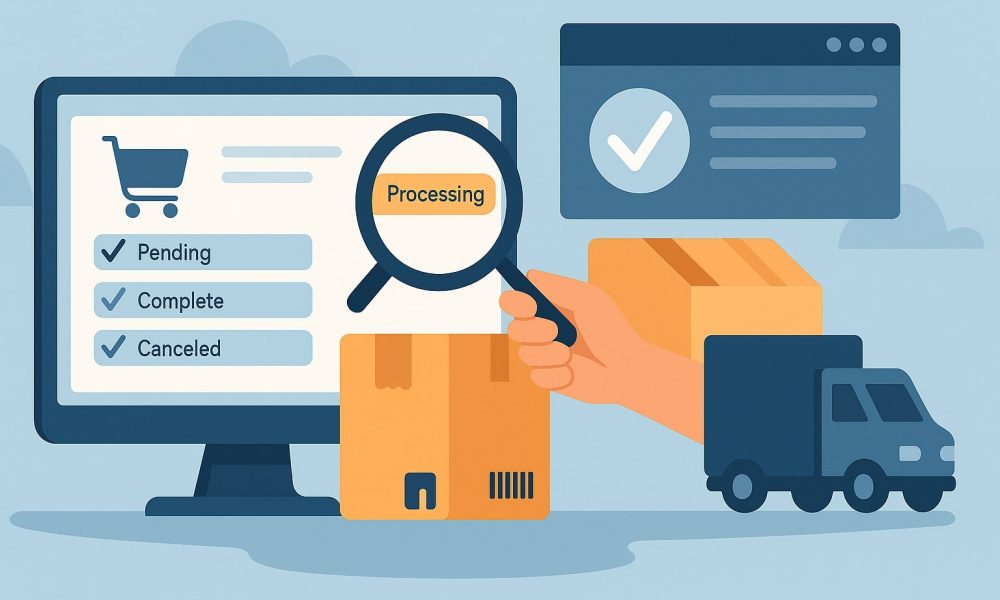
Efficient order fulfillment is the backbone of any successful e-commerce operation. While front-end experiences like fast-loading pages, mobile optimization, and attractive product listings are essential for attracting customers, it’s the order status workflow that determines how smoothly those purchases are processed, shipped, and completed.
Behind every “Order Confirmed” or “Shipped” notification lies a complex sequence of events that businesses must get right to ensure timely delivery, customer satisfaction, and operational efficiency. As online shopping continues to grow, particularly across multi-channel and international markets, understanding and optimizing your order status workflow has never been more critical.
The Importance of Order Status in E-Commerce
When a customer places an order, they expect real-time updates that reflect the progress of their purchase. From payment confirmation to shipping notifications, each status update builds trust and transparency.
However, these statuses aren’t just about keeping the buyer informed—they also play a vital internal role. Order statuses trigger warehouse operations, stock adjustments, invoicing, and even returns processing. If any part of the chain breaks down, delays can ripple through the entire system.
Without a well-structured workflow, miscommunication between departments or systems can result in overselling, missed shipments, and unhappy customers. For businesses operating on Magento, Shopify, WooCommerce, or other platforms, having a clear, customizable workflow for order statuses is essential for scalability.
Key Stages in an E-Commerce Order Workflow
While the specifics can vary depending on business model and platform, most order workflows include the following stages:
- Order Placed – The initial step when the customer completes the checkout process.
- Payment Authorized – Payment gateway confirms that funds are available.
- Order Processing – Internal systems begin picking and packing the order.
- Shipped – The order is dispatched and tracking information is typically shared.
- Delivered – The package arrives at the customer’s location.
- Completed – The order cycle ends, barring any post-sale interactions.
- Returned / Refunded – Optional stages if the customer initiates a return.
Depending on your fulfillment strategy, such as dropshipping or third-party logistics (3PL), additional steps may be required, including generating purchase orders, transferring inventory, or obtaining partner confirmations.
Challenges in Managing Order Statuses
While the concept seems straightforward, execution can be tricky:
- Lack of customization: Some e-commerce platforms offer only basic status labels, which may not reflect the nuances of your operations.
- Inventory sync issues: Without proper workflow controls, systems can mark items as shipped before inventory is actually available.
- Customer service load: Inconsistent or unclear statuses lead to more “Where is my order?” inquiries, putting strain on support teams.
- Inadequate automation: Manual transitions between statuses are prone to error and slow down the entire process.
Enhancing Magento Workflows
Magento users have access to a wide range of extensions and customization options. One invaluable tool is the Magento 2 order status workflow, which allows businesses to define their own order stages and automate transitions based on business rules.
Such tools help bridge the gap between back-end operations and customer-facing notifications. For example, you can add a custom “Quality Check” status before shipping or an “Awaiting Warehouse Confirmation” step when inventory is sourced from a third-party supplier.
Being able to label and automate each stage not only reduces internal confusion but also enhances the overall customer experience.
Best Practices for Optimizing Order Statuses
To make the most of your order status system, consider the following best practices:
- Use descriptive and intuitive labels: Your team and customers should both understand what each status means at a glance.
- Automate where possible: Use rules-based transitions triggered by system events (e.g., marking an order as “shipped” once tracking is generated).
- Keep the customer in the loop: Send real-time email or SMS updates for each significant status change.
- Monitor and iterate: Use analytics to identify where orders are getting stuck and update workflows accordingly.
- Integrate with shipping and inventory tools: Ensure statuses reflect actual product movement and stock levels.
Conclusion
In the competitive world of e-commerce, seamless order fulfillment isn’t just a logistical concern—it’s a customer service imperative. By establishing a well-defined and dynamic order status workflow, businesses can enhance transparency, minimize errors, and scale more efficiently.
Whether you manage fulfillment in-house or through partners, your ability to track, communicate, and adapt order progress directly impacts customer satisfaction and your brand’s reputation. As platforms like Magento continue to evolve, leveraging customizable workflow tools is a smart move toward achieving long-term success.




