
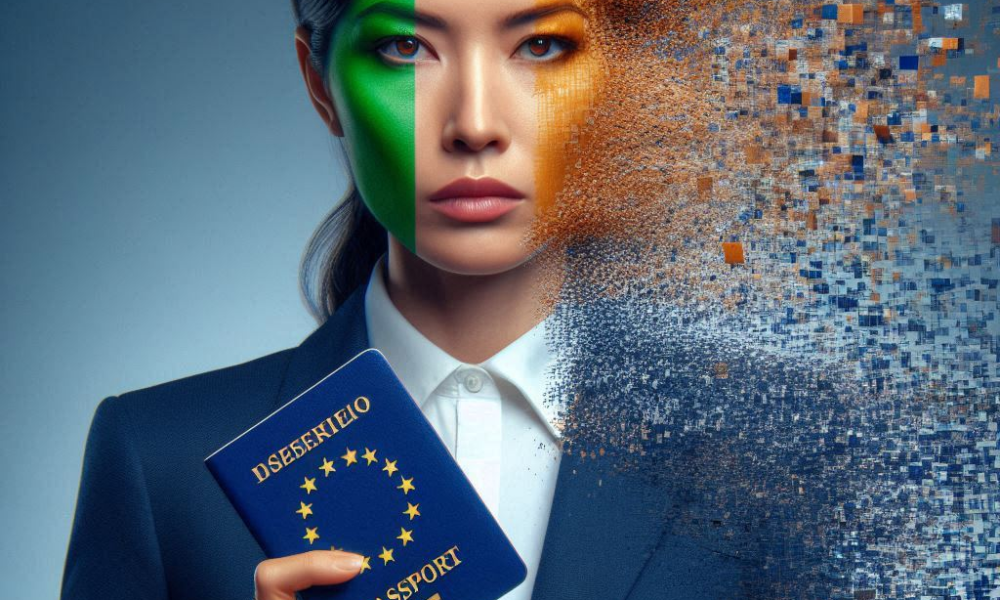
VANCOUVER, British Columbia — August 5, 2025 — For global travelers concerned about privacy, few experiences are more daunting than a customs checkpoint. Governments around the world have increasingly tightened their border control measures, incorporating advanced biometric scanners, AI-driven passenger profiling systems, and mandatory data-sharing agreements between jurisdictions. Yet for those who prioritize identity privacy—whether for professional, personal, or political reasons—there are legal and strategic ways to navigate customs while minimizing exposure.
Amicus International Consulting, a leading authority on legal identity transformation and anonymous living, has been advising clients for over a decade on how to maintain lawful global mobility while preserving identity compartmentalization. In this release, we explore how privacy-conscious travelers can legally prepare for, pass through, and exit customs inspections without compromising their personal identity frameworks.
Understanding the Modern Customs Landscape
The past ten years have seen a global uptick in customs scrutiny, driven by national security policies, immigration enforcement efforts, and financial tracking mandates such as FATCA and CRS. Customs agencies are no longer simply interested in goods but are deeply involved in passenger metadata: flight history, social media activity, and behavioral flags are all part of the scrutiny.
Most countries now require travelers to provide fingerprints, iris scans, facial recognition, and even mobile phone searches on entry or exit. Customs inspections in countries such as the United States, United Kingdom, Australia, and many in the Schengen Area have merged traditional security protocols with digital surveillance tools.
For identity privacy advocates, the question becomes: how can you legally cross these borders without disclosing more than necessary?
Customs Laws: What You Are Obliged to Disclose
While customs officers wield considerable discretionary power, they are still bound by national laws and international agreements. Understanding what information is legally required—and what isn’t—can empower travelers to maintain boundaries.
Travelers are generally required to:
Present valid travel documents (passport, visa, etc.)
Declare goods above the exemption limits.
Disclose certain forms of cash or monetary instruments (usually above USD 10,000 or equivalent)
Submit to standard biometric requirements in jurisdictions where it’s legally mandated
However, travelers are not universally required to:
Hand over social media passwords
Provide access to encrypted communication apps
Reveal the source of their income beyond immigration questions
Disclose past names or identities if not legally connected to the current travel document
Volunteer personal opinions, affiliations, or historical political activities
Knowing the limits of lawful inquiry gives travelers clarity when faced with intrusive questioning.
Using Multi-Jurisdictional Identity Legally
One strategy that Amicus International Consulting facilitates for clients is the legal construction of multi-jurisdictional identity portfolios. This involves holding multiple legal citizenships or residencies, each tied to different documentation, bank accounts, or business operations.
For instance, a dual citizen may choose to enter certain countries on a passport that aligns with less politically sensitive affiliations. Alternatively, a business traveler might travel under a passport issued by a government with neutral diplomatic standing to avoid targeted profiling.
Each of these strategies is legal when properly structured, but must be disclosed correctly to avoid accusations of misrepresentation or identity fraud. Countries like the United States require U.S. citizens to use their American passport to enter and exit the country, regardless of additional nationalities held.
Minimizing Digital Footprint at the Border
Even before arriving at customs, border authorities may already have access to a traveler’s digital footprint. Airlines share passenger name records (PNRs), including email addresses and credit card data, with customs and immigration databases.
To protect privacy:
Use booking agents or third-party services to book travel under legally recognized identities
Avoid loyalty programs tied to real names or social media accounts
Travel with a clean device: no unnecessary personal data, cleared browsing history, and encrypted storage
Avoid biometric unlocking mechanisms (use passwords instead)
Use privacy-respecting email services and VPNs when necessary
It is also recommended to carry a secondary, non-networked phone for travel purposes, with no personal apps or identifiable communication history.
Dealing With Secondary Inspections
One of the most stressful privacy breaches can occur during a secondary customs inspection. This often includes intense questioning, baggage searches, and sometimes, requests to unlock devices.
During such encounters:
Remain calm and courteous
Ask if you are being detained or are free to leave
Ask for a lawyer or consular representative if in doubt about your rights
Never lie or present fraudulent documentation, but also know you are not required to volunteer information not requested by law.
Lawful silence is often misunderstood. In many jurisdictions, travelers are not compelled to explain their travel intent beyond answering direct questions truthfully. Over-disclosure, especially about identity transitions or sensitive affiliations, can create risk where none existed.
Biometric Loopholes and Legal Alternatives
Biometrics are increasingly non-optional. Many jurisdictions mandate facial scans at entry and exit, and iris or fingerprint scanning is standard in countries like India, Singapore, and the UAE. However, some countries still do not require biometrics at all—creating legal pathways for travel without this form of identity capture.
In 2025, travelers can look for privacy-conscious countries with:
No biometric requirement at land crossings (e.g., parts of Central America or West Africa)
Visa-free access using alternate passports
Manual entry options where facial recognition has not yet been installed
Using these routes strategically—while fully complying with local law—provides one of the few remaining biometric-free channels in global travel.
Case Study: Anonymous Consultant Crossing Borders Safely
An executive coach with clients in both Europe and Asia restructured her travel and identity profile after facing repeated scrutiny during visa applications. She held dual citizenship: one from a G20 nation and one from a smaller, neutral Caribbean state.
After consultation with Amicus International Consulting, she began using her Caribbean passport to enter countries where her other nationality triggered travel alerts. Her business communications were migrated to a company structure registered offshore, and she traveled with a separate device configured solely for work.
On a recent trip to Bangkok, Thai customs questioned her lack of a digital footprint. Because she was prepared with legal, company documentation, and a legitimate travel history, she passed through without incident—while maintaining her private identity framework intact.
Case Study: Political Dissident Preserving Anonymity at Customs
A North African human rights lawyer who had recently been granted asylum in a European country needed to travel to Latin America for a speaking engagement. Due to ongoing political risk, he sought to avoid recognition by hostile regimes that cooperate through international databases.
Using his new legal name and passport, he avoided layovers in jurisdictions where biometric databases might be shared with his country of origin. He also routed through countries with limited entry-exit cooperation protocols and chose a nation for his final destination that did not require visa documentation for his new citizenship.
Despite several layers of scrutiny, he never disclosed his former identity—and legally didn’t need to. The travel was successful, and his appearance at the conference went unnoticed by potential adversaries.
Legal Challenges and the Importance of Documentation
While legally navigating customs is possible, errors in identity documentation can be costly. If name changes or identity modifications are not correctly reflected in all official records, such as passports, visas, residence permits, and bank documents, then border delays or denials may occur.
Amicus International Consulting advises clients to:
Maintain consistent legal records across jurisdictions
Travel with certified copies of documentation (name change orders, naturalization certificates, etc.)
Use notarized translations where documents are in a non-local language
Prepare a travel script for potential interviews, aligned with legal truth but not disclosing excess
Customs authorities are increasingly trained to identify inconsistencies in travel histories. Any mismatches—such as unexplained gaps or conflicting documentation—can invite suspicion. This is why professional preparation is vital.
Global Entry Programs: Useful or Risky?
Some privacy-focused travelers consider enrolling in expedited entry programs like NEXUS, Global Entry, or APEC Business Travel Cards. While these programs offer convenience, they also involve deep background checks, biometric enrollment, and ongoing surveillance.
For those who require strict privacy, Amicus generally advises against joining such programs unless there is a compartmentalized identity solely for corporate travel. Even then, use must be tightly controlled and separated from private travel structures.
Legal Disclaimers and Strategic Silence
Another powerful but underused tool is the concept of strategic silence—invoking the right to not answer questions beyond those legally required. In many countries, you are not obligated to discuss:
Your political opinions
Past aliases not tied to your current documents
Relationships or associations that have no bearing on your current status
Sources of personal funds when already approved through visa or entry channels
Silence, when exercised respectfully and within the law, is not obstruction. It is strategic protection.
Final Thoughts: The Balance Between Legality and Privacy
Successfully navigating customs while preserving identity privacy is not about deception. It’s about preparation, precision, and legal understanding. Those with multi-jurisdictional identities, second residencies, or a history requiring identity protection need to plan every travel movement with foresight.
Amicus International Consulting provides tailored solutions for clients ranging from entrepreneurs and whistleblowers to digital nomads and politically exposed persons. Whether you seek to limit biometric exposure, travel under alternate legal identities, or restructure your global footprint, expert guidance is key.
In the current climate, customs may be your most public moment. How you prepare for it determines how much of your private identity you retain.
Contact Information
Phone: +1 (604) 200-5402
Email: [email protected]
Website: www.amicusint.ca




